
Methane emissions from gas infrastructure have become one of the key priorities of European climate policy due to methane’s high global warming potential (it is approximately 28 times more harmful than CO₂). Reducing methane emissions can therefore make a significant contribution to climate protection.
With the adoption of Regulation (EU) 2024/1787 on the reduction of methane emissions in the energy sector, hereinafter referred to as the EU Methane Regulation, the European Union has established a common legal framework for reducing methane emissions.
For gas network operators across Europe, this means that traditional leak detection is increasingly becoming part of a broader process: detecting methane emissions, locating leaks, rectifying them, quantifying emissions and documenting the results.
LDAR and emissions reporting: the EU and DVGW have set out a framework
The EU Methane Regulation requires operators of fossil gas infrastructure to carry out regular checks for leaks and to report on them (LDAR: Leak Detection and Repair). In addition to the requirement for an LDAR programme, there is now a restriction on the venting and flaring of methane. Further information on this topic and on the use of our Mobile Gas Flares to reduce operational methane emissions can be found here.
Following the publication of the EU Methane Regulation, the German Technical and Scientific Association for Gas and Water (DVGW) has published a technical note on how to comply with its requirements: DVGW G 424. This is a “Guide to reducing methane emissions from gas transmission and distribution network operations in accordance with Regulation (EU) 2024/1787”. The information sheet describes periodic leak detection, the monitoring of methane emissions and their elimination through repair or maintenance, restrictions on the venting of gases in the public gas supply, and the minimum requirements for documentation and reporting.
Leak detection in practice: Germany’s experience with the DVGW G 465 standard
In Germany, methane emissions from the gas distribution and transmission networks are generally at a low level. To ensure a functional and safe gas infrastructure, pipeline networks were already required to conduct LDAR even before the EU Methane Regulation was published. The DVGW G 465 series of standards covers all safety-related details regarding the operation and maintenance, as well as the monitoring and leak detection of gas pipeline networks.
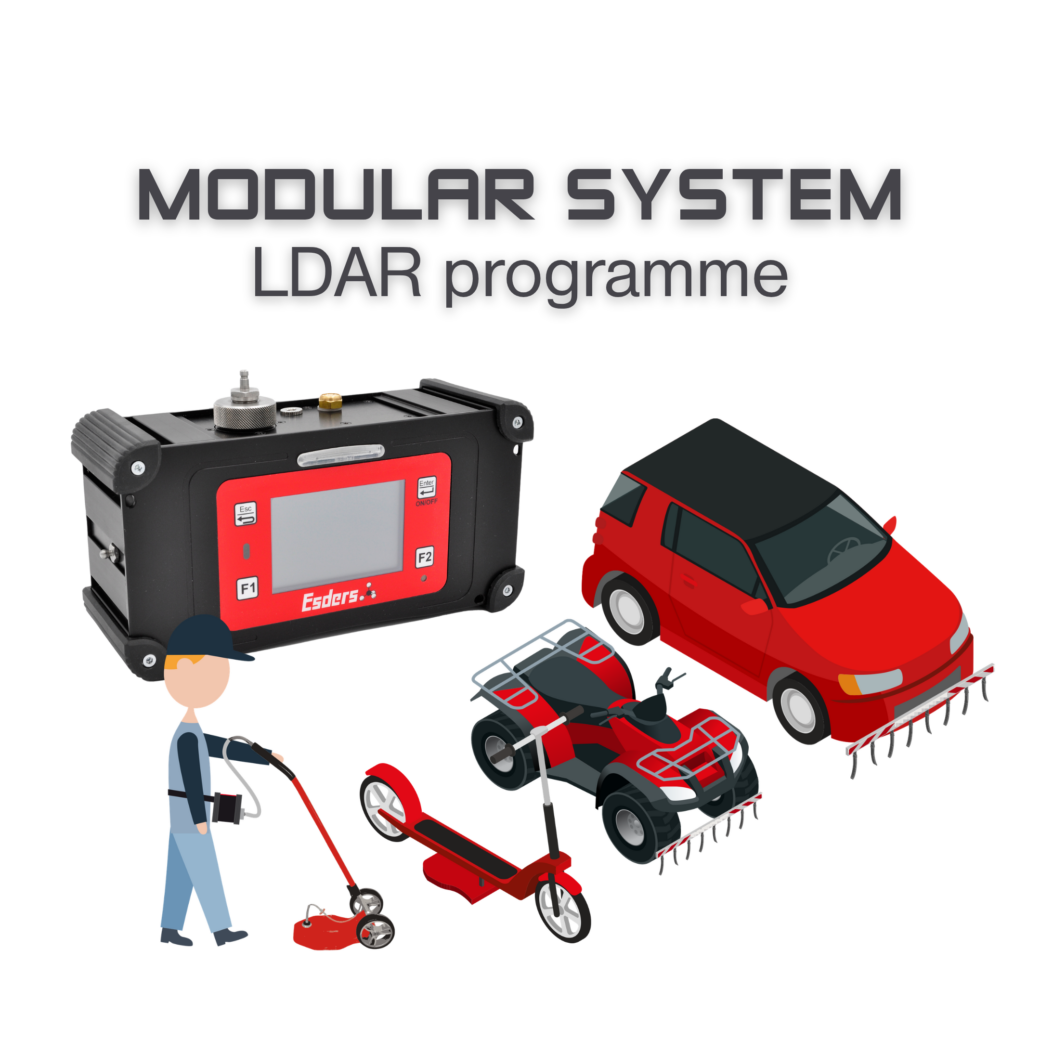
The systematic inspection of gas networks is a key focus of gas utilities. There are various methods for regular, recurring pipeline network inspections, which are listed in the DVGW G465-1 worksheet. Established methods include, for example, above-ground inspections using a carpet probe, an e-scooter, or vehicle-based leak detection. Each method has its own advantages and disadvantages depending on environmental conditions -whether in urban or rural areas, and more – so there is no single method that can be universally recommended. Instead, recommendations are made on a case-by-case basis depending on the application. Further information on flexible and regulation-compliant device technology for above-ground leak detection in accordance with DVGW G 465-4 is available here.
From pipeline network inspections to quantification in accordance with DVGW G 425
In Germany, pipeline network inspections and leak detection carried out to date have been properly documented by the distribution or transmission network operator, and any leaks identified have been classified into risk groups and reported for safety reasons (see DVGW G465-3). Proper reporting and documentation of pipeline network inspections are therefore not new in Germany. However, the publication of the EU Methane Regulation and the DVGW G 424 technical guideline now additionally require quantification of methane emissions at source.
How is the size of a leak and the level of methane emissions defined?
To quantify methane emissions, the DVGW has published the new series of standards, DVGW G 425, which provides methods for the metrological quantification of methane emissions. The quantification is described for airborne active remote gas detection of above-ground natural gas transmission pipelines as well as underground installations.
DVGW G 425-1 describes further methods for quantification at site and/or source level, such as vehicle-based quantification. However, the suitability of these methods has not yet been proven or is subject to restrictions.
We have already prepared a summary of the latest overview of suitable equipment for you in this blog: Equipment for inspecting gas pipelines and gas installations.