
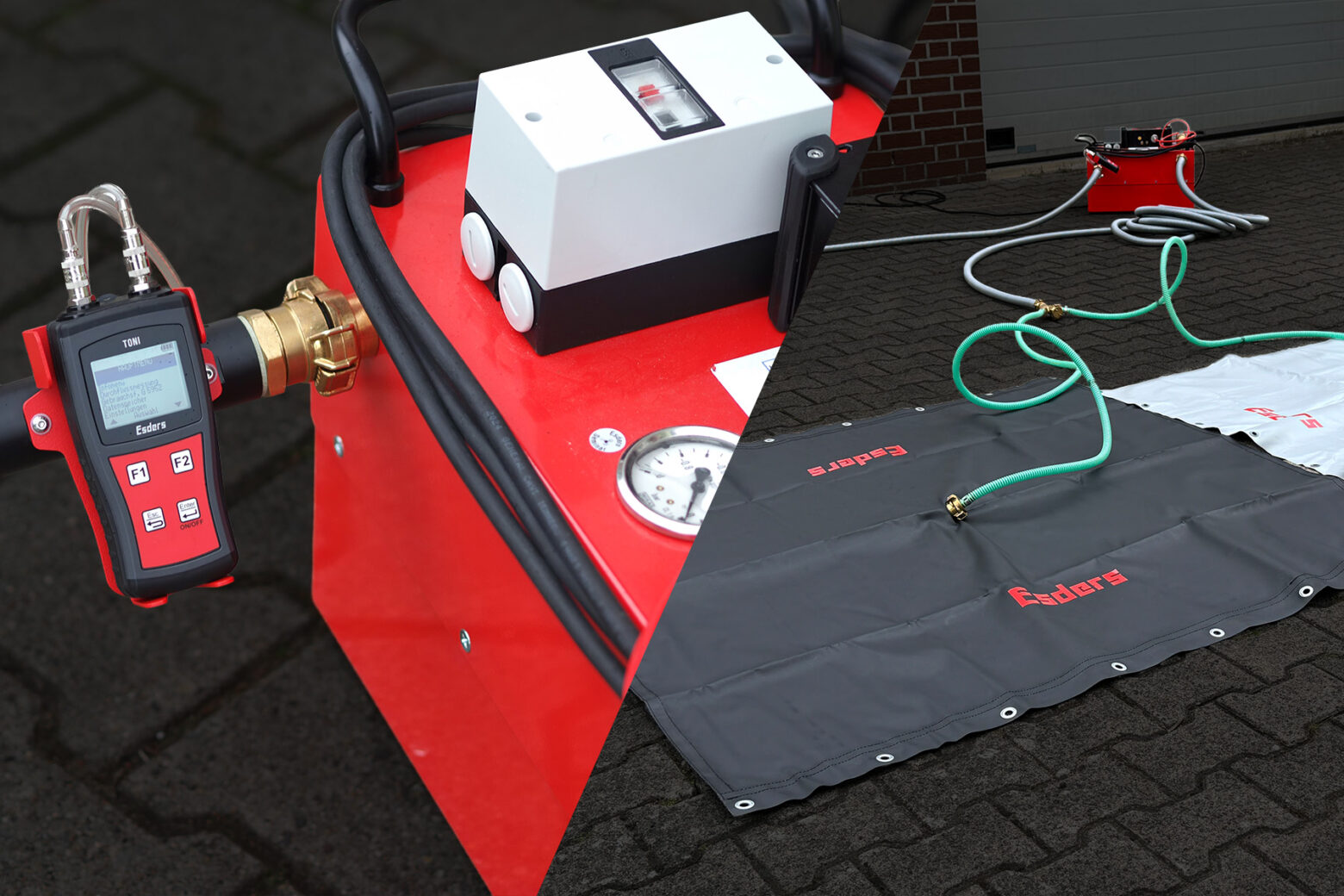
Table of Contents
Monitoring and documenting methane emissions are becoming an increasingly important part of modern gas network management. While leak detection and localisation have long been standard practice for natural gas operators, increasing attention is now being given to methane emissions quantification – determining how much methane is actually entering the atmosphere.
For network operators, utility companies and service providers, quantifying methane emissions offers much more than simply an assessment of gas losses. It supports risk-based maintenance planning, emissions reporting, regulatory compliance and the prioritisation of repair work.
What is methane emissions quantification?
Methane emissions quantification is the process of measuring or estimating the amount of methane released from a source, usually expressed as a flow rate (e.g., g/h or kg/h).
While leak detection answers the question “Is there a leak?”, methane emissions quantification answers “How much methane is escaping?”
From methane leak detection to emission quantification
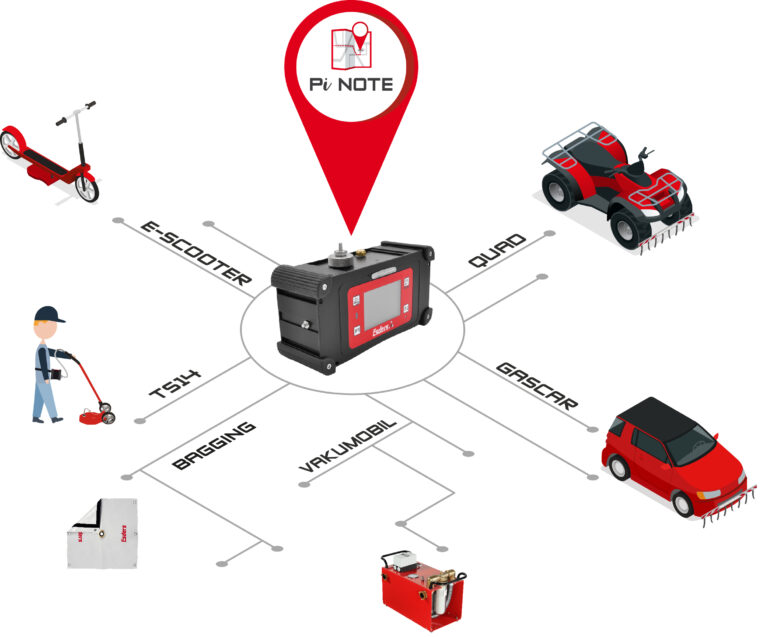
The assessment of an underground methane leak usually takes place in three stages: detection, localisation and quantification.
Once a leak has been detected and its location confirmed, the methane emission rate can be measured and documented. Accurate quantification provides the data needed to determine the severity of the leak and to make informed maintenance decisions.
Challenge: Locating underground methane leaks
Methane escaping from underground pipelines does not usually reach the surface directly above the leak. Instead, it migrates through the surrounding soil before reaching the atmosphere along the path of least resistance. This makes it difficult to accurately estimate the methane emission rate.
Consequently, the challenge lies not only in pinpointing the exact location of the leak but also in reliably quantifying the amount of methane being released. To address this, specialised measurement methods have been developed for underground pipeline applications.
Methods for quantifying methane emissions
Several methods are available for measuring and quantifying methane emissions, depending on the type of installation and measurement conditions.
For underground gas pipelines, two practical approaches are commonly used:
- the Bagging (Surface Enclosure) Method, which captures methane released at the ground surface. This method is usually used for quantification in above-ground installations, but it can also be used to estimate methane emissions from underground pipelines.
- the Extraction Method, which extracts soil air containing methane through ground probes installed around the suspected leak.
Equipment requirements for the accurate measurement of emissions
To determine the emission rate, a metrologically determined or known volume flow rate of the extracted soil air is required. The gas measuring device used to determine the methane concentration in the extracted soil air must have a detection limit of 10 ppm, i.e. at least 10 ppm must be detectable. This must be checked before each operation.
This applies to both methods mentioned in this article: bagging using a dedicated bagging probe and the extraction method using our Vakumobil.
Bagging (Surface Enclosure) Method
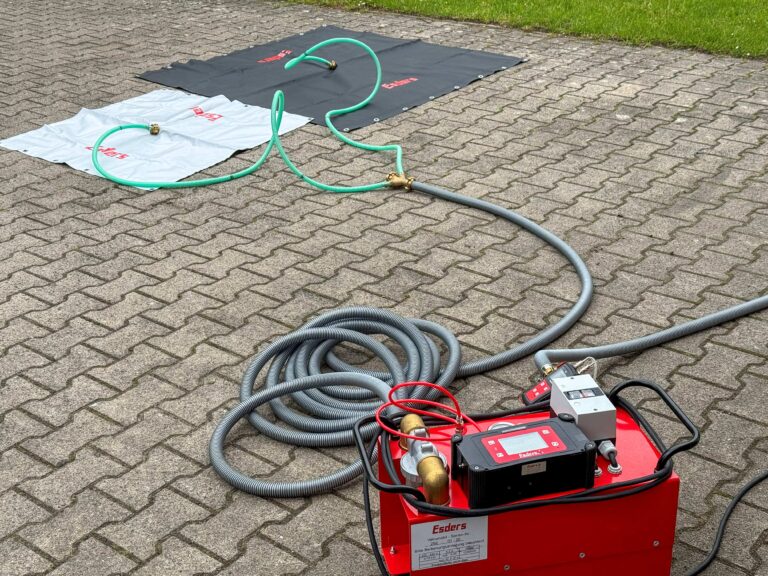
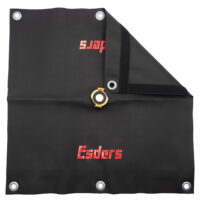
The bagging method enables the rapid measurement of methane emissions directly at the surface. To do this, the area where methane is being released is covered with a tarpaulin and the escaping gas-air mixture is extracted in a controlled manner.
The DVGW worksheet G 425-1 refers to the extraction of soil air using a tarpaulin spread out on the ground as a method for quantifying underground releases. This means the method can also be used for underground pipes.
In combination with modern measurement technology, the method enables a practical assessment of the emission levels and provides important information for the further investigation of leak points.
Step-by-step guide: quantifying methane emissions using the Bagging Method
Step 1: Locating the leak
The starting point for the measurement is a previously detected and localised methane leak. Based on the gas concentrations determined, the measurement area is defined and prepared for the measurement.
Step 2: Extraction and measurement
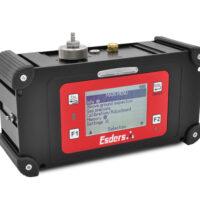
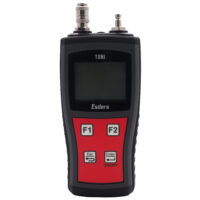
The gas-air mixture collected beneath the tarpaulin is extracted using the bagging probe. The Laser HUNTER continuously measures the methane concentration, whilst the flow rate is monitored via the TONI FlowTest.
Step 3: Assessment of emissions
Conclusions regarding the order of magnitude of methane emissions can be drawn from the recorded measurement values. The data obtained assists network operators in assessing, documenting and prioritising leak locations.
Download our free sample report on quantification using borehole probes and bagging on above-ground pipelines now!
Extraction (Suction) Method
The extraction (suction) method for underground installations is carried out using ground probes inserted into the soil following leak detection or localisation, and is described in detail in worksheet DVGW G 425-2. Other suction methods are permitted to a limited extent in accordance with DVGW G 425-1.
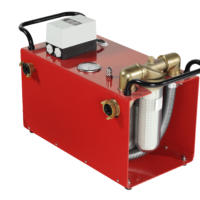
To carry out emission measurements of a leak in underground pipework, we recommend using the Vakumobil with borehole probes in combination with the Laser HUNTER.
Step-by-step guide: quantifying methane emissions using the Extraction Method
Step 1: Define the measurement area
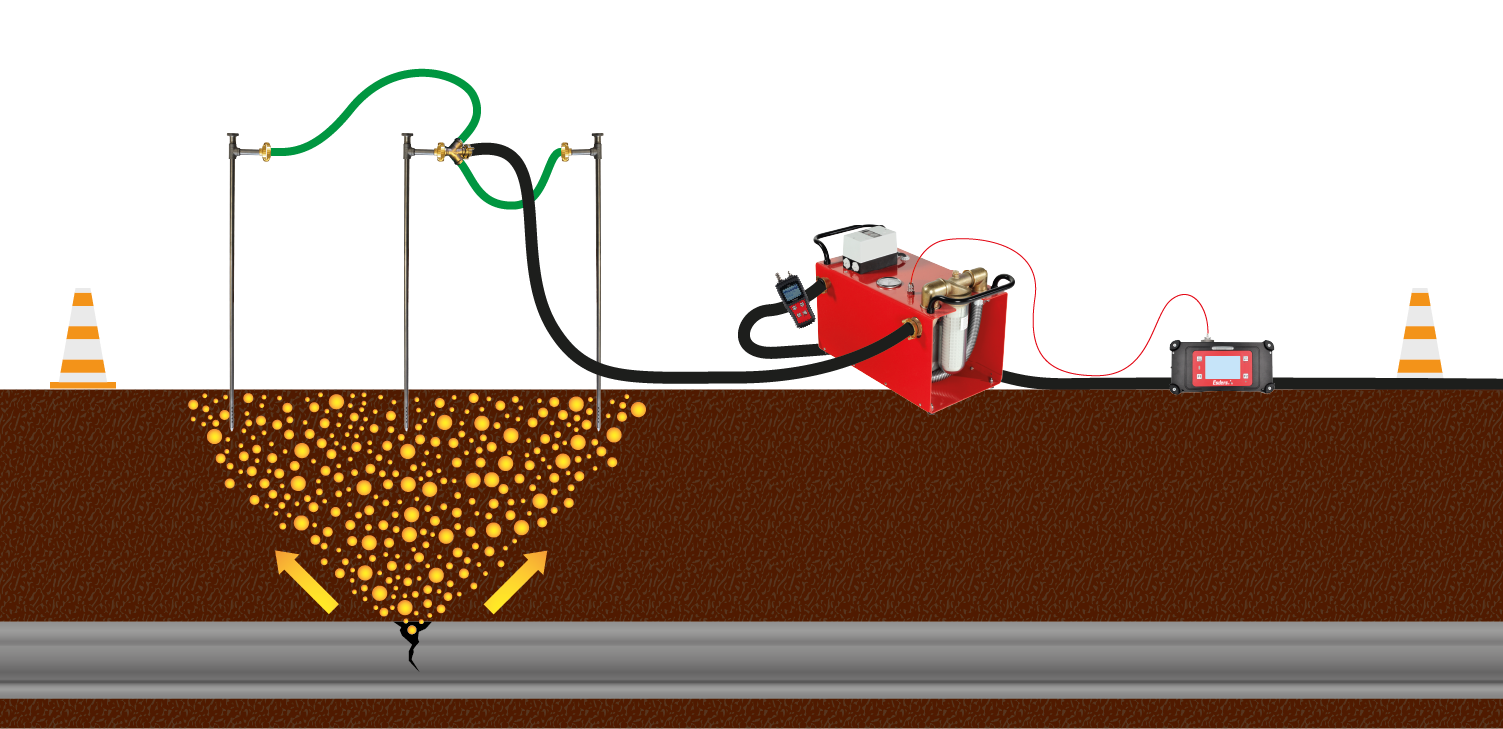
The measurement area is determined on the basis of a recorded gas concentration above ground and prevailing environmental conditions, such as the nature of the subsoil, and, where necessary, cleared and secured. The ground probes should be placed symmetrically around the suspected leak. Furthermore, care should be taken to ensure that the probes are ventilated evenly.
Step 2: Install ground probes
Depending on the nature of the subsoil, boreholes may need to be drilled for the ground probes. These should be as deep as possible, whilst ensuring that the underground pipe is not further damaged. In most cases, a depth of approx. 35 cm has proved effective. Furthermore, the free outflow from the leak should not be affected, and the maximum hose length specified by the manufacturer should not be exceeded.
Step 3: Extract and analyse soil gas
Once the measuring equipment has been set up and connected, the soil air enriched with methane/natural gas is extracted via a vacuum pump connected to the soil probes and analysed by a concentration analyser linked to the pump. The combination of concentration measurement and flow rate measurement of the extracted soil air enables the methane emission rate from the leak to be determined.
Step 4: Calculate the methane emission rate
The extraction flow rate must be sufficiently high so that no further methane leakage is detectable at the surface. In most cases, this condition can only be achieved using a suitably sized vacuum pump. Once the measured gas concentration and the flow rate have remained constant for approximately 10 minutes, the enriched soil air has been extracted and the emission rate of the leak itself is recorded. The measurement can then be terminated. Depending on the soil conditions, environmental conditions and extraction flow rate, it may take several hours to reach these constant values.
Bagging Method vs Extraction Method
The two methods described above are designed for different measurement scenarios, although both aim to quantify methane emissions from underground pipeline leaks.
The bagging method allows the quantity of methane escaping through the ground surface to be measured by covering the emission area with a sealed tarpaulin and sampling the gas-air mixture at a controlled flow rate. This is a relatively simple and quick approach when the surface emission area can be clearly defined.
The extraction method involves collecting ground air containing methane using soil probes installed around the suspected leak site. By combining concentration measurements with a controlled extraction rate, this method makes it possible to determine the intensity of methane emissions even in cases where the underground migration of the gas makes surface measurements difficult, as well as to obtain more detailed data.
In practice, the choice of method depends on site conditions, soil characteristics and the accessibility of the leak location. Both methods provide valuable data for quantifying methane emissions. However, it is expected that the requirements set out in the EU Methane Regulation will become even stricter in the future. Consequently, the requirements for the measurement methods used may also change.
Simply request a free consultation with no further obligations!
Are you a network operator, energy supplier or service provider who needs to implement measures to reduce methane emissions? We would be delighted to help you!