Menu
Privacy Settings
By visiting our online presences in social networks

By visiting our online presences in social networks your personal datat is also processed there by the respective provider. Bitte beachten Sie, dass Sie genauen Umfang, Please note that the exact scope, purpose, legal basis, storage period and your rights with regard to these processing procedures of your personal data must also be taken from the details of the respective provider.

Due to the integration of services of third parties

Due to the integration of services of third parties on our website, personal data of you could be processed by the respective provider. Please note that in this case you must also refer to the information provided by the respective provider regarding the scope, purpose, legal basis, storage period and your rights regarding these processing procedures of your personal data.


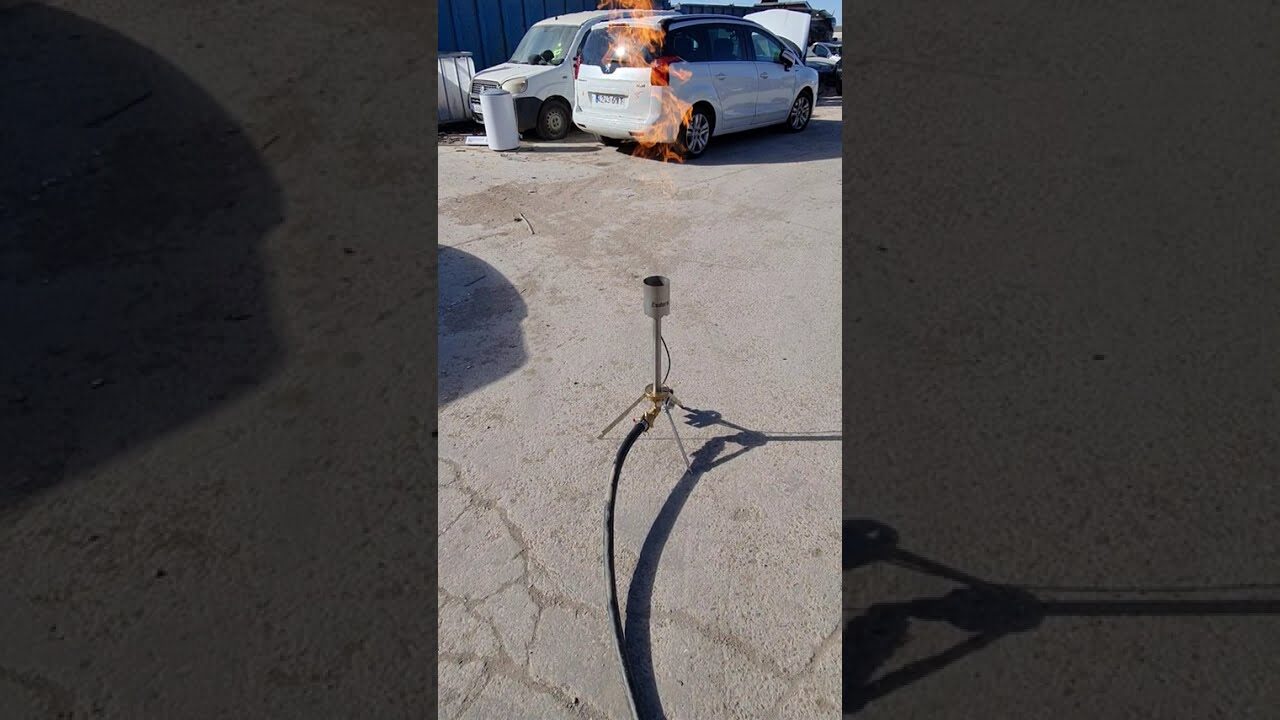
Header Autotanks abfackeln, Mobile Gasfackel M brennenden im Vordergrund, Hintergrund Autos und ein Schrottplatz

Safely draining gas and tank systems in accordance with standards

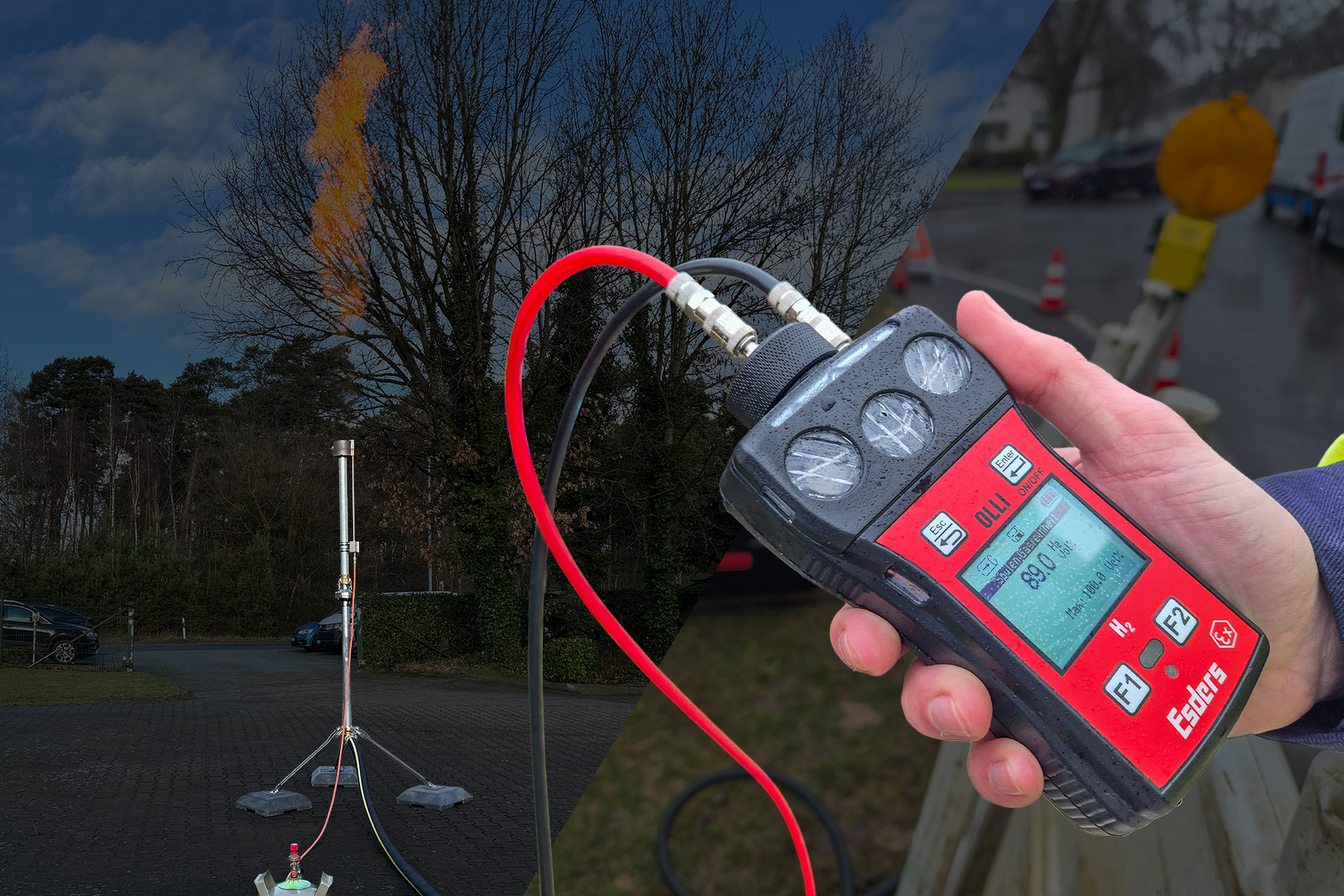
Safely and environmentally friendly flaring of CNG, LPG and hydrogen from vehicle, LPG and industrial tanks

Whether in a garage, when servicing LPG tanks in housing estates, for forklift fleets or when working with H₂ refuelling stations: Residual gases must be vented in an absolutely safe, controlled and environmentally friendly manner during maintenance, repair and decommissioning.
Our Mobile Gas Flares offer the perfect, tailor-made solution for precisely these demanding applications and make your daily workflow much easier.

Maintenance, Repair and Decommissioning

We explain why simply venting or draining residual gas is no longer an option, and how you can now work safely, efficiently and in compliance with the law.
Whether it’s an LPG tank, CNG storage facility, hydrogen plant or industrial gas container: Before gas-carrying systems can be opened, serviced, repaired, decommissioned or dismantled, the residual gas present must be safely controlled.
Uncontrolled venting into the environment is no longer a suitable standard solution. Depending on the gas, quantity and location, even small releases can create dangerous gas-air mixtures. Electrical and mechanical sparks, electrostatic discharges or hot surfaces can be sufficient as effective ignition sources in an explosive atmosphere. At the same time, avoidable emissions are released directly into the atmosphere.

The challenge lies in the fact that the gases used behave very differently when released.

LPG - liquefied petroleum gas:

Propane and butane are heavier than air. Leaking gas can therefore accumulate near the ground and in pits, shafts, sewers or other low-lying areas. An explosive atmosphere may form there without being noticed.

Methane is lighter than air and rises when released. However, in enclosed or poorly ventilated areas, it can accumulate under ceilings or in structural cavities. With CNG, there is also the additional factor of storage under high pressure.

Hydrogen is extremely light, rises very quickly and diffuses readily. At the same time, it has a wide explosive range and can be ignited by even very low ignition energies. In buildings in particular, unfavourable ceiling areas or poor ventilation can lead to critical concentrations.

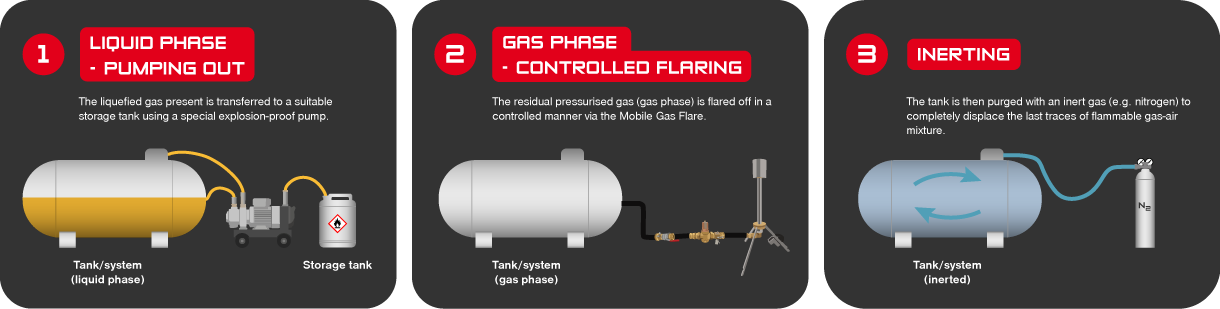
Structure and Procedure

Would you like to find out more?

Contact your Esders representative directly.

The legal framework

Controlling gas releases and managing hazards safely

When gas-containing tanks, vessels or systems are serviced, repaired, decommissioned or dismantled, companies must consider more than the technical process of removing the remaining gas. They must also protect workers and third parties from fire, explosion, pressure and other hazards and comply with the environmental and occupational safety requirements applicable at the site.

The key question is therefore not simply: How can the gas be removed from the system? It is: How can it be removed in a controlled and safe manner while avoiding unnecessary releases to the atmosphere?

European Union Directives

Within the EU, occupational safety requirements for flammable gases are based on several European directives that are implemented through the national legislation of each Member State.

Directive 1999/92/EC covers the protection of workers who may be exposed to explosive atmospheres. Among other requirements, employers must assess explosion risks, prevent the formation of explosive atmospheres where possible and control potential ignition sources.

For equipment and protective systems intended for use in potentially explosive atmospheres, Directive 2014/34/EU – commonly known as the ATEX Equipment Directive – establishes essential health and safety requirements.

Additional requirements may arise from legislation governing hazardous chemical agents, pressure equipment, environmental protection and specific applications such as filling stations, vehicle workshops, LPG installations or hydrogen systems.

From hazardous residual gas to a safe system status

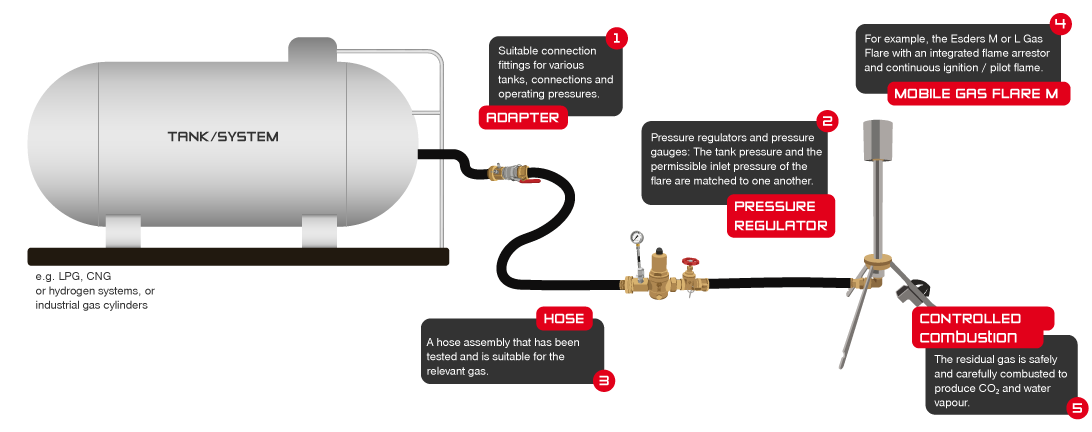
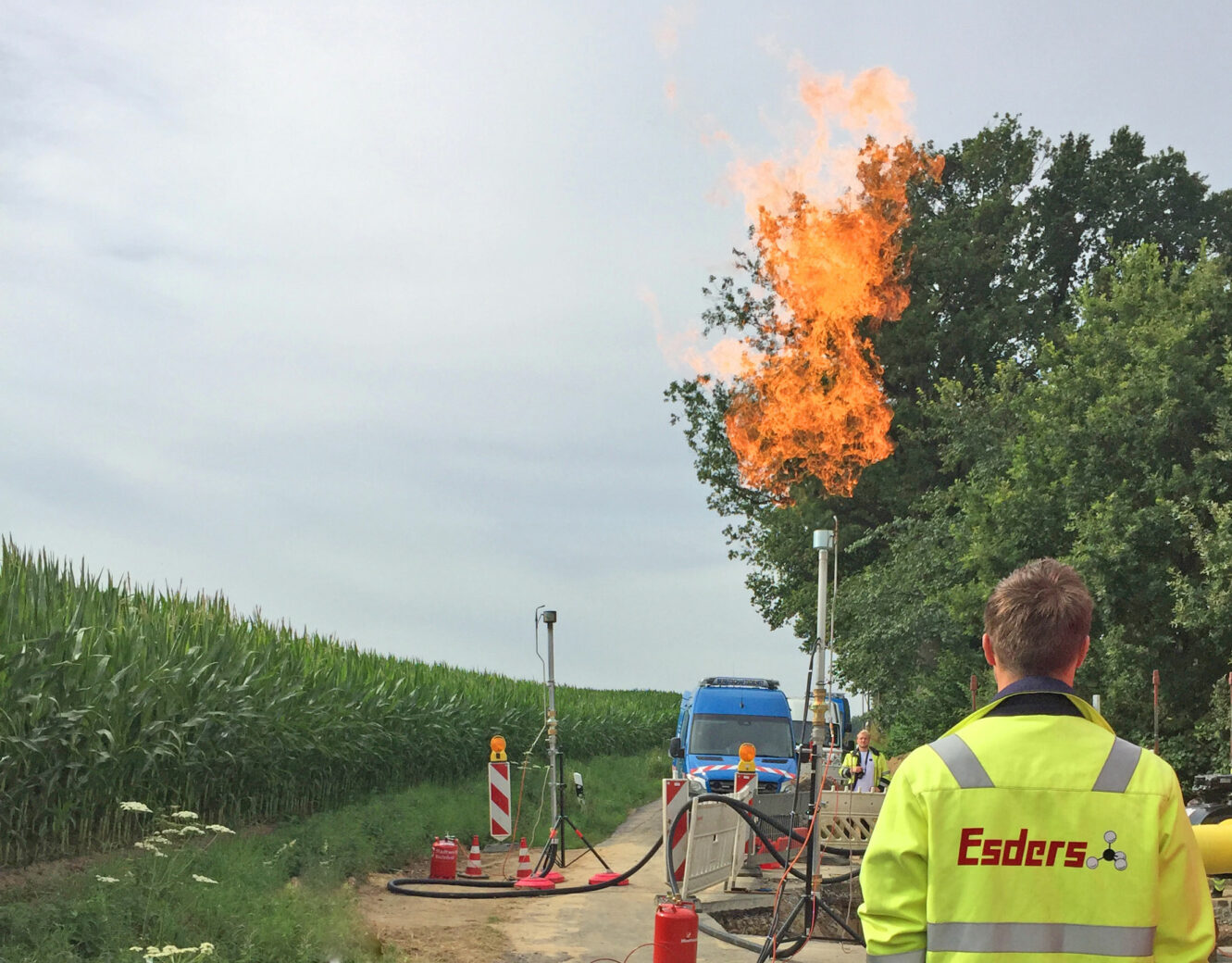
Our Mobile Gas Flares offer safety and efficiency, as well as ease of use, for the environmentally sound disposal of residual liquefied gas. Thanks to their robust and compact design, our flares are ideal for everyday use in repair workshops or by mobile specialist contractors.
Here at Esders, we offer you the right solution for every application and every pressure level. Our Mobile Gas Flares are suitable for natural gas (methane), propane/butane (LPG), hydrogen and gas mixtures.

Here are the advantages of our flares:

Quick set-up:

The Mobile Gas Flare is ready for use in less than 4 minutes.

Flexibility:

Adapters, hoses, pressure regulators, pressure gauges and other accessories allow the system to be adapted to different tanks, connections and operating pressures.

Absolute safety:

Explosion protection certification in accordance with DIN EN ISO/IEC 80079-49.

Mobility:

Safe and practical use during the maintenance, repair, decommissioning and dismantling of gas-carrying installations and containers.

Compliance with legislation:

Fulfilment of requirements of the GefStoffV and the DGUV in accordance with the current state of the art.

Our product solutions

All models feature an integrated flame arrestor to ensure maximum safety. Our systems are therefore designed for explosion groups IIA, IIA1, IIB and IIC. This prevents the flame from flashing back into the tank. Before each use, the systems can also be easily checked for operational readiness by means of a visual inspection (hoses, adaptors, piezo ignition). During the recommended annual service, we carry out a more targeted inspection of your flare system – including hoses and pressure regulators – to check its functionality, leak-tightness and safety.

When draining tanks and gas-carrying systems, leave nothing to chance and put your trust in over 30 years’ experience in gas safety. With Esders’ Mobile Gas Flares, you can burn off flammable residual gases in a controlled, safe and efficient manner, thereby creating the conditions for safe maintenance, repair and dismantling work. Protect your staff, reduce preventable emissions and choose a practical solution for the professional management of residual gases.

Mobile Gas Flare M
Mobile Gas Flare M
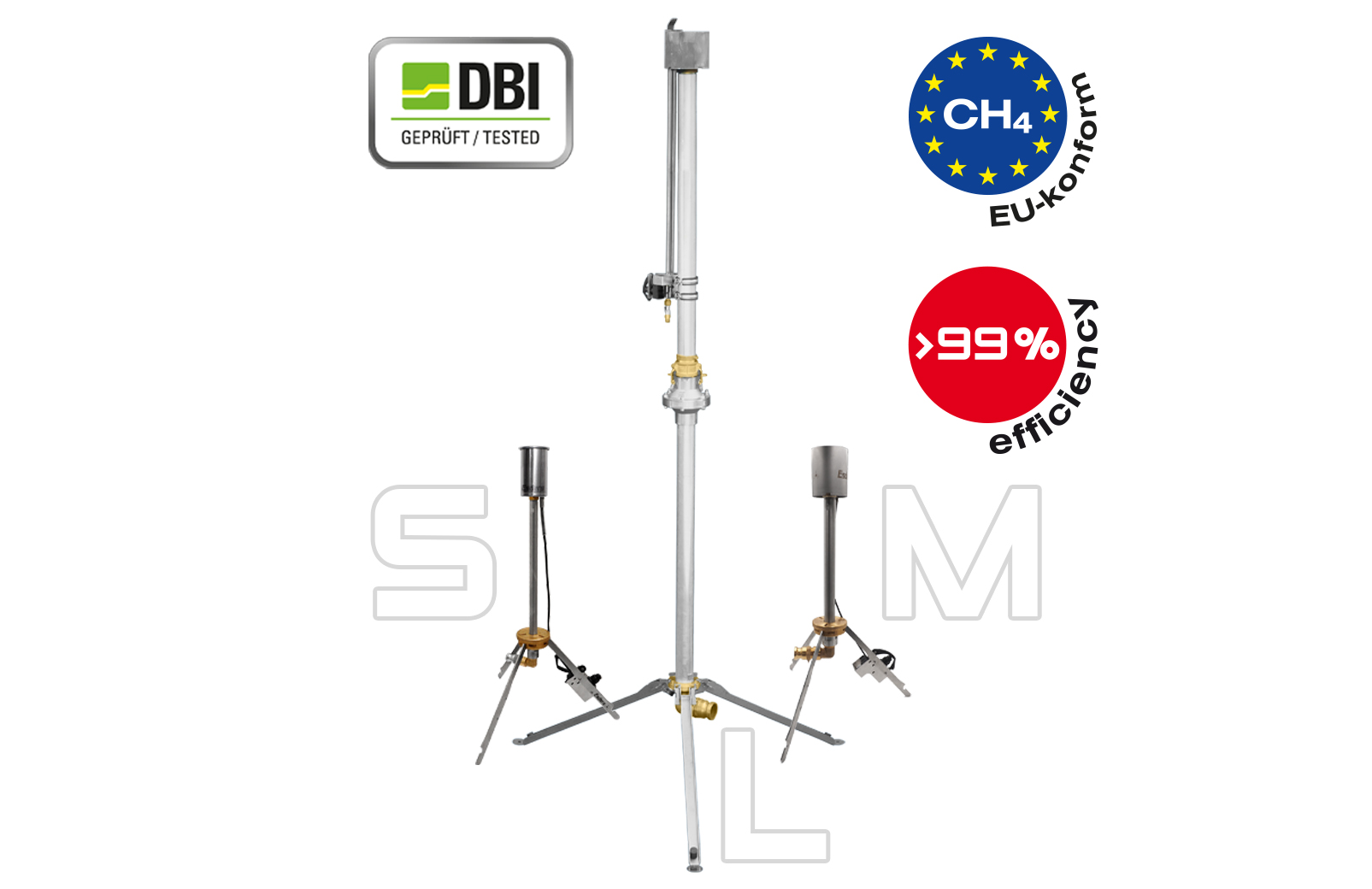
Mobile and compact gas flare for the safe and environmentally friendly flaring of natural gas, hydrogen or other combustible gases. For preventing operational methane emissions during, for example, depressurisation, commissioning and decommissioning of pipelines. Complies with the requirements of DVGW Merkblatt G 404. Suitable for supply/distribution pipelines, limited suitability for house connections. Suitable for emptying of gas tank/storage facilities. - integrated piezo igniter, continuous ignition up to 8 h (1x AA battery). - quickly ready for use, short set-up time, high flow rate and low emission combustion - integrated flame arrester for gases of the explosion groups: IIA, IIA1, IIB, IIC - H2-ready - max. operating pressure 1 bar - max. flow rate approx. 40 Nm3/h methane at 1 bar - combustion efficiency under ideal conditions approx. 99% - connection accessories available separately - connection for optional pilot flame via Series 21 nipple
To the shop
Adapter Set for Mobile Gas Flare M - LPG Tanks
Adapter set for connecting LPG multi-valves to liquid gas tanks, comprising: - Adapter: external thread M14x1.25 to Series 21 coupling - Adapter: external thread M12x1 to Series 21 coupling - Adapter: internal thread M12x1 to Series 21 coupling - 2x M12x1 plug screws with O-ring
To the shop
Control panel for Mobile Gas Flare M
Connection adapter 1 inch external thread, including pressure reducer and integrated valve for connecting the Mobile Gas Flare M to gas pipes. - Integrated pressure reducer for restricting the inlet pressure at the mobile gas flare (max. 1bar) - Integrated shut-off valve for safe gas inlet and flow restriction - Series 21 coupling and screw coupling for connecting a pressure or concentration measuring device - 1" ET on the inlet side, Camlock coupling DN25 on the outlet side - max. pressure 16 bar
To the shop
Hose NBR25 C25N-C25C - 10 metres - Unitrix
Gas hose for Mobile Gas Flare M. Length: 10 m NBR, Camlock adapters on both sides. DN 25 coupling on one side, DN 25 nipple on the other side. Max. pressure: 16 bar
To the shop
Pressure gauge 0 to 25 bar - Class 1.6
- 63 mm - A2 housing - glycerine-filled - with S21 connection nipple for the Mobile Gas Flare M connection adapter or the Mobile Gas Flare L connection adapter with ball valve
To the shop

Blog

Safety due to a flame arrester

Safety due to a flame arrester

How can flaring gas actually be safe, and how do we ensure the flame does not flash back into the pipeline or tank? A closer look at protective functions and flame arresters...

Read more »
keyboard_arrow_up