

Once a gas leak has been detected (gas indication) as part of a gas pipeline network inspection (G 465-1) or a methane emission survey (G 465-5), the leak must be located and classified.
The DVGW G 465-3 technical note describes the correct procedure for pinpointing the location of the gas leak, classifying the potential hazard, and the necessary safety measures and repair times.
What to do in the event of a gas leak?
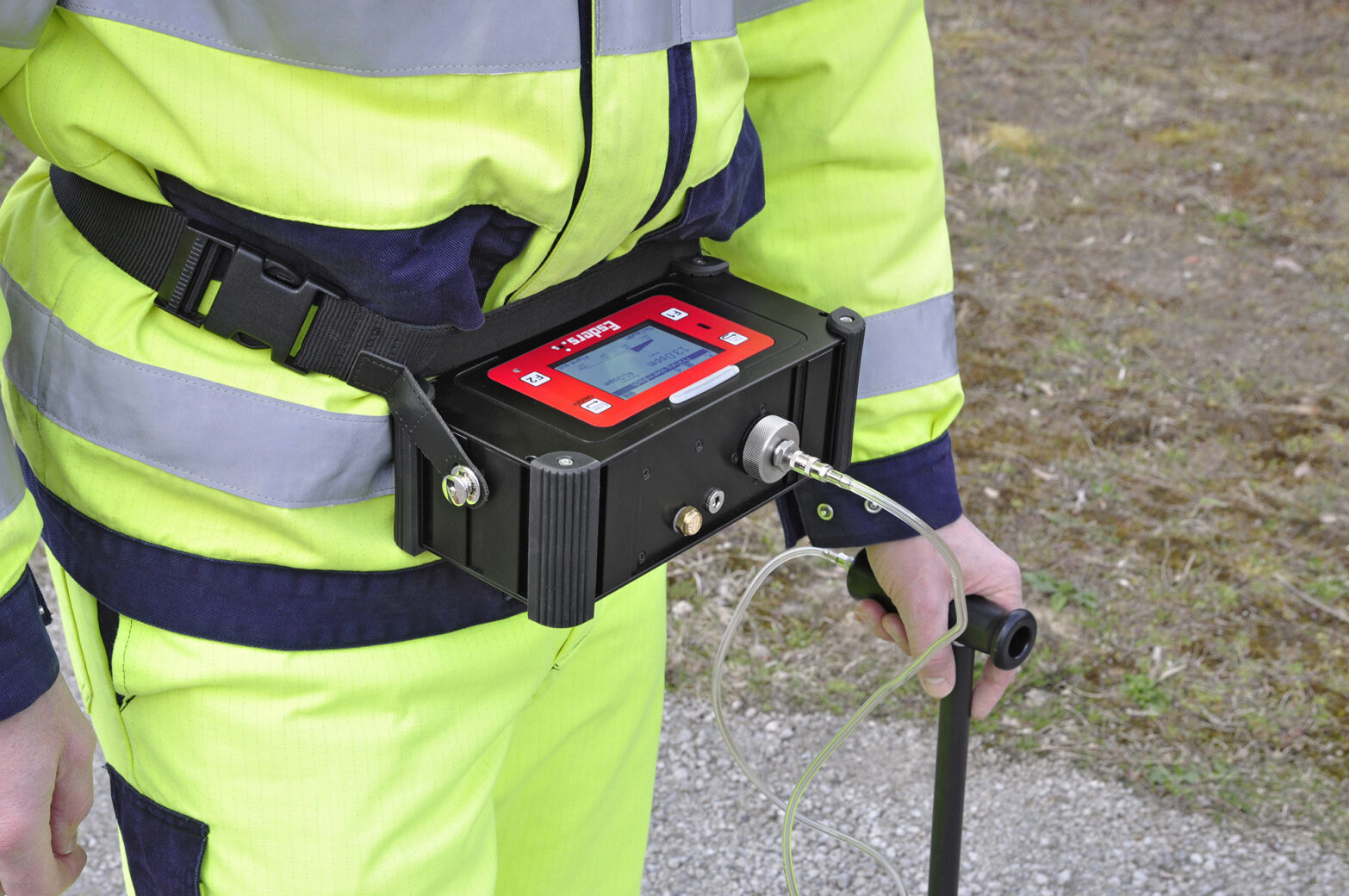
To locate the point of the leak, the soil air is tested for the presence of gas using probe holes. The location with the highest gas concentration must be identified using a measuring device in accordance with G 465-4-2 with a measuring range of 0,1–100% by volume; this is where the leak is suspected to be.
Even more important is determining the direction in which the gas is spreading towards buildings and cavities. Further test holes are drilled at 1-metre intervals, systematically towards houses and shafts, and tested for the presence of gas (measurements ≥ 0.1 vol% ) until no gas is detected. The shortest distance between the point where gas is detected and the building/cavity determines the leak class:
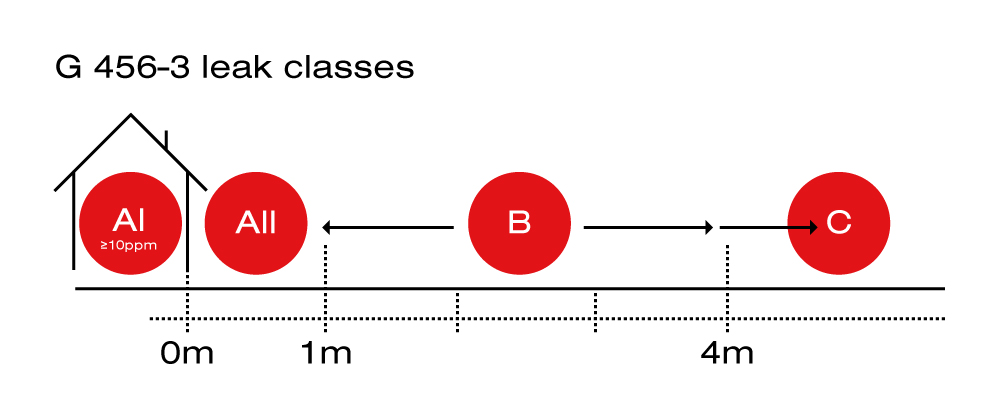
If gas is detected in zone AII – i.e. within 1 metre of a building or cavity – the building or cavity must be checked immediately for gas ingress. In the ‘Building Inspection’ scenario, the indoor air of the building and all building openings are checked for gas. In adjacent shafts/cavities, the atmosphere is checked for gas. In both cases – buildings and cavities – if gas is detected at ≥10 ppm, the leak class is upgraded from AII to AI.
Adherence to time limits
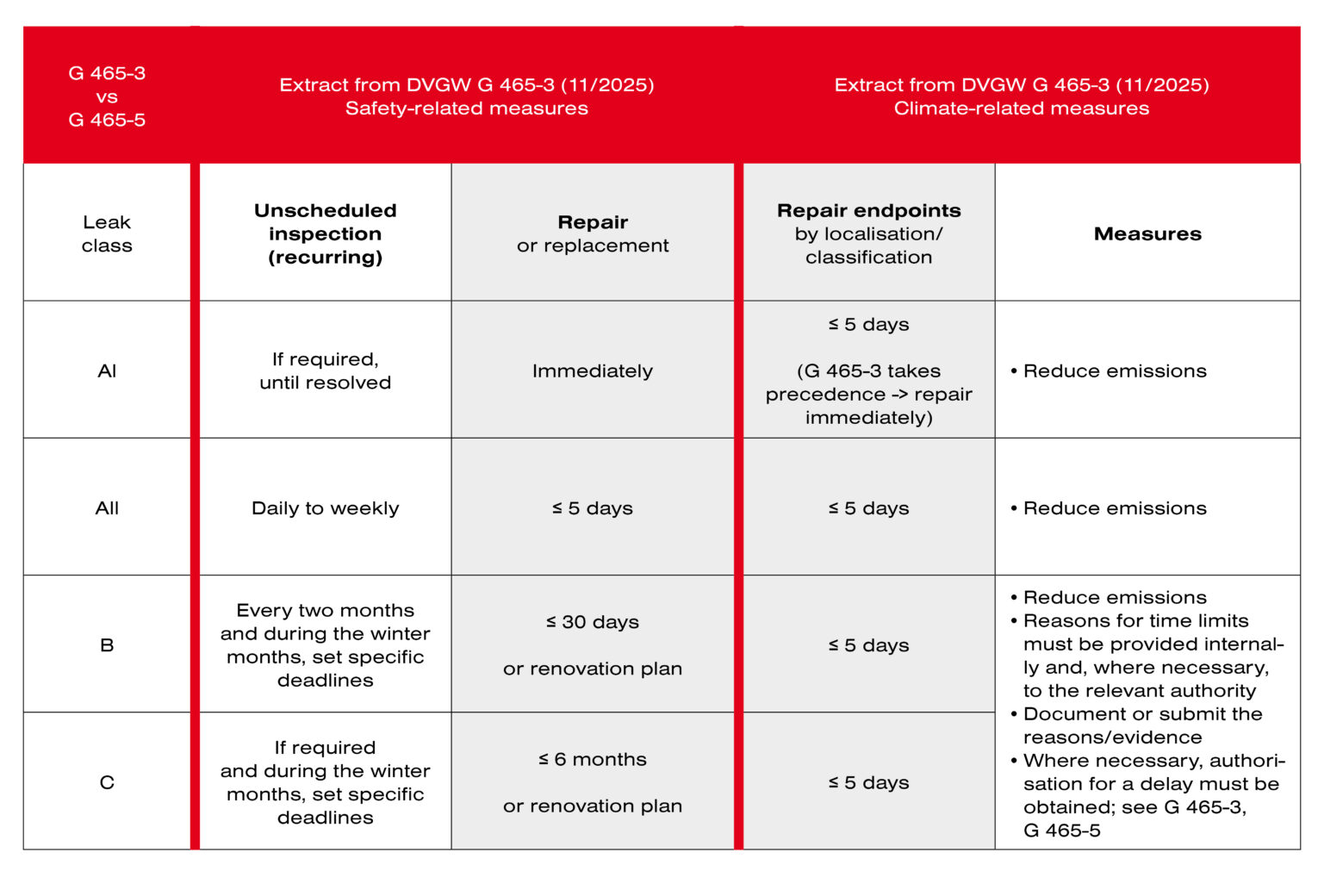
Every localised and classified gas leak must be followed by safety measures and, depending on the risk, regular inspections until the repair is complete. According to the EU Methane Regulation, every gas leak must not only be classified and repaired from a safety perspective, but, for environmental protection purposes, every gas leak exceeding the repair threshold (see our blog G 465-1 /465-5) must be repaired within five days:
Further information on repair limits and how these are measured on underground pipelines will be available shortly.