

Menu

DVGW W 400-2 pressure test: Legally compliant and digital

The smart memo pressure measuring device: your all-in-one solution for legally compliant, fully automatic pipe testing

Find out how to carry out tests on water pipes in accordance with worksheet W 400-2. Fully automated pressure testing using all standard-compliant procedures – from the contraction procedure through the (accelerated) standard procedure to the influence-minimised procedure. Read practical case studies, find out how to meet the stricter requirements, and discover the right system components for your next pipe network inspection.

Challenges encountered when carrying out tests in accordance with W 400-2

The fine line between compliance with standards, physical interference factors and time pressure on the building site

When carrying out pressure tests in pipework construction, variables arise on a daily basis that can distort the measurement results. These include air bubbles trapped in the pipe without being noticed, the viscoelastic behaviour (relaxation) of PE materials, or unforeseen temperature effects in the pipe trench. In the worst-case scenario, an inaccurate pressure sensor or a purely manual reading can result in a test lasting several hours being classified as ‘failed’, even though the pipe is completely leak-tight, or, conversely, small leaks being overlooked.

W 400-2 applications and case studies

Our case studies provide practical insights into the day-to-day work of network operators, utilities and service providers in relation to the commissioning and maintenance of safe drinking water networks.

W 400-2: Safe and traceable water pressure testing

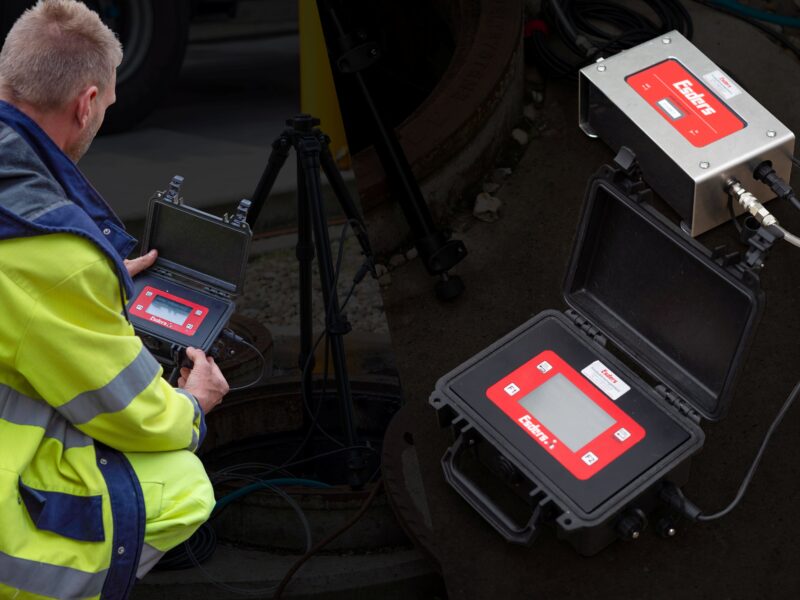
Druckpruefung-smart-memo

In Germany, water pipes used for the supply of drinking water must undergo a pressure test prior to being put into service in order to verify that the construction work has been carried out correctly and that the pipework system is leak-free. The requirements regarding the procedures and guidelines for carrying out these tests are set out in DVGW Worksheet W 400-2.

What challenges and opportunities does the implementation of W 400-2 present?

Practical two-step guide

Below, we outline the stages of the water pressure test in accordance with DVGW W 400-2.

Step 1: Main inspection - Accurately assess whether the water pipe is leaking

The main test constitutes the final phase of a procedure and is used as the final assessment of leak-tightness. During the main test, the pressure drop in the pipeline is measured and compared with a permissible pressure drop. The specifications regarding test duration and permissible pressure drop vary significantly between different procedures and depending on the pipeline being tested. To measure the pressure curve, a pressure sensor with a measurement range that complies with the relevant regulations and sufficient accuracy is required.

Step 2: Pressure drop test and preliminary test – detecting residual air and establishing test conditions

The pressure drop test is carried out in every procedure following the preliminary test and prior to the main test. Its purpose is to verify that the pipework system is free of air. An excessive amount of residual air in a pipe during a water pressure test significantly affects the result of the main test.
The current W 400-2 regulations set out strict requirements for the performance and evaluation of the pressure drop test. The volume of water drained must be determined using a digital measuring device, and the measured value must be transferred to the pressure testing device used. The preliminary test shows the greatest differences between the individual procedures, as it is designed to produce different conditions depending on the pipeline material. During the preliminary test of the contraction method, plastic pipes expand under test pressure.
In the preliminary test for the accelerated standard procedure, a cement mortar lining (CML) of a steel or cast iron pipe is to be partially saturated with water under test pressure, whereas in the standard procedure the cement mortar lining must be completely saturated. The procedures are therefore complex and involve numerous different details, which depend on the type of procedure, the pipe material and the nominal diameter.
High-quality measurement technology that complies with the relevant regulations should be used to carry out the procedures. The components required for carrying out the procedures are listed below. This equipment enables all procedures in accordance with W 400-2 to be carried out.

An overview of equipment for water pressure tests in accordance with W 400-2

smart memo

smart memo

Externer Absolutdrucksensor

External pressure sensor EDS2-P 25 bar 0.1%

EDS2_V4

EDS2-V flow meter 1–42 l/min 5%

EDS2-T-Anlegefuehler

EDS2-T contact temperature sensor, 0.1 K

MPP 30 30

Motor test pump MPP 30-30

An overview of options for water pressure tests in accordance with W 400-2

222610

Option LTE-GPS smart memo

W 400-2

Option DVGW W 400-2

222628

Feature Subscription smart memo

405832_Option_Durchflussmessung

Flow measurement option MPP 30-30/MPP 70-35

Our online shop offers a wide range of devices and options – each as unique as the application itself.

Test procedure in accordance with W 400-2

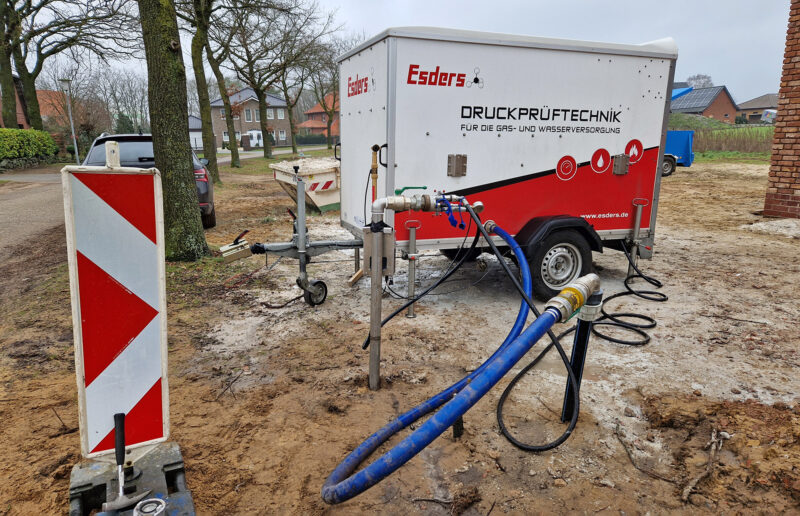
Pressure-test-trailer-W-400-2

The pressure test using the contraction method is designed to reliably assess the leak-tightness of newly laid or replaced drinking water pipes. The procedure takes into account the pressure-dependent behaviour of the pipework and enables an assessment in accordance with DVGW Worksheet W 400-2. Careful execution and clear documentation are crucial to ensuring the quality and operational safety of the drinking water system.

What should you keep in mind when using the contraction method?

The contraction method places high demands on the preparation and correct execution of the pressure test. In particular, the pipework must be sufficiently free of air, as trapped air can distort the measurement results and mask potential leaks. At the same time, the individual test phases, pressure changes and limit values must be strictly adhered to. External conditions, as well as the specific behaviour of the plastic pipework, can also influence the pressure curve and make it difficult to arrive at a clear evaluation without suitable measurement technology and expert operators.

The contraction method - the ideal solution for inspecting drinking water network systems

The contraction method enables a reliable and verifiable evaluation of the leak-tightness of drinking water pipes. Thanks to the defined test procedure, potential leaks can be detected at an early stage, the quality of the installed pipework can be verified, and the test results can be documented in accordance with the relevant standards.

Step-by-step guide to carrying out the contraction procedure

We demonstrate in a practical way how the methodology can be easily implemented using our technologies, despite the challenges.

Step 1: Prepare the W 400-2 contraction procedure - enter pipe data and test parameters

Enter the pipe data and the required test pressure via the input screen. Set the ‘MPP remotely controlled’ selection parameter to ‘Yes’ so that the MPP is controlled by the smart memo during the pressure build-up and pressure hold phases of the test sequence.
After setting the zero point of the pressure sensor (also set the zero point in the MPP’s main menu), press F2 to switch to the pressure release (relaxation) phase.

During the relaxation phase, you can use the F1 key to open or close the automatic drain valve at the touch of a button. This allows you to vent the EDS2 automatic drain system and the connected EDS2-V flow meter even after the process has started. Furthermore, for pipework without a gradient, you can use an open drain valve to create a pressure-free condition. At the end of the relaxation phase, the valve closes automatically in all cases.
If the MPP is not yet connected to the smart memo or is not yet ready for use, a prompt will appear at the end of the relaxation phase asking you to establish the connection.
In the current version (03/2023) of the automatic system, a prompt appears at the start of the relaxation phase asking whether pressure build-up should be started automatically once the relaxation phase has ended.
If you confirm this prompt with ‘Yes’, the smart memo will automatically switch to the next phase once the 1-hour relaxation phase has ended. If the MPP is already connected to the smart memo via the connection cable, the system will automatically switch to the pressurisation phase and the pressure build-up will commence. Once you have confirmed the prompt with ‘Yes’, the entire test will therefore run automatically without any further user intervention.

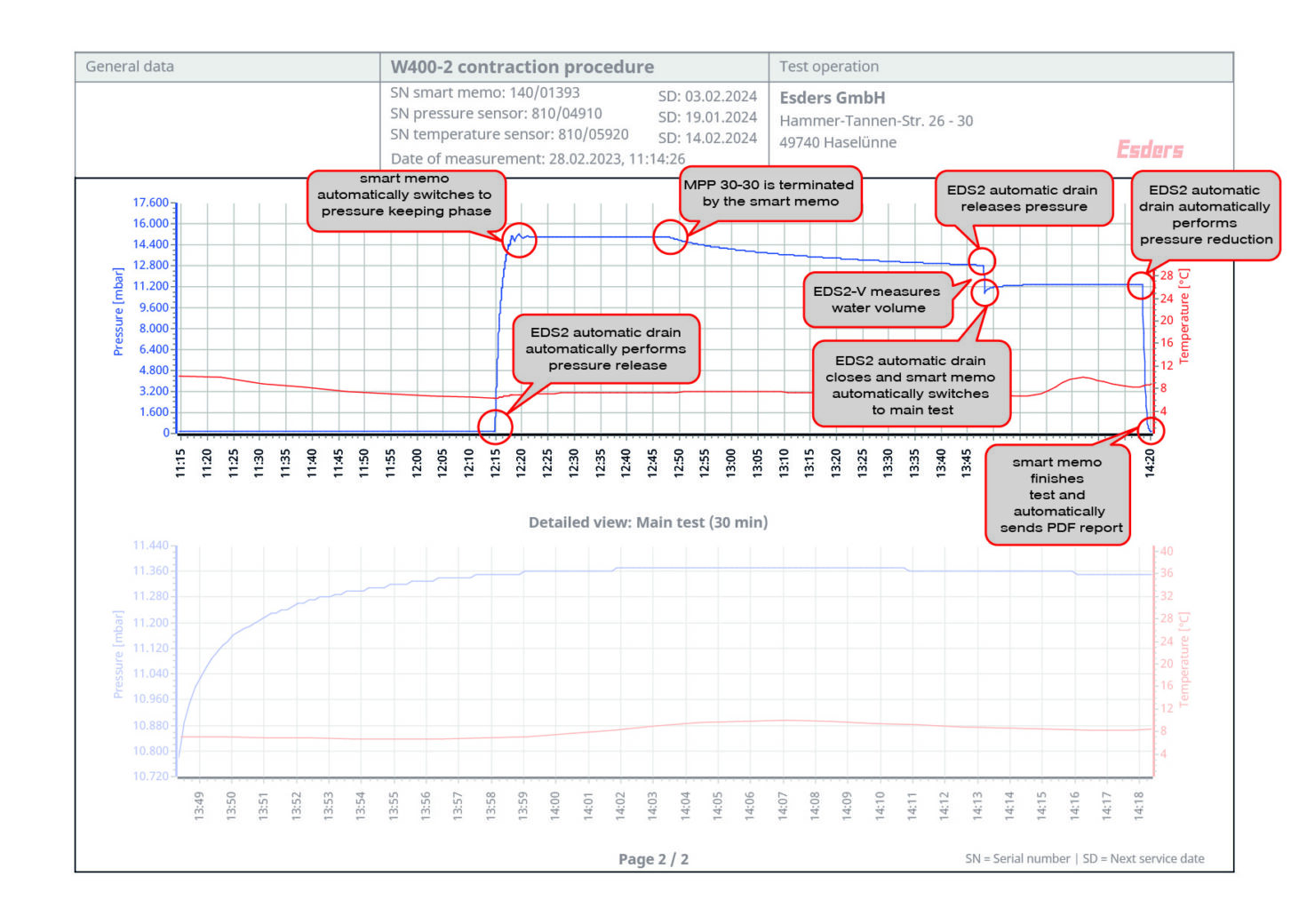
The relaxation phase must be ended by pressing the ‘Next’ button. The MPP is now initialised. If the MPP is not yet connected to the smart memo via the connection cable, a corresponding message will appear. As soon as the MPP has been initialised, a prompt will appear asking whether pressure build-up should be started. After confirming with OK (F2), the smart memo switches to the pressurisation phase and the MPP automatically begins operation. Pressurisation is carried out via the MPP’s speed control without overshoot. As soon as the preset test pressure is reached, the smart memo automatically switches to the pressure-holding phase.
This is followed (at the start of the pressure-holding phase) by a message from our air volume measurement system, which was used to determine whether there is too much residual air in the line. We have already compiled further information on air volume measurement for you here on this product page and here in the blog post ‘Checking for air ingress during pressure tests’.

The smart memo continues to control the MPP and ensures that the pressure is maintained at the preset test pressure throughout this phase. Once the 30-minute phase has elapsed, the smart memo automatically switches to the rest phase.

When the system switches to the rest phase, the smart memo automatically finishes the MPP’s pressure control. The MPP is reset to the main menu and, once the cable connection to the smart memo has been disconnected and the ball valve on the test head HANS has been closed (please ensure that you close the correct ball valve), it can be taken out of service, drained and stowed away.
The smart memo monitors the pressure drop during the rest phase. If this exceeds 20%, the testing is automatically terminated, as this usually indicates a leak in the pipe.
Once the one-hour rest phase is complete, the smart memo automatically switches to the pressure drop test.

The EDS2 automatic pressure relief system now begins to perform pressure reduction automatically. The valve opens gradually and regulates the pressure reduction in such a way as to achieve the specified target pressure as accurately as possible. At the same time, the discharge volume is measured by the connected EDS2-V and transmitted digitally to the smart memo. Once the target pressure is reached, the valve of the EDS2 automatic pressure relief system closes completely.
The smart memo automatically switches to the main test as soon as a rise in pressure resulting from the contraction of the test line is detected.
A check of the discharge rate and the pressure drop generated, in accordance with the specifications of the current worksheet W 400-2, takes place in the background. If the check is unsuccessful, a corresponding message appears at the start of the main test; otherwise, the test continues without a message.

The smart memo records the rise in pressure resulting from the contraction and, once the 30-minute main test has finished, provides an evaluation in accordance with the regulations.
If the pressure curve falls within the permitted range, the evaluation is positive.
If an excessive pressure drop occurs during the main test, the smart memo automatically switches to the main test extension phase.

The smart memo records the pressure curve during this phase and, once the 60-minute extension has ended, provides an evaluation in accordance with the regulations.
At the end of the phase, the smart memo automatically switches to the results page or, optionally, to the pressure release phase (if set beforehand, see below).

The pressure release phase can be enabled as an option in the settings under this menu item. If this phase is enabled, the EDS2 automatic drain automatically reduces the pressure to relieve the pipe and terminate the testing.
This ensures that the test pipe is not subjected to the test pressure for an unnecessarily long time once the fully automatic pressure test has been completed.

Test Report W-400: Automated Contraction Procedure
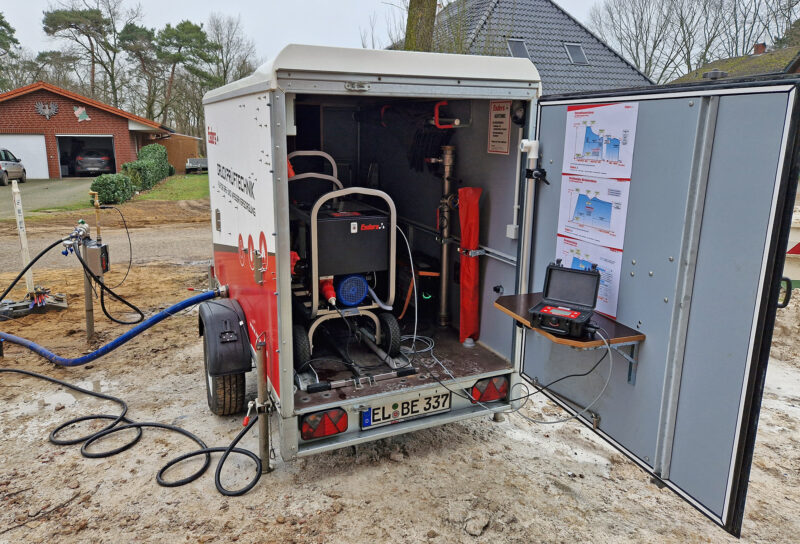
Pressure test trailer

An overview of our suitable equipment solutions

smart memo

smart memo

222610

Option LTE-GPS smart memo

W 400-2

Option DVGW W 400-2

222628

Feature Subscription smart memo

Externer Absolutdrucksensor

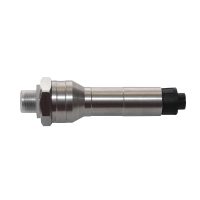
EDS2-P external pressure sensor, 25 bar, 0.1%

EDS2_V4

EDS2-V flow meter 1–42 l/min 5%

EDS2-T-Anlegefuehler

EDS2-T contact temperature sensor, 0.1 K

OLYMPUS DIGITAL CAMERA

EDS2 automatic drain valve

Pruefkoerper-HANS zur Durchführung von Wasserdruckprüfungen nach W 400-2 (Stand 08/2022) mit dem smart memo

Test head HANS

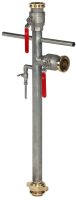
Prüfstandrohr Hydrant VA, Fuß DN80

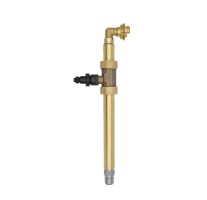
Test stand pipe, hydrant, VA, base DN 80

Related products

smart memo
smart memo
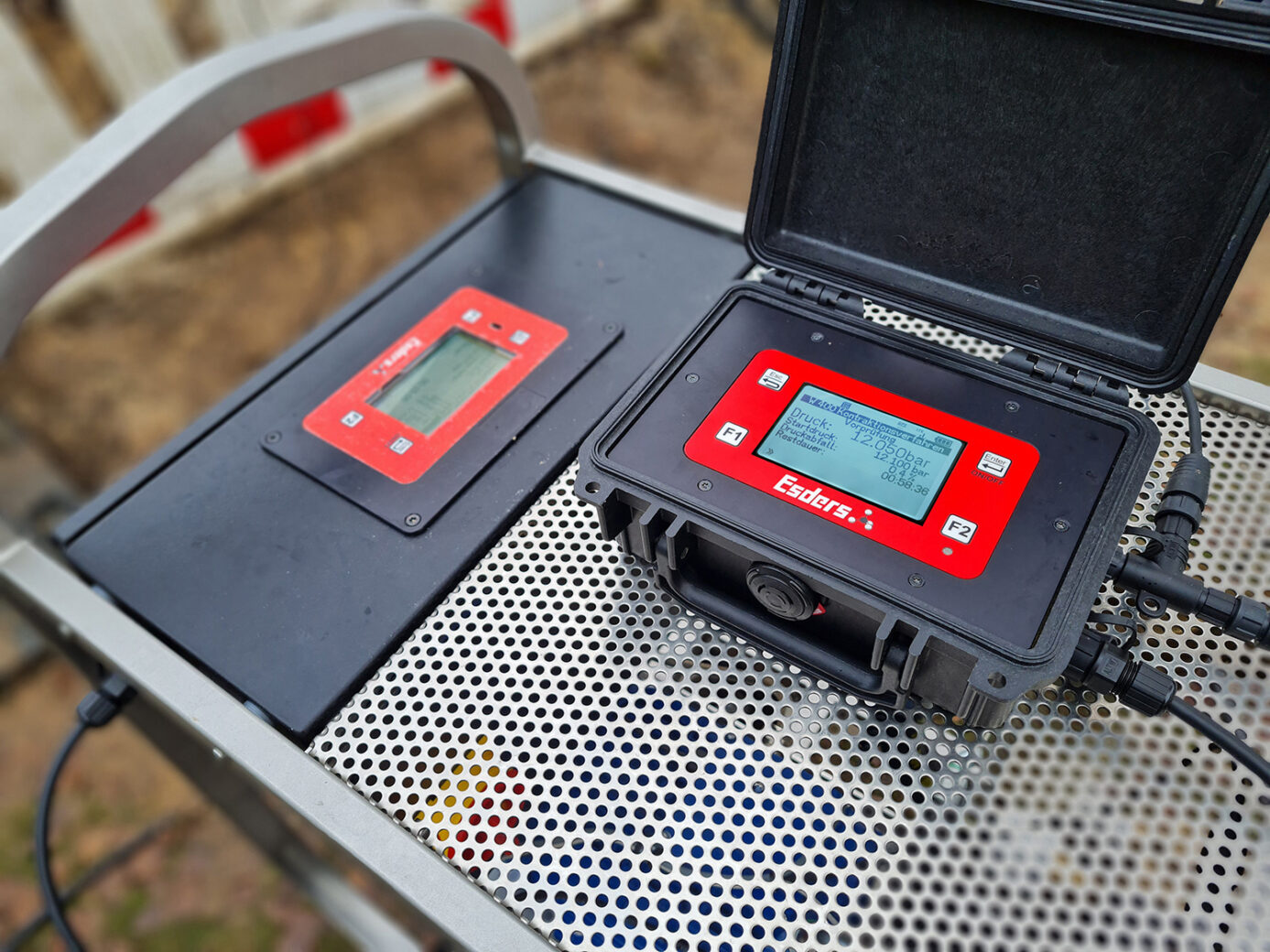
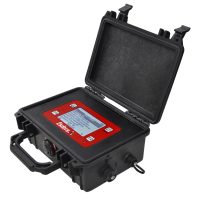
Electronic pressure measurement case for pressure tests with the option of connecting up to five external sensors (type EDS2). - the test procedures are menu-guided and can be carried out with simple data entry dialog - a freely programmable pressure test is included - optional test sequences for gas and water tightness tests e.g. according to DVGW, ÖVGW, EWE, Avacon, WEVG - a subsequent addition of test sequences is possible easily - large, illuminated display, even in direct sunlight easy to read - data entry and signature via touch display and foil keys - stylus for the touch display included - data memory for hundreds of measurements, depending on test sequence - wireless communication with an external device for updates and data transmission (costs apply for data transfer to the cloud) - LTE / GPS module (optional) - robust case (IP 67) - operating time approx. 200 hours, extension with power supply possible from outside Dimensions: 220 x 90 x 168 mm Weight: approx. 1450 g
To the shop
Option DVGW W 400-2
Option DVGW W 400-2
Menu-driven pressure test procedures for water pipes according to German DVGW W 400-2 - Contraction procedure - Accelerated normal procedure - Normal procedure - Influence-minimized normal procedure
To the shop
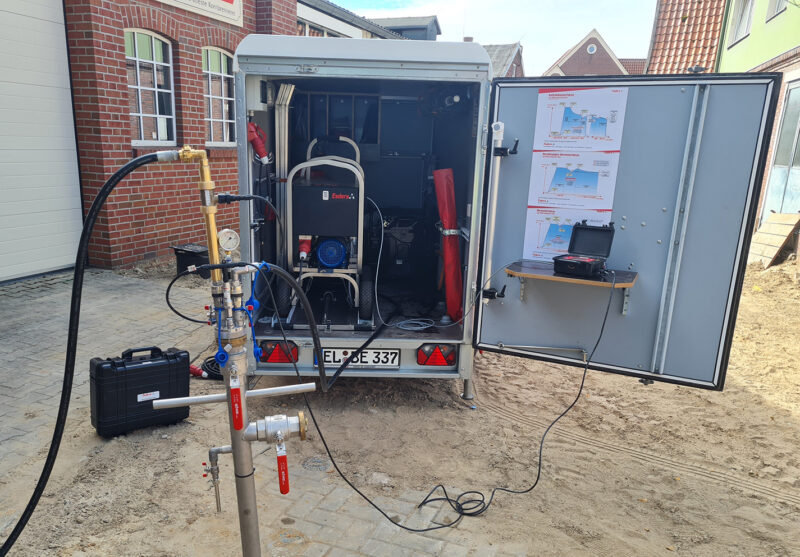
Pressure test trailer braked
Pressure test trailer - braked - Closed boxes trailers 2515 x 1300 x 1520 mm permissible total weight 1350 kg Wing door with rear revolving rods Interior design with: - AC socket with distribution - lighting with button - connection for test pump (MPP) - water tank with supply hose, connection for MPP and expiration - separate water supply for the water tank and test pump - drain for water tank and test pump - connection for umbrella at wing door - aluminium ramps for test pump - table for paperwork or storage measuring instruments
To the shop
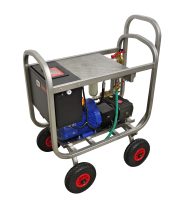
Test pump MPP 30-30
Test pump MPP 30-30
Fully automatic test pump for simplified execution of water pressure tests according to DVGW W 400-2, ÖVGW W 101, EN 805 - max. outlet pressure 30 bar - delivery volume 30 liter/min. - power supply 230 Volt / 400 Volt - 50 Hz - power consumption 2,2 kW - test pressure adjustable in 0,1 bar steps - frequency converter and speed control for adapted pressure build-up and pressure maintenance without pressure surges - freely adjustable, constant speed via "manual operation" - non-return valve for blocking of pressure line - Storz coupling and quick-coupling for water inlet and outlet - optional with volume flow measurement (necessary for air volume determination in smart memo) - optional disinfection procedure for pump - optional with wheel set
To the shop
Test pump MPP 70-35
Test pump MPP 70-35
Fully automatic test pump for carrying out water pressure tests, e.g. according to DVGW W 400-2, ÖVGW W 101, EN 805 - max. outlet pressure 35 bar - delivery volume 70 l/min. - Voltage 400 volt - 50 Hz - Power consumption 5.5 kW - Test pressure adjustable in 0.1 bar steps - Frequency converter and speed control for adapted pressure build-up and pressure maintenance without pressure surges - freely adjustable, constant speed via "manual operation - check valve for locking the pressure line - Storz connection and quick couplings for water inlet and water outlet - optionally with flow measurement (necessary for air volume determination in smart memo) - optional with disinfection procedure for MPP - optional with wheel set Suitable for pressure build-up in large pipeline volumes. For small pipeline volumes with V < 1m^3, the MPP 70-35 is only suitable to a limited extent, as the test pressure may be "overrun".
To the shop

More information about the W 400-2

Blog tips

Live-Messung mit dem smart memo in Esders Connect
Blog

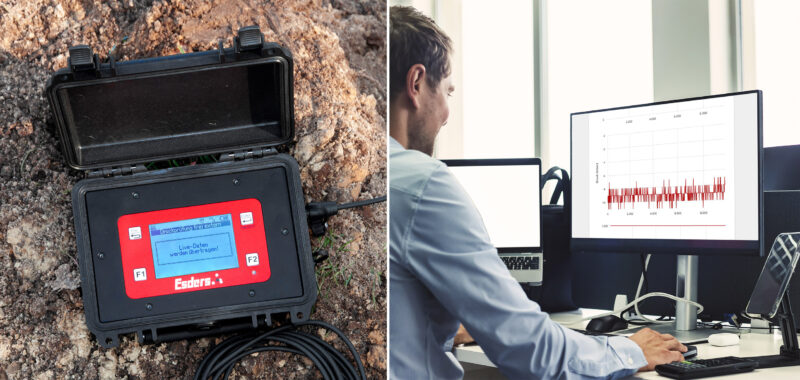
Live measurement during pressure testing with the smart memo

The smart memo is a versatile device for carrying out pressure tests. We offer simple, menu-guided test sequences for different test procedures in the gas, water and waste water sectors in accordance with applicable regulations. All test sequences in the device are programmed according to the current version of the

Read more »
Pressure drop test with the smart memo
Blog

Difficulties with the pressure drop test of PE pipes

Table of Contents Some of our customers have reported that they have problems with the pressure drop test to check whether PE pipes are free of air. The results of the pressure drop test were implausible, as otherwise all indications of sufficient absence of air were given. We have also

Read more »

Request a consultation with a specialist or a live demonstration

Whether you have any questions about our processes or would like to see our measurement technology in action – we’re here to help.
Simply send us your contact details. You can choose between a free consultation or a personalised product demonstration (online or on-site). We’ll get back to you as soon as possible!

Request a consultation

Would you like to find out more about Esders, our technologies and, above all, the opportunities available to you? We’d be happy to advise you, with no obligation.

Request a live demonstration

Please fill in the form below and we will arrange a suitable time for a product demonstration. Whether this is an on-site meeting or an online consultation.

Newsletter

Don’t miss out on the latest news about our technologies and key regulations – sign up for the newsletter now.
keyboard_arrow_up