The European standard EN 805, which sets out the requirements for water supply systems and their components, has undergone a comprehensive update. This also brings with it a number of important changes and revised specifications regarding the performance of pressure tests on water pipes.

Below, we summarise what has changed regarding pressure testing under the new EN 805 and how we are implementing the new requirements in our smart memo measurement technology.

What has changed in EN 805?

The update to the standard primarily introduces detailed specifications for the test procedure, the basis for calculations and the handling of external influences. There are, however, no specific changes to the hardware: the standard still does not define any specific requirements (such as minimum resolution or measurement accuracy) for the measurement technology used.

Greater focus on the effects of temperature

A key focus of the revised EN 805 is on the environmental conditions during testing. New sections on the effects of temperature have been incorporated at various points in the standard. It is now explicitly required that account be taken of frost conditions at night or excessive heating during the day. The effects of temperature fluctuations on uncovered pipes and joints must be kept to a minimum. To avoid distorting the pressure in the test section, it must be ensured that the initial and final temperatures of the pipe wall are approximately the same at each stage (particularly during the main test). In practice, this constitutes an indirect requirement for temperature measurement, for example using a contact probe or a ground spike.

A new feature is the direct handling of high temperatures in the contraction test procedure: if temperatures above 20 °C are unavoidable, an adjustment factor must be applied in accordance with Table A.4. This factor is used to reduce the test pressure accordingly under warm conditions (temperature-compensated test pressure STP).

New, specific limit values and parameters have been defined for the test procedure:

  • Test pressure & rest phase: A minimum test pressure of 0.7 x PFA (PFA: permissible component operating pressure) has been introduced. In addition, there is now a further defined limit value for the rest phase, during which the pressure drop must be between 10 % and 20 % (10 % ≤ Δp ≤ 20 %).
  • Pressure drop test: The factor f used to calculate the permissible water volume has been adjusted from the previous value of 1.2 to 1.05. Furthermore, new target values for the pressure drop (Δp) during the pressure drop test have been specified (e.g. Δp = 3.2 bar for a PE 100 SDR 11 pipe).
  • Material properties: In Table A.6, the assumed modulus of elasticity values for pipe materials have been adjusted. A value of 850 N/mm² is now used for PE 80 and a value of 1100 N/mm² for PE 100.

Key points in the updated version of the EN 805

Permissible test methods

Testing of PVC pipes using the contraction method is still permitted in accordance with standard EN 805. The water loss test method is also still included in this standard and is recognised.

For tests on PE pipes carried out using the standard procedure, the EN 805 standard still does not permit repeating a failed main test.

The EN 805 standard continues to set out strict requirements for the main test using the contraction procedure: the test section is considered leak-tight only ‘if the pressure curve shows an upward or constant trend during the contraction period’.

The EN 805 standard specifies a value of 850 N/mm² for PE 80 and 1100 N/mm² for PE 100.

The EN 805 standard stipulates that the test pressure must be adjusted at temperatures above 20 °C using a correction factor (STP reduction).

What do the changes to the EN 805 standard mean for the smart memo?

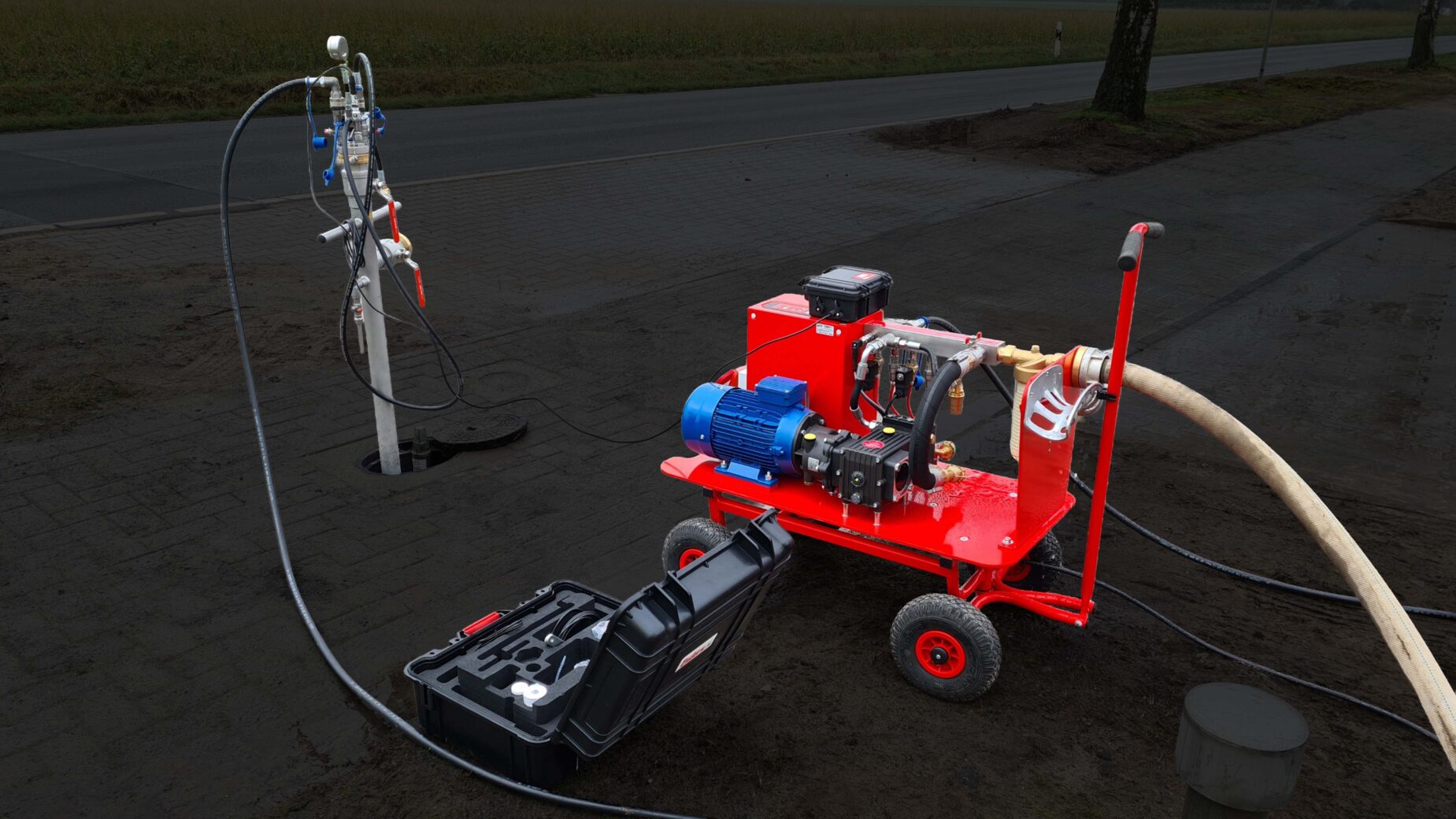
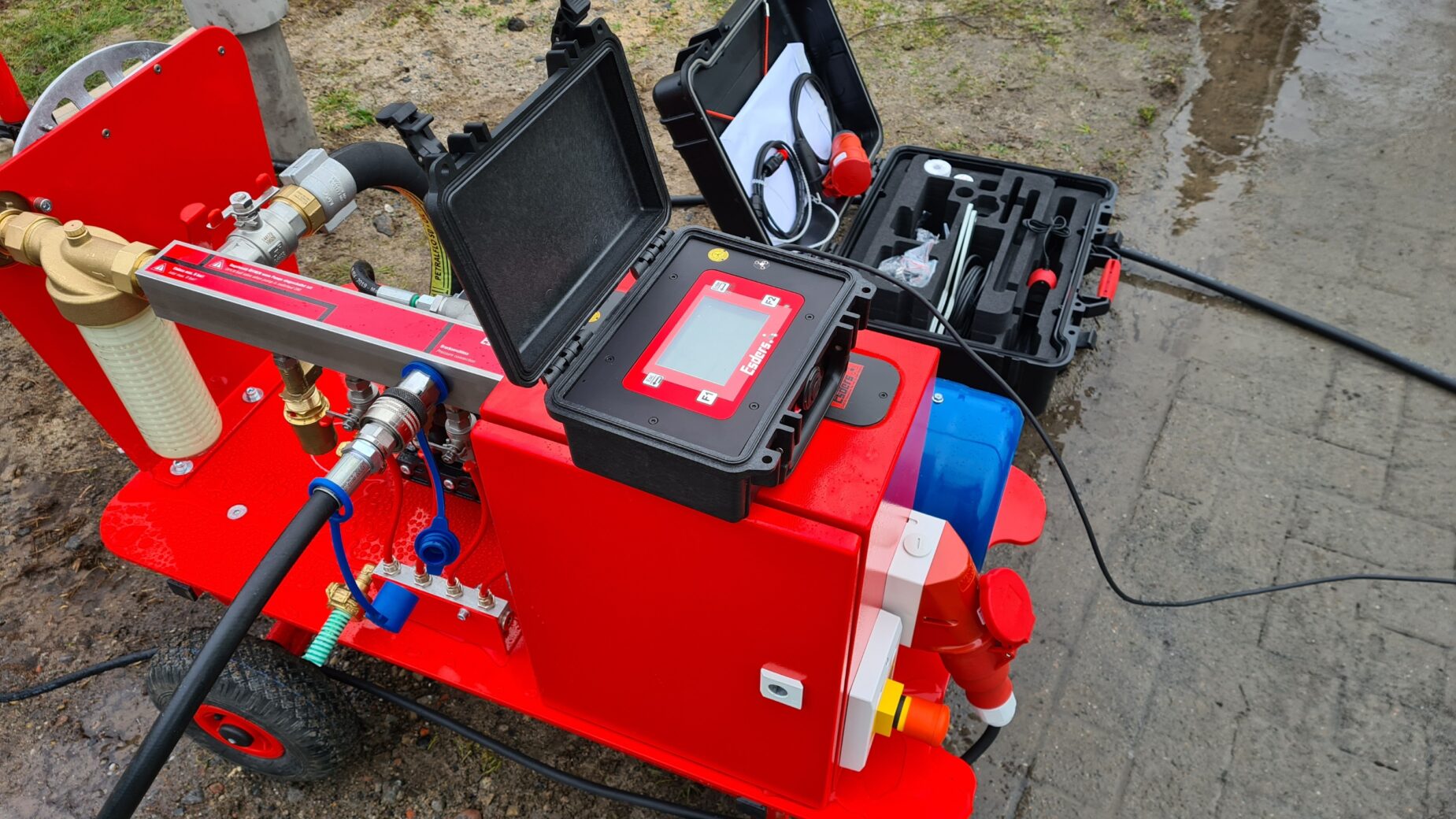
To ensure that you can continue to carry out your tests in a straightforward, safe and standards-compliant manner, we have incorporated the relevant amendments to EN 805 into an updated test procedure for our smart memo measurement technology.

  • Temperature measurement: We have included the indirect requirement of EN 805 for a temperature sensor in the smart memo menu as an optional feature for the time being. You can use a temperature sensor, but you do not have to.
  • Temperature-compensated test pressure: The device automatically calculates the reduction in test pressure required by the standard at temperatures above 20 °C (when using an external EDS2-T temperature sensor). In the smart memo, we apply this reduction immediately after the end of the pressure release phase, i.e. directly before pressure build-up.
  • Any further adjustments to the details of the procedure will be applied automatically following an update

As usual, we are providing the corresponding software update free of charge. You can install the update on your smart memo easily and hassle-free using the Esders Connect app. Once installed, the customised menu options for tests in accordance with EN 805 will be available to you straight away.

The key changes at a glance?

A clear summary of the changes to EN 805 is available for you to download here. Simply fill in the form and download the overview of the changes as a PDF document.

Good to know: A summary of the key FAQs on EN 805

What are the main changes in EN 805 for pressure testing?

The update to EN 805 places a much greater emphasis on the effects of temperature during testing. Among other things, a new requirement is for a temperature-compensated test pressure at ambient temperatures above 20 °C in the contraction test. In addition, specific limit values have been adjusted: the minimum test pressure is now 0.7 x PFA, and for the pressure drop test, the calculation factor f has been changed to 1.05.

If temperatures above 20 °C are unavoidable during the pressure test, an adjustment factor from Table A.4 must be applied in the contraction method. This reduces the test pressure accordingly under warm conditions (temperature-compensated test pressure STP). The Esders smart memo automatically calculates this reduction when an external temperature sensor (EDS2-T) is used, immediately before the pressure is built up.

No, the standard does not specify any new or more stringent hardware requirements regarding the resolution or accuracy of the measurement equipment used. However, as EN 805 aims to ensure that the initial and final temperatures of the pipe wall are approximately the same, this results in an indirect requirement for temperature measurement.

We are providing you with the necessary software update, featuring the adapted test procedures, free of charge. You can install the update on your smart memo quickly and easily at any time via the Esders Connect app. Once installed, the new menu options for a pressure test compliant with EN 805 are immediately ready for use.