As global temperatures rise, the use of refrigeration appliances is also growing rapidly, whether they be traditional fridges, freezers, or – in particular – air-conditioning units and heat pumps. According to statistics, there are now well over two refrigeration appliances in almost every household in Germany.
Coupled with the trend towards ever more efficient and future-proof systems, this increase is leading to a massive rise in the volume of service work for specialist tradespeople. However, maximum efficiency must never come at the expense of safety.
As modern refrigeration and air-conditioning systems are now predominantly powered by environmentally friendly but highly flammable natural gases, safe handling during maintenance and dismantling is essential. A tool that is often underestimated in practice but is vital for technicians is personal protection through the controlled flaring of refrigerants.
You can find answers to frequently asked questions about Mobile Gas Flares here.
Where are refrigerants used?
Refrigerants such as R290, R600 and R600a are frequently used in various sectors. Below, we outline which sectors these are.
Domestic refrigerators and freezers
Isobutane (R600a) in particular is used because of its energy efficiency and low environmental impact.

Excerpt from the user manual of a standard refrigerator.
Heat pumps and air-conditioning systems in private households
Here, propane (R290) has become the standard for new systems in recent years.
Industrial refrigeration systems
Small industrial systems use both R600a and R290 because of their cooling capacity and low GWP (Global Warming Potential).
Industrial applications
R290 is frequently used in larger industrial refrigeration systems due to its high performance and efficiency.
In large industrial plants, refrigerant recovery by extraction is the standard practice. This ensures that the refrigerant remains within the closed system and can be recycled or reused – as primarily required by the Circular Economy Act (KrWG). However, as the size of the refrigeration system decreases – as is the case, for example, with a domestic fridge or a compact heat pump for domestic use – this process quickly becomes uneconomical. With small appliances, long hose runs often mean that more residual gas remains in the system than ultimately ends up in the recycling cylinder.
When should refrigerants be flared?
We outline the scenarios in which controlled flaring is used.
Scenario 1: Servicing small appliances (e.g. R600a fridges)
With charge quantities often below 100 grams, it is technically hardly feasible to carry out an economical and efficient extraction, as significant quantities would remain in the pipework. In such cases, flaring using special gas flares is standard practice.
Scenario 2: Removing residual gas prior to hot work
If you need to carry out brazing or welding on a propane system, there must be no flammable gas left in the system. Once the bulk of the gas has been extracted, any remaining quantities are burned off in a controlled manner.
Scenario 3: Emptying in the event of an emergency
This applies when an outdoor unit needs to be repaired and no recycling cylinder is available, or the gas is contaminated.
Use of the Mobile Gas Flare S for safe refrigerant flaring
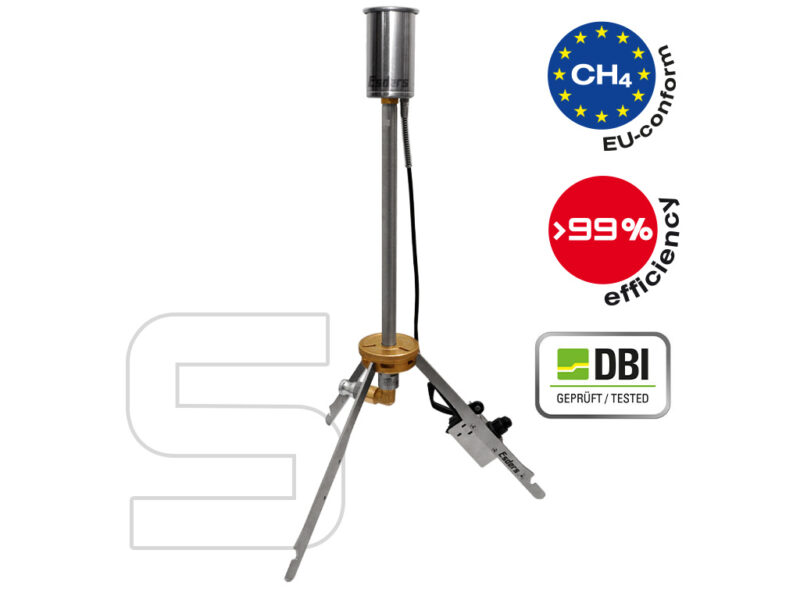
Safe, controlled gas combustion in a flare – this is where a Mobile Gas Flare comes in handy. However, to ensure personal safety on a construction site, it is essential to distinguish very clearly between different types of gas.
The “clean” hydrocarbons (e.g. R290 Propane, R600a Isobutane)
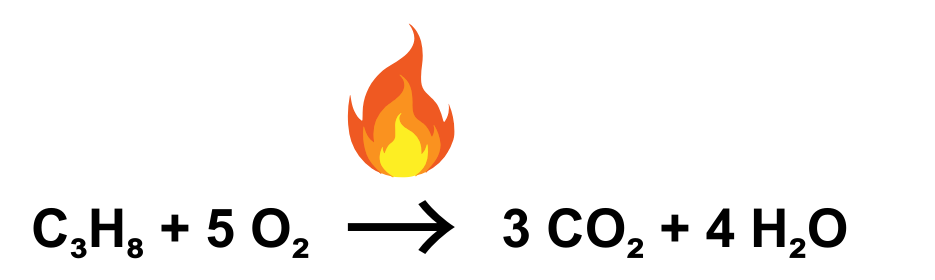
These natural A3 refrigerants consist exclusively of hydrogen and carbon. When flared in a controlled manner outdoors, they decompose completely into CO₂ and water vapour. As these refrigerants have no significant global warming potential, flaring is the safest method here to prevent dangerous gas build-ups at ground level.
Synthetic F-gases (e.g. R32, R1234yf or the rare A3 gas R161)
There is a strict ban on combustion on the construction site! As these gases are fluorinated, their combustion produces highly toxic decomposition products such as hydrogen fluoride (hydrofluoric acid) and gases similar to carbonyl fluoride. They must never come into contact with an open flame and must be extracted.
Step-by-step guide
The Mobile Gas Flare S is specifically designed for the temporary and controlled combustion of substances in the first group. It makes no difference whether propane, (iso-)butane or methane is to be burned. The process is divided into three simple steps.
- Define the appropriate safety zone and carry out a risk assessment. In doing so, ensure that there are no people or combustible materials within the hazard zone.
- Set up the Mobile Gas Flare S using the appropriate hoses and the necessary adaptors.
- Start the combustion process by activating the piezo ignition and then open the cooling circuit.
Need help selecting the right accessories for the Mobile Gas Flare?
If you have any questions about the required hoses, adaptors or other accessories, please contact our team by simply filling in the form below.
We would be delighted to help you choose the equipment best suited to your specific needs.
Important safety warning: Fire hazard in refrigeration oil!
Hydrocarbons such as propane dissolve extremely well in refrigeration oil (e.g. POE or PAG oil). Even if the system is depressurised and the flare goes out, the oil continues to emit gas continuously when heated.
Inerting (this is an absolutely essential step if hot work is to be carried out!): In accordance with DIN EN ISO 5149-4, refrigeration systems must be evacuated following controlled flaring to allow the dissolved refrigerant to diffuse out of the oil. The system must then be purged with an inert gas such as nitrogen, alternating with next evacuation, until no more flammable gas escapes.
Monitoring and documenting the flaring process
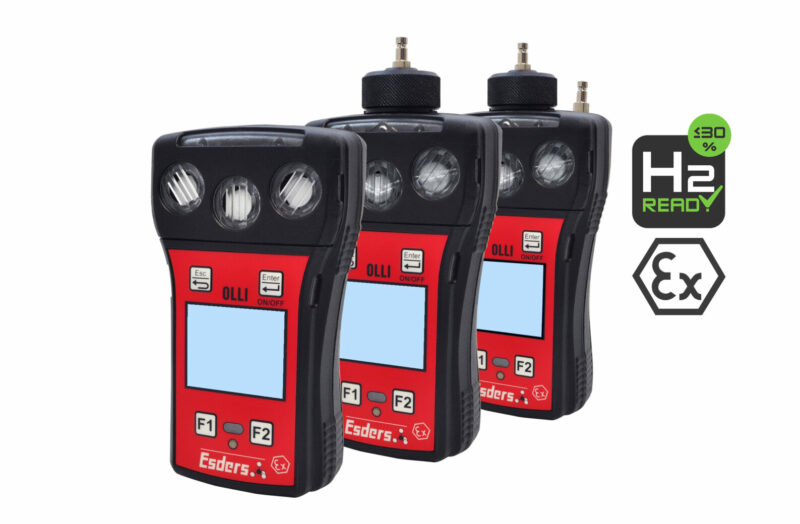
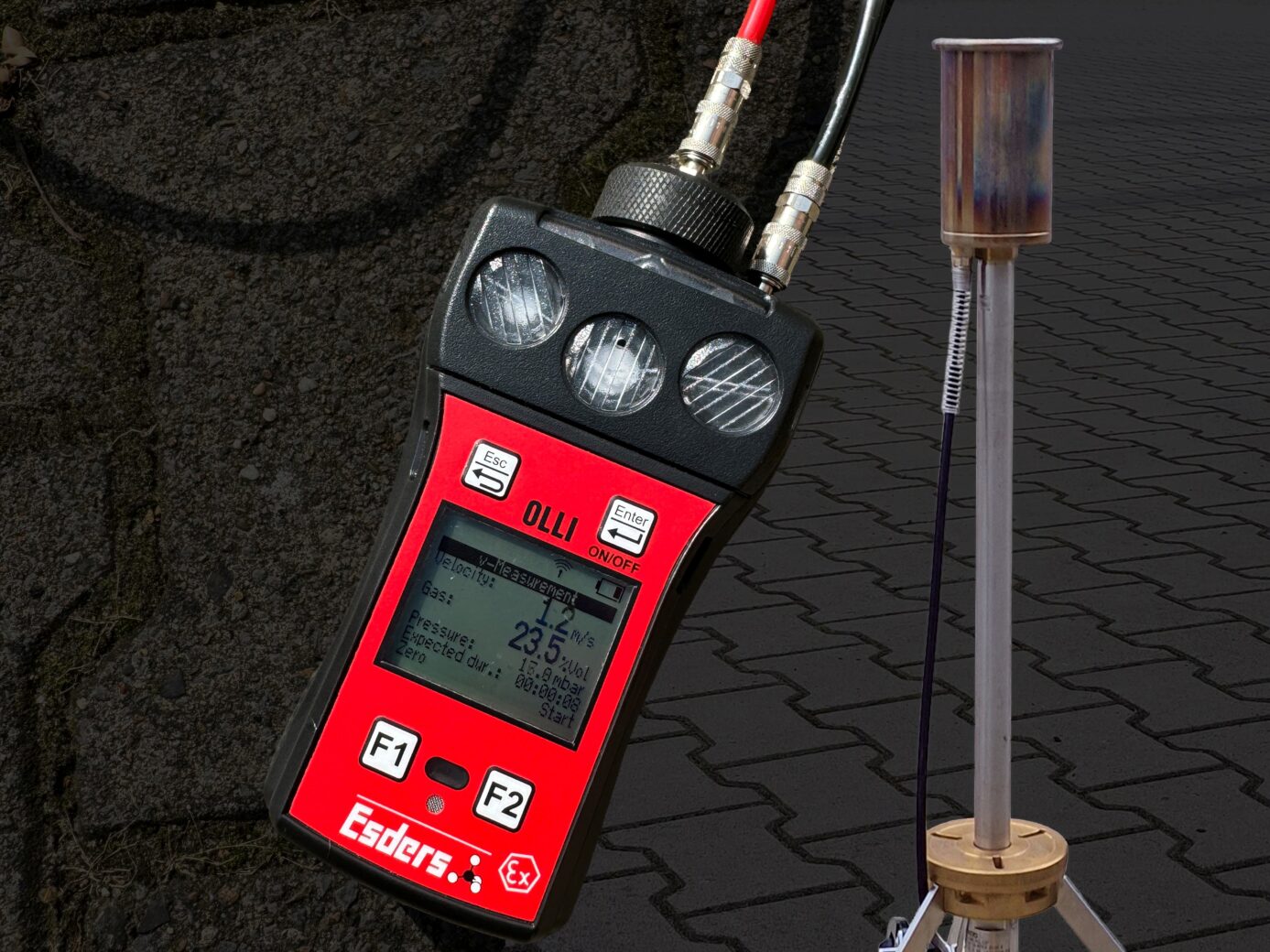
Using the OLLI and the V-Measurement, the flaring process can be logged and thus documented. This also allows the flow rate to be determined and adjusted to ensure clean combustion. At the same time, the gas measurement device can be used to verify and record that inerting has been successful by confirming the absence of combustible gas!
This ensures effective personal safety in practice through the controlled combustion of refrigerants!
Download a sample V-Measurement test report now!