Water is our most valuable resource globally. Nevertheless, significant amounts of this vital resource are often lost over long periods of time in many supply networks. This is usually caused by tiny leaks that develop underground and are invisible to the human eye. Reducing water loss and using resources more sustainably for longer – this is one of our goals in manufacturing suitable device solutions that are used for environmental and personal protection.
In this blog, we explicitly present the possibility of preventing leaks with tracer gas (forming gas).
Previous
Next
How to find an underground water leak?
Practical experience shows that not every testing method is suitable or even applicable in every situation. Thermographic inspections are highly dependent on external conditions and are often of limited use for underground pipes. Visual methods also often fail to provide reliable results for underground water pipes.
The decisive factor is therefore not so much the combination of as many methods as possible, but rather the targeted use of a method that addresses the cause directly. Tracer gas method fulfils precisely this requirement: it makes even the smallest leaks measurable – regardless of soil structure, pipe depth or environmental conditions.
Do you have questions about leak detection technologies using tracer gas? Simply fill out the form below to receive expert advice from our specialists.
Leak detection in large pipeline networks
The search for leaks in pipe networks is often like the proverbial search for a needle in a haystack. The damage is minor, the networks are large, and the conditions are complex. At the same time, leak detection must be highly accurate, because every confirmed leak requires construction work: excavations, traffic disruptions, interventions in existing infrastructure and the associated costs. Accordingly, such measures must be justified beyond doubt.
Tracer gas leak detection: a precise, safe and proven technology
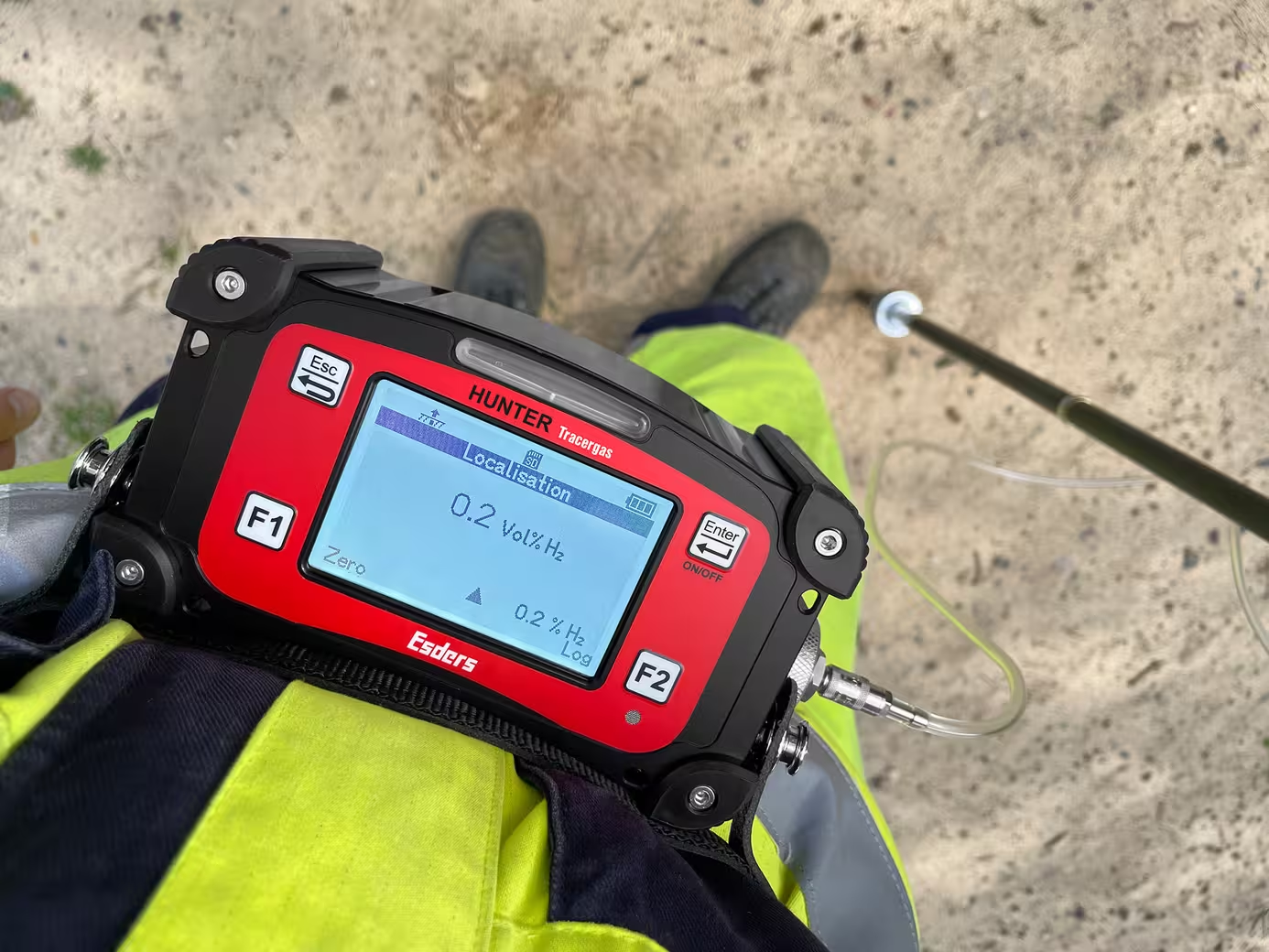
When using the tracer gas method, a specific gas mixture, usually consisting of 5% hydrogen and 95% nitrogen, is introduced into the pipe. Due to the small size of its molecules, hydrogen penetrates even the smallest cracks and can be detected using highly sensitive devices on the surface.
The forming gas used is:
harmless to health
non-toxic and non-corrosive
established for years in industry and supply networks
A brief fact check on water scarcity
Water shortages and supply gaps
Depending on the country and the condition of the infrastructure, the proportion of water lost can vary significantly – in particularly affected regions, losses can sometimes exceed 50% of the water supplied. In large cities in emerging economies, this often leads to water shortages and significant gaps in supply, as a large proportion of the treated water disappears before it can be used in households.
Preventing water loss for sustainable water supply
In regions with increasing water scarcity, including European countries such as Spain, Italy and Portugal, it is becoming clear that every loss prevented counts and has positive effects – not only now, but also for the future and subsequent generations. Efficient leak detection is no longer an optional tool here, but a central component of sustainable supply.
Applications of tracer gas leak detection across various industries
Indoor installations
Advantages: minimally invasive, no holes in walls or floors required
Applications: pipelines in walls, floors, shafts, distribution areas
How tracer gas leak detection supports resource conservation
Thanks to its versatility, tracer gas is ideal for use in sensitive infrastructures. Resource conservation thus begins even before construction work starts, because the sustainable effect lies not only in the measurement technology itself, but also in the consequences:
targeted repairs instead of large-scale earthworks
lower material and energy consumption
reduced water losses
minimal impact on the environment, traffic and residents
Precise leak detection thus makes a direct contribution to resource conservation.



.jpg?width=100)
.jpg?width=100)