
Menu
Privacy Settings
By visiting our online presences in social networks

By visiting our online presences in social networks your personal datat is also processed there by the respective provider. Bitte beachten Sie, dass Sie genauen Umfang, Please note that the exact scope, purpose, legal basis, storage period and your rights with regard to these processing procedures of your personal data must also be taken from the details of the respective provider.

Due to the integration of services of third parties

Due to the integration of services of third parties on our website, personal data of you could be processed by the respective provider. Please note that in this case you must also refer to the information provided by the respective provider regarding the scope, purpose, legal basis, storage period and your rights regarding these processing procedures of your personal data.

Header LDAR Gascar Ausschnitt Front

LDAR: Leak detection in gas pipeline networks

Systematically detect, locate and document gas leaks using the modular system

Regular leak detection in gas pipeline networks is a key component of safe network operation and goes hand in hand with the EU Methane Regulation. LDAR (Leak Detection and Repair) combines systematic leak detection with the subsequent handling and documentation of identified leaks. Our modular system helps to carry out this process in accordance with the regulations, from leak detection and quantification right through to legally compliant documentation.

In this section, you will find everything you need to know about how to inspect gas distribution networks efficiently, whether through a traditional inspection on foot, by e-scooter, or via a vehicle-based pipeline network inspection. This allows different methods to be deployed on a case-by-case basis, tailored to the network structure and environment.

What are the challenges of leak detection in gas pipeline networks?

Mensch auf einem E-Scooter für die Lecksuche

Gas networks run through a wide variety of environments: through city centres and residential areas, along country roads and across areas that are difficult to access. A single type of inspection is therefore not equally suitable for every section of the network.
Added to this are the requirements regarding sensitivity, selectivity and documentation. Gas escaping from underground pipes must be reliably detected at the surface. At the same time, it is important, for example, to be able to distinguish natural gas from natural sources of methane, such as biogas, and to avoid unnecessary localisation work.

More information on deadlines, limit values, quantification and reporting can be found on our page on the EU Methane Regulation.


LDAR in practice: Which method is suitable in which case?

Maximum safety with the Laser HUNTER

The centrepiece of the modular system for leak detection, localisation and quantification

Flexibility in gas pipeline network inspection with the Modular System

The Modular System centred around our Laser HUNTER is not only designed for high-precision leak detection in gas pipeline networks, but also offers flexible application depending on the operational scenario – whether it be a manual inspection, for urban routes, hard-to-access terrain or as a vehicle-mounted solution for efficient area-wide inspection.

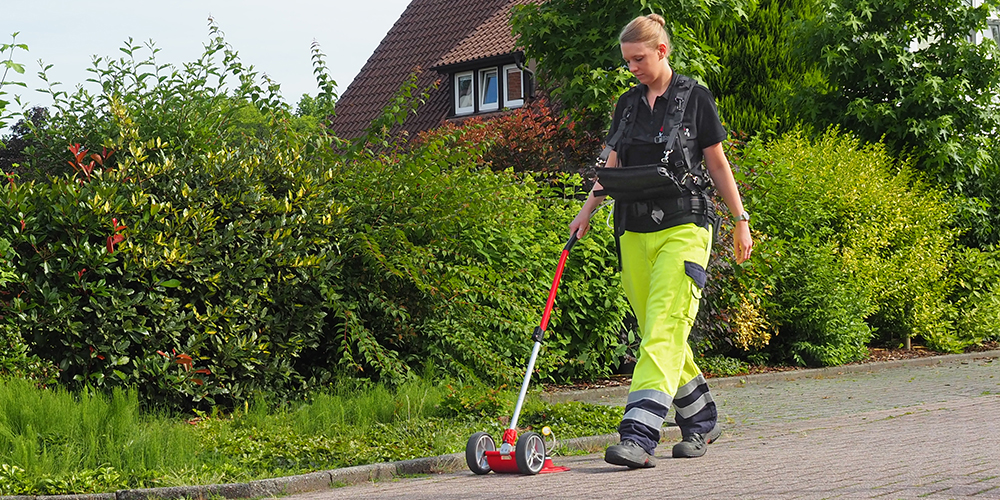
Leak detection on foot

For short distances, pavements and hard-to-reach areas. Depending on the surface, the inspection is carried out using, for example, a carpet probe or a bell probe.

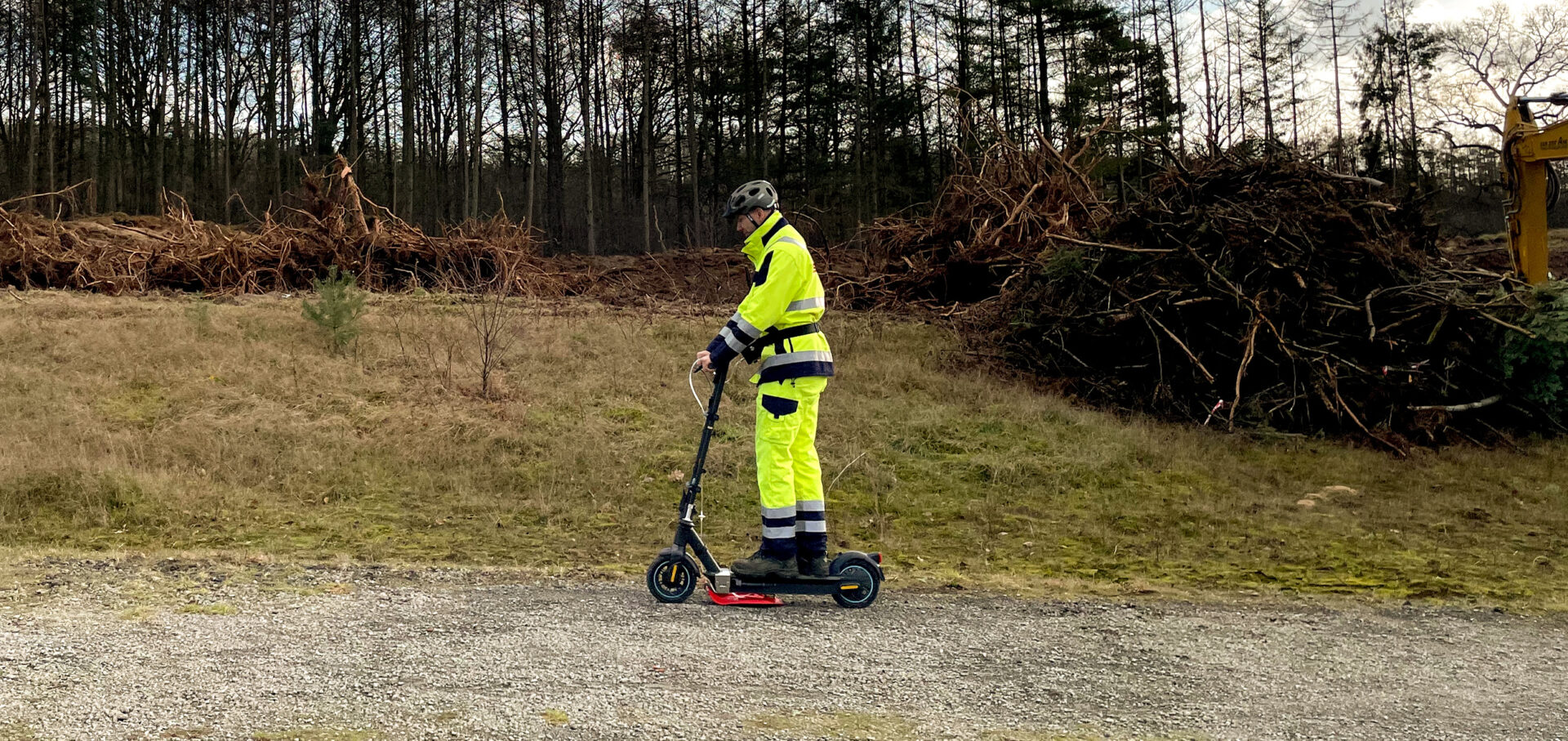
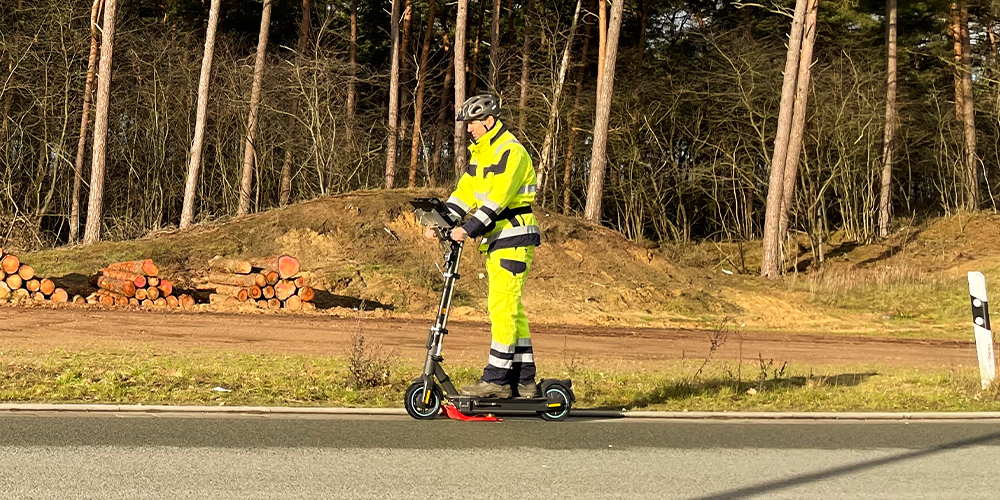
Leak detection using e-scooters

For longer distances and urban areas where a traditional walk-through inspection would be time-consuming, but where flexibility is required.

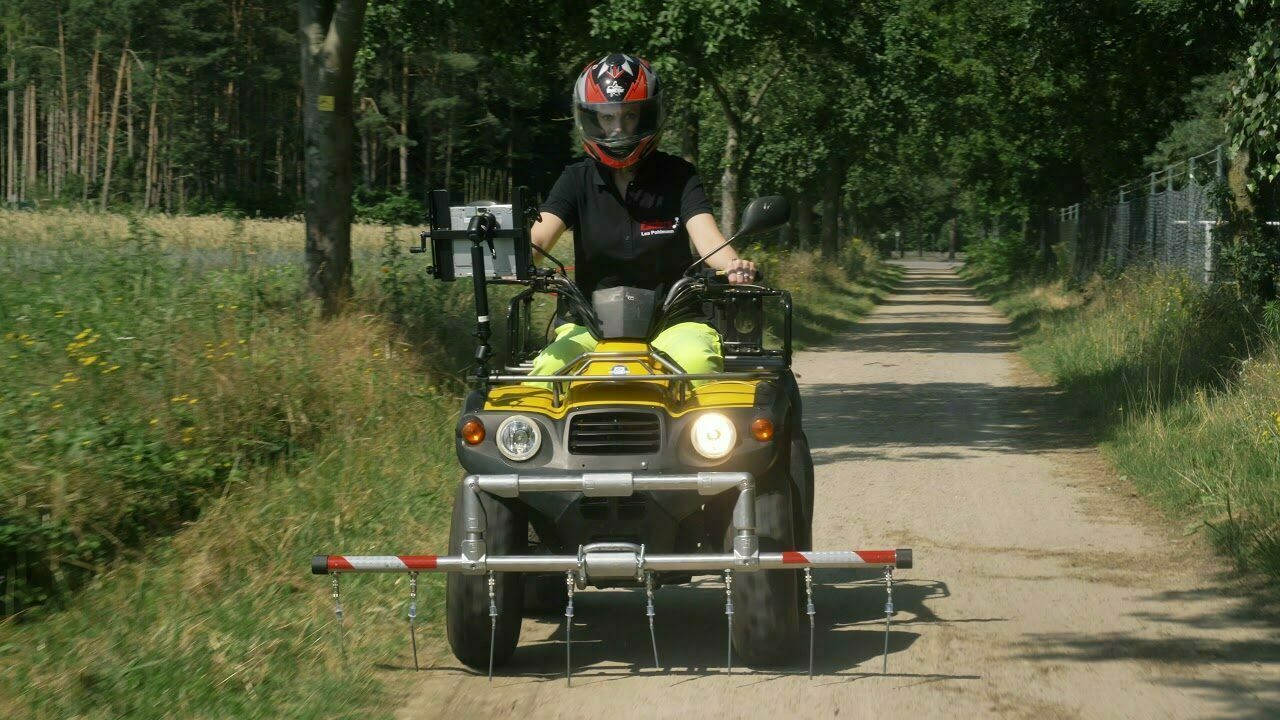
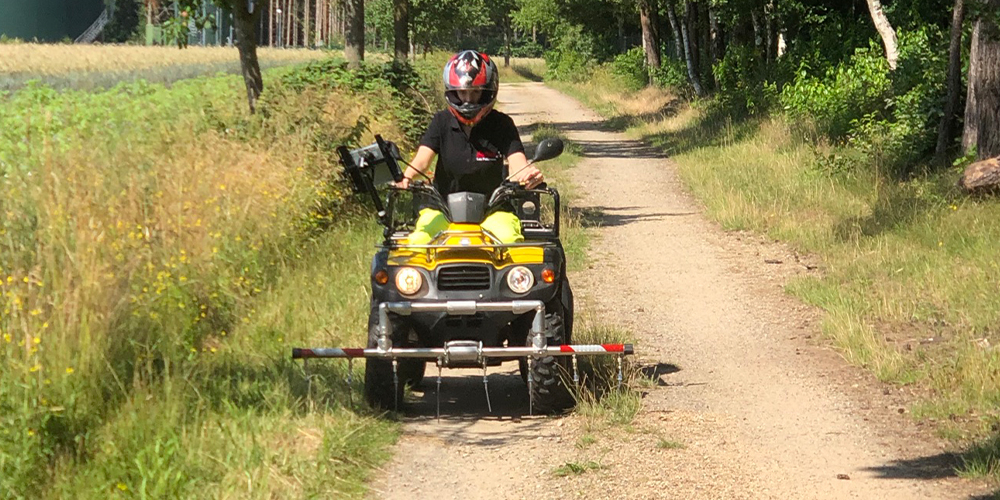
Leak detection using a quad bike

For extensive and rough-terrain sections of the network that are difficult to access with a standard vehicle.

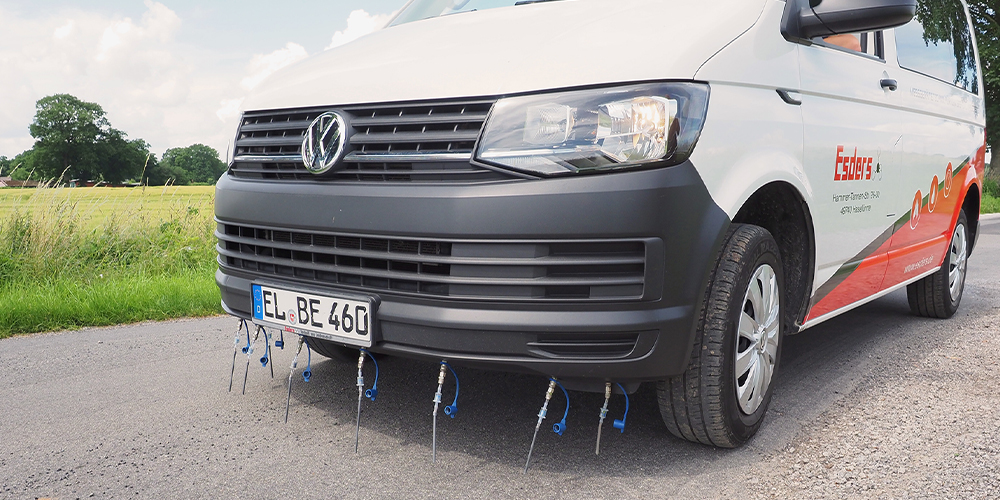
Vehicle-based gas leak detection

For long pipelines along roads open to traffic. Just as with our quad bike – and, optionally, with the scooter or the carpet probe – the GasCar enables continuous monitoring. This combines three functions whilst on the move: detection, positioning data and documentation.

The software behind the modular system: Esders Pi NOTE

The GIS software Esders Pi NOTE standardises the recording and documentation of inspections of underground gas pipelines in accordance with DVGW G 465. In the field, the mobile client, in conjunction with the gas detector, directly records any gas leaks at the surface. The analysis client consolidates the measurement and route data for evaluation, thereby ensuring complete and audit-proof LDAR documentation.

Want to find out more about Pi NOTE?

Simply fill in the form below, and we’ll be in touch shortly!

Practical examples and areas of application

You can read about how LDAR can be implemented in practice as an end-to-end process in our case studies.

Related products

Laser HUNTER
Gas detection & Gas measurement device
Laser HUNTER Gas detection & Gas measurement device
Highly sensitive and selective gas detection & gas measurement device with laser technology for the inspection of underground gas pipes using suitable probes (e. g. carpet probe). The device can also be used for the vehicle-based pipeline inspection. With built-in diaphragm pump, wireless data transfer and rechargeable Li-Ion battery. One out of two different laser modules can be assembled: - single laser module for methane or - dual laser module for methane & ethane Moreover, the device can be equipped with additional sensors to enable further applications. The following applications are possible: - Testing of underground pipes - Testing of exposed pipes in buildings or outdoors - Testing of soil air for localisation (optional) - Purging of gas pipes (optional, only in combination with soil air testing) - Quantification in underground or above-ground installations (optional) - Recording of methane peaks (optional) - Gas analysis (with dual laser module) Operating time: up to 10 hours Measurement range: depending on built-invsensors Dimensions (LxWxH): 143 x 240 x 85 mm Weight: 2.1 kg Temperature ranges: 0 °C to 40 °C (dual laser module) -10 °C to 50 °C (single laser module)
To the shop
Esders Pi NOTE mobile GIS client
The Esders Pipeline inspection NOTE (Pi NOTE) is a GIS (geo-information system) based client specially developed for the systematic pipeline inspection according to German DVGW G 465-1 The Esdres Pi NOTE mobile client comprises the following possibilities: - Wireless device connection for data transfer - GPS-based positioning and automatic centering of GIS-data - Documentation of GPS position, measuring data, sensitivity check of measuring device, date & time, defects, notes, accessible and non-accessible areas (e. g. houses service connection), classification of leakages - Generation of relevant drawings of leakages on site - Administration of measuring campaigns and examination sections The mobile optimized view enables the complete documentation during inspection, e. g. with enlarged icons Prerequisite for purchasing the software is the conclusion of a corresponding maintenance contract.
To the shop
Carpet probe TS14 with joint
with flexible joint unit Carpet probe with optimised suction area, highly flexible hose with coupling and telescopic handle. The warranty of the carpet mat is 3 years.
To the shop
E-scooter Laser HUNTER V2
Ninebot MAX G2 D E-scooter with carpet probe for professional gas leak detection. Includes filter and hose for connecting the measuring device (Laser HUNTER). Insurance is required for use of the scooter on public roads! The registration of the scooter is not included in the scope of delivery and must be carried out by the customer. The Laser HUNTER is also not included in the scope of delivery and must be ordered separately.
To the shop
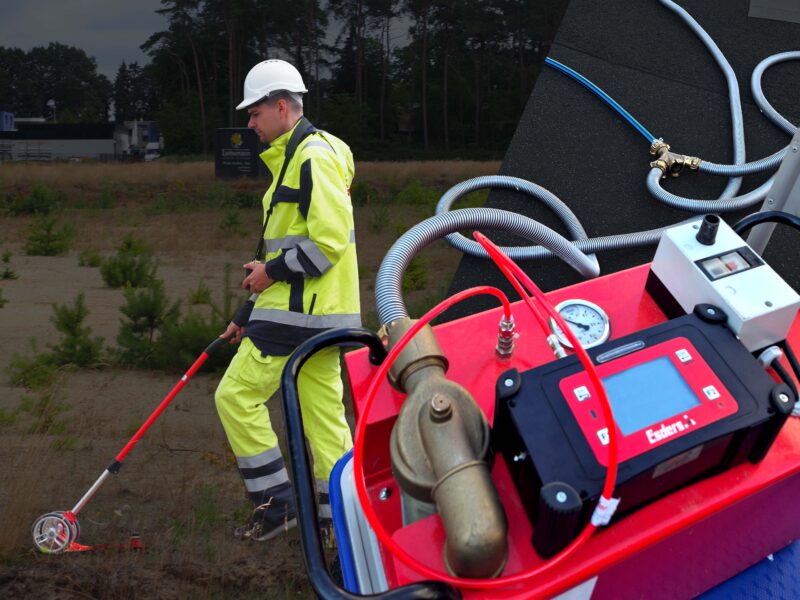
GasCar Laser HUNTER standard
Pump unit for use with a Laser HUNTER. Possibility to clean the suction system by backwashing using an integrated compressor. Additional components are required for a functional system for vehicle-based pipeline inspection and must be ordered separately: - Laser HUNTER (item 251220). - Intake unit & probes - Accessories, e.g. hoses - Test system - Notebook, notebook holder - GIS software (Esders PI NOTE) - GPS Receiver
To the shop
GasCar Laser HUNTER plus
Pump unit for use with two Laser HUNTERs for separate intake and analysis of the gas flow via the left and right side of the vehicle. Possibility to clean the suction system by backwashing using an integrated compressor. Additional components are required for a functioning system for vehicle-based pipe network inspection and must be ordered separately: - 2x Laser HUNTER (item 251220). - intake unit & probes - accessories, e.g. hoses - test system - notebook, notebook holder & software - GIS software (Esders Pi NOTE) - GPS receiver
To the shop

Frequently asked questions about LDAR

What does LDAR stand for?

LDAR stands for Leak Detection and Repair. The aim of an LDAR programme is to systematically detect, document and subsequently address leaks. In the context of gas networks, LDAR plays an important role both in ensuring operational safety and in reducing methane emissions.

During above-ground pipeline network inspections, the pipeline route is checked using sensitive gas detection technology. Gas escaping from a leak can spread through the ground and reach the surface. There, it is drawn in using suitable probes and detected by the measuring device.

Highly selective measurement technology capable of detecting even low concentrations of methane is suitable for the systematic inspection of gas pipeline networks. The Laser HUNTER utilises laser technology for this purpose and, depending on the model, can measure both methane and ethane. Ethane analysis helps to distinguish natural gas from biogenic sources of methane.

Find out more about the latest technology for inspecting gas pipeline networks here.

No. Depending on the environment and the length of the section of pipeline, the pipeline network inspection can be carried out on foot, by e-scooter, by quad bike or using a GasCar. This allows the method to be adapted to urban areas, rural stretches and terrain that is difficult to access.

Leak detection involves determining whether gas is escaping, identifying the affected area and classifying it. Quantification then involves determining the amount of methane emissions released. Both steps can form part of a comprehensive LDAR process.

Transparent documentation shows, amongst other things, which sections of the network have been inspected, where anomalies were detected and what the measured values were. Digital GIS solutions can link measurement and location data together whilst the pipeline network is being inspected.

Further information on gas pipeline network inspections

Blog

Request a consultation with a specialist or a live demonstration on how to detect gas leaks

We’ll answer your questions about detection, testing methods, or our measurement technology. Simply leave your contact information.
We’ll get back to you as soon as possible.

Consultation

Would you like to find out more about Esders, our technologies and, above all, the opportunities available to you? We’d be happy to advise you, with no obligation.

Live Demonstration

Whether in person or via an online meeting: we’ll demonstrate our products and help you find the device that best suits your needs

Newsletter

Don’t miss out on the latest news about our technologies and key regulations – sign up for the newsletter now.
keyboard_arrow_up