Menu

EU Methane Regulation: How to reduce methane emissions and document them correctly

From leak detection and quantification to reporting: how network operators, utility companies and service providers can meet all the requirements

The EU Methane Regulation requires operators of gas infrastructure to systematically monitor, document and reduce methane emissions. Precise leak detection, increasingly accurate quantification and repairs are therefore crucial to keeping gas leaks to a minimum and thus effectively reducing emissions in the long term. We provide a comprehensive overview of the regulation’s key requirements, as well as best practices for methane reduction.

What challenges does the EU Methane Regulation pose for network operators?

Key deadlines set out in the EU Methane Regulation

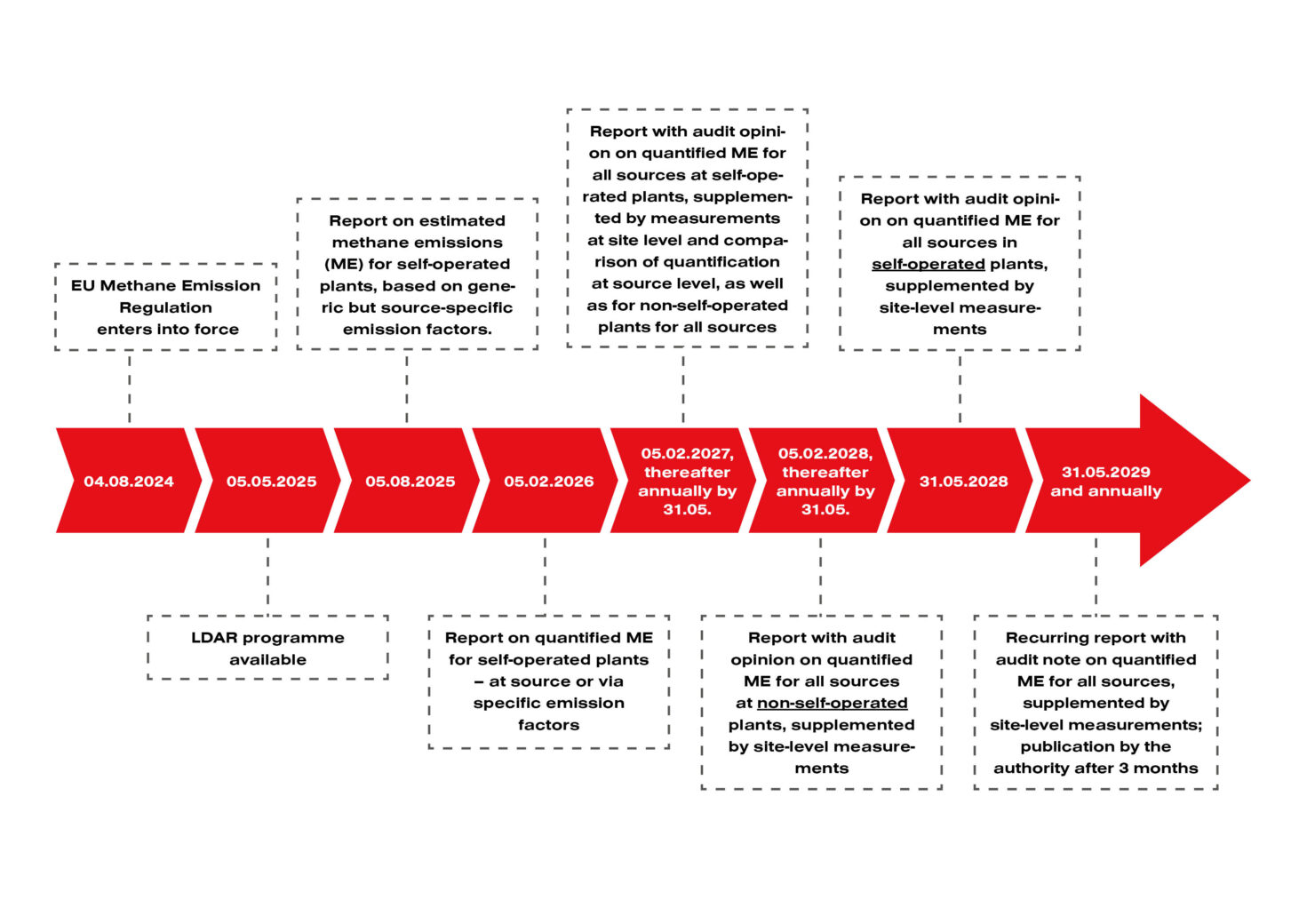
Infographic EU Methane Regulation implementation deadlines

The initial deadlines under the EU Methane Regulation relate in particular to the systematic detection of leaks and the quantification of methane emissions. Companies must be able to demonstrate how emissions are recorded, measured and reduced. At the same time, documentation and reporting requirements are being gradually expanded.
Compliance with these requirements is not only relevant for climate protection, but also for the legal certainty of network operators and energy suppliers. The regulation provides for regular inspections and effective sanctions in the event of non-compliance. Implementing suitable processes and measurement technology at an early stage helps to minimise risks and meet future requirements efficiently.

What are the steps involved in leak detection and emission assessment?

LDAR processes are comprehensive and, in addition to leak detection, also involve complete documentation. Based on this, a reporting obligation regarding detected emission sources and specific factors has been in place since February 2025. The quantification requirements under the EU Methane Regulation are becoming increasingly specific.
We will keep you up to date at all times and provide you with the most important information on leak detection, quantification, flaring and the documentation of measurement results, as well as suitable equipment solutions.

Leak detection under the EU Methane Regulation: Detecting methane emissions at an early stage

The EU Methane Regulation requires gas infrastructure operators to carry out regular LDAR (leak detection and repair) procedures. The aim is to identify, document and reduce methane emissions at an early stage. The requirements vary depending on the type of installation: whilst above-ground installations can be checked directly for gas leaks, leak detection in underground gas pipelines requires specialised measurement methods and sensor technology. Suitable technologies are available for both areas of application to ensure the legal requirements are met efficiently.

Leak detection on above-ground installations and pipelines

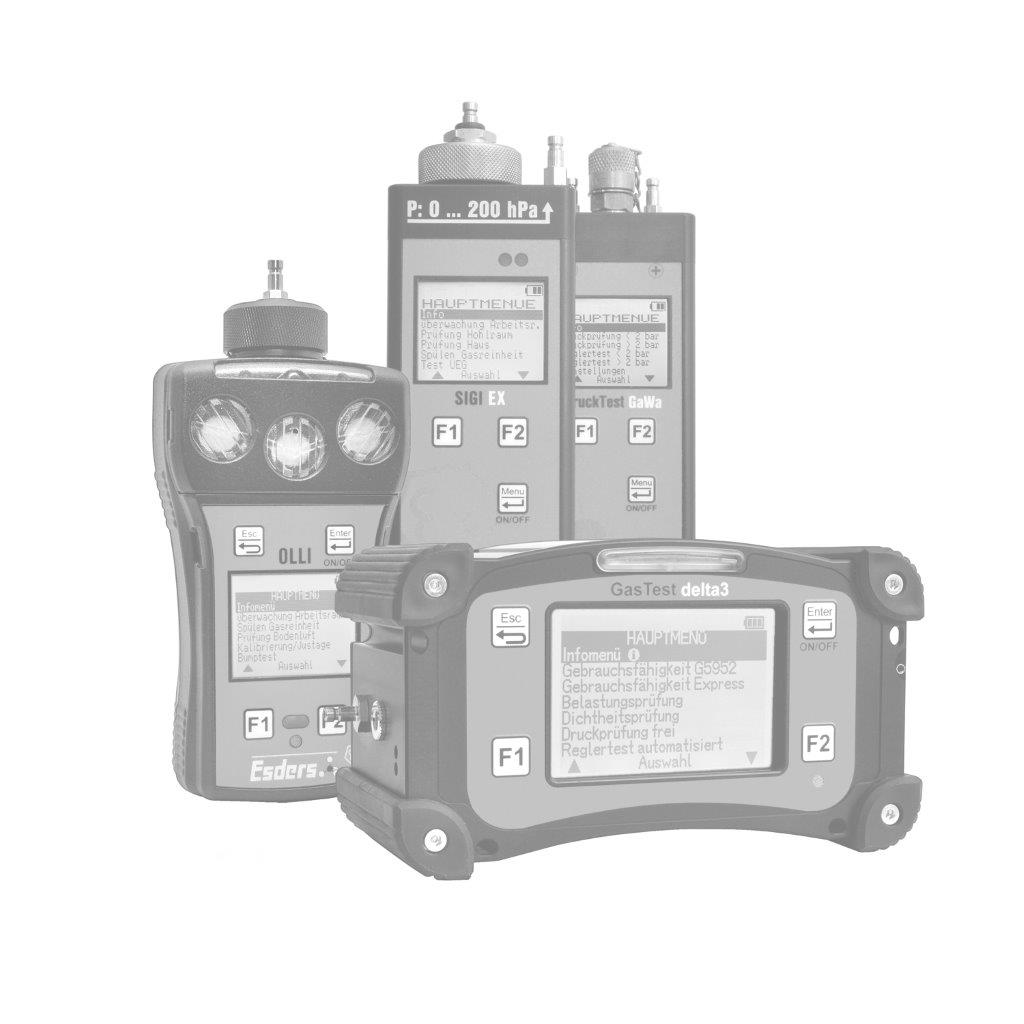
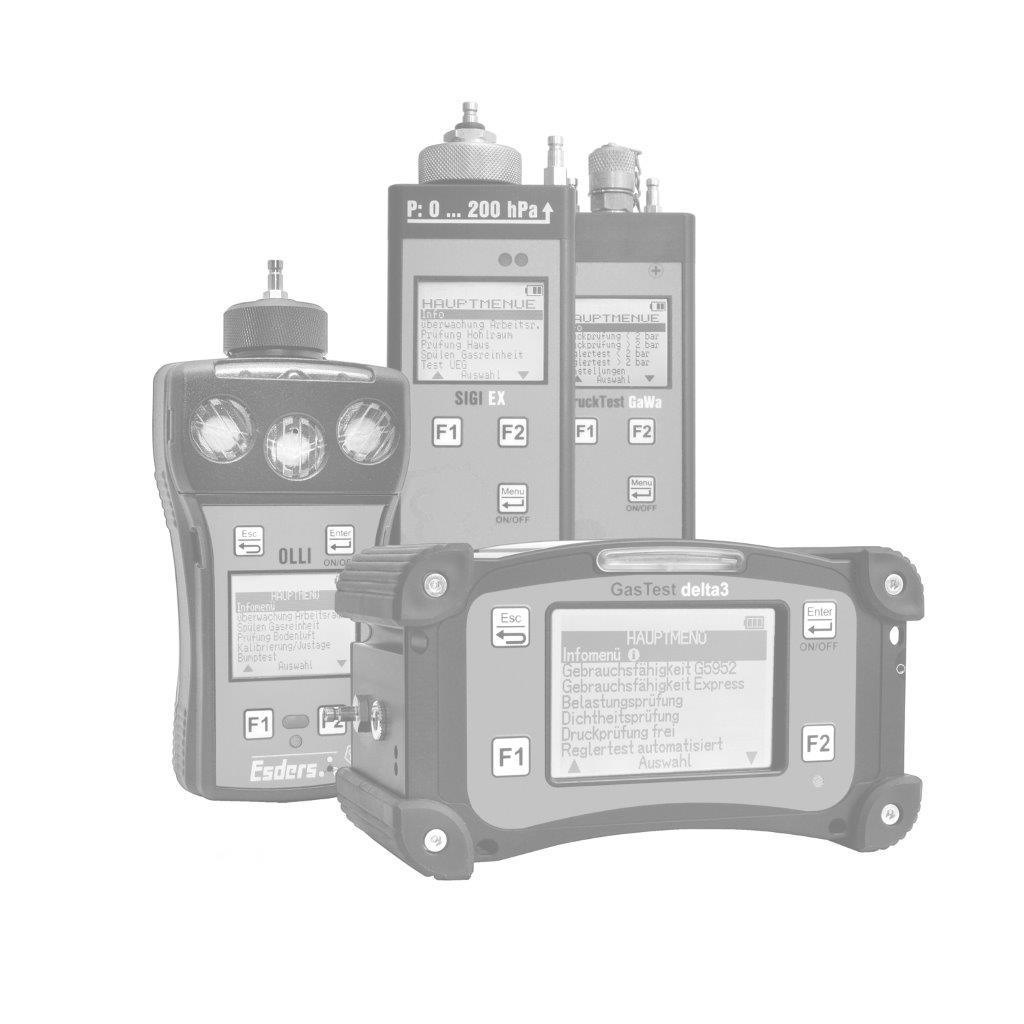
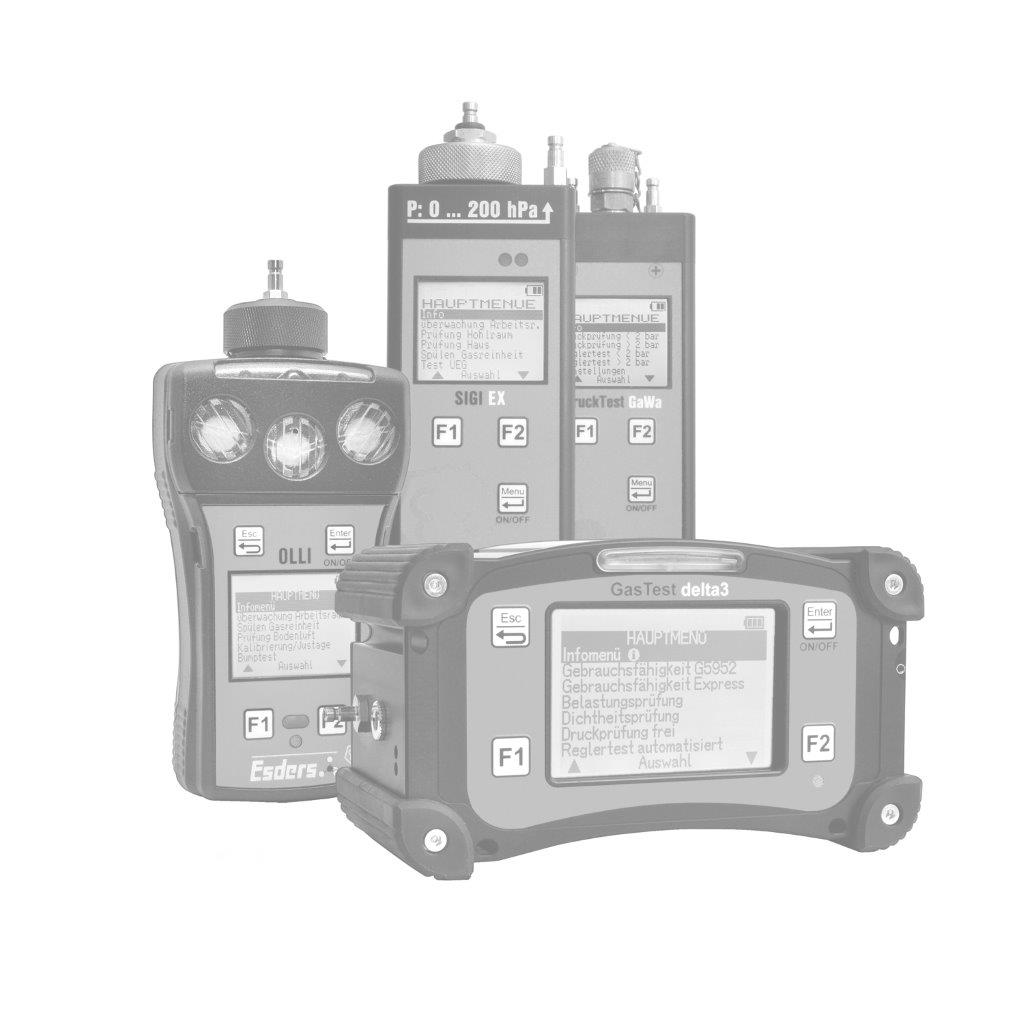
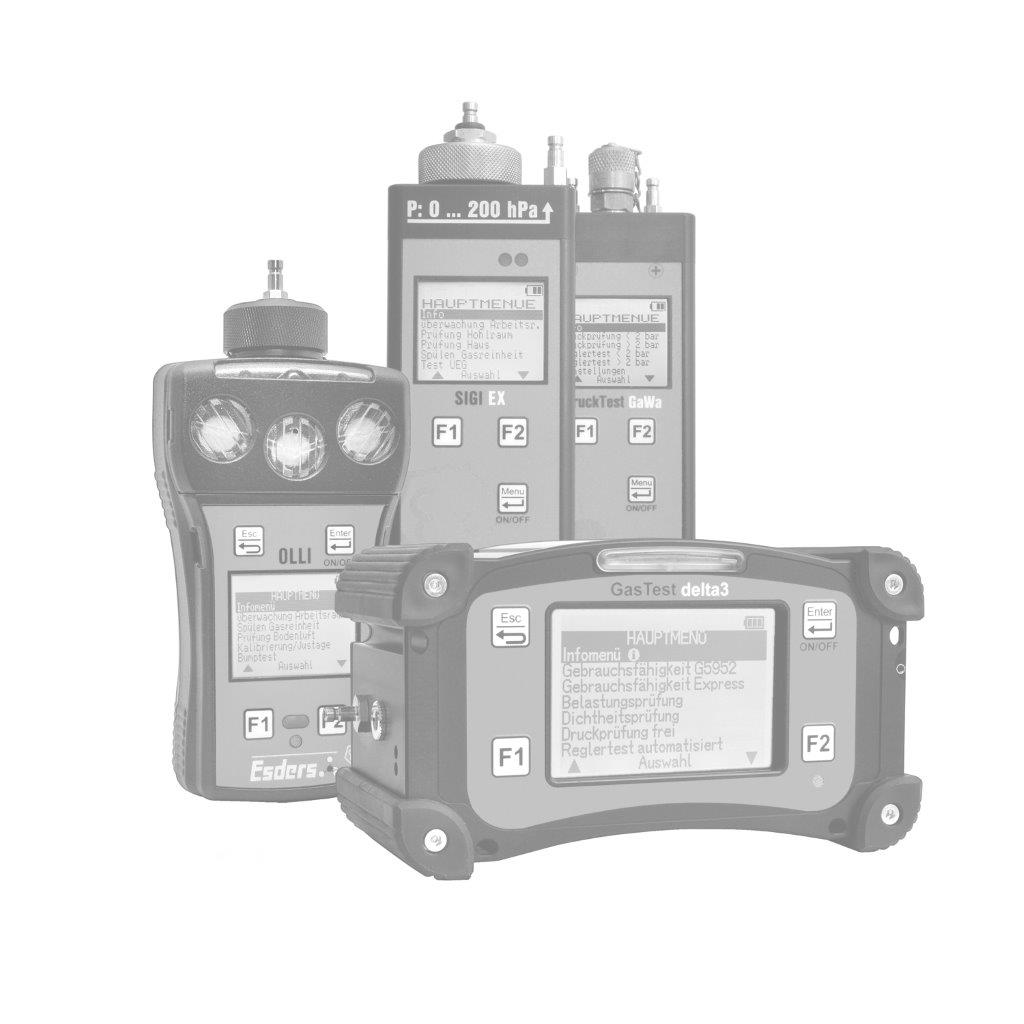
Reliable detection of methane and other gases is essential for the implementation of LDAR programmes on exposed pipework, stations and technical installations. The OLLI multi-gas detector assists operators in carrying out systematic leak detection and meets the requirements for use in potentially explosive atmospheres (ATEX). This enables emissions to be detected at an early stage, documented and rectified in a targeted manner.

Leak detection in underground gas pipes

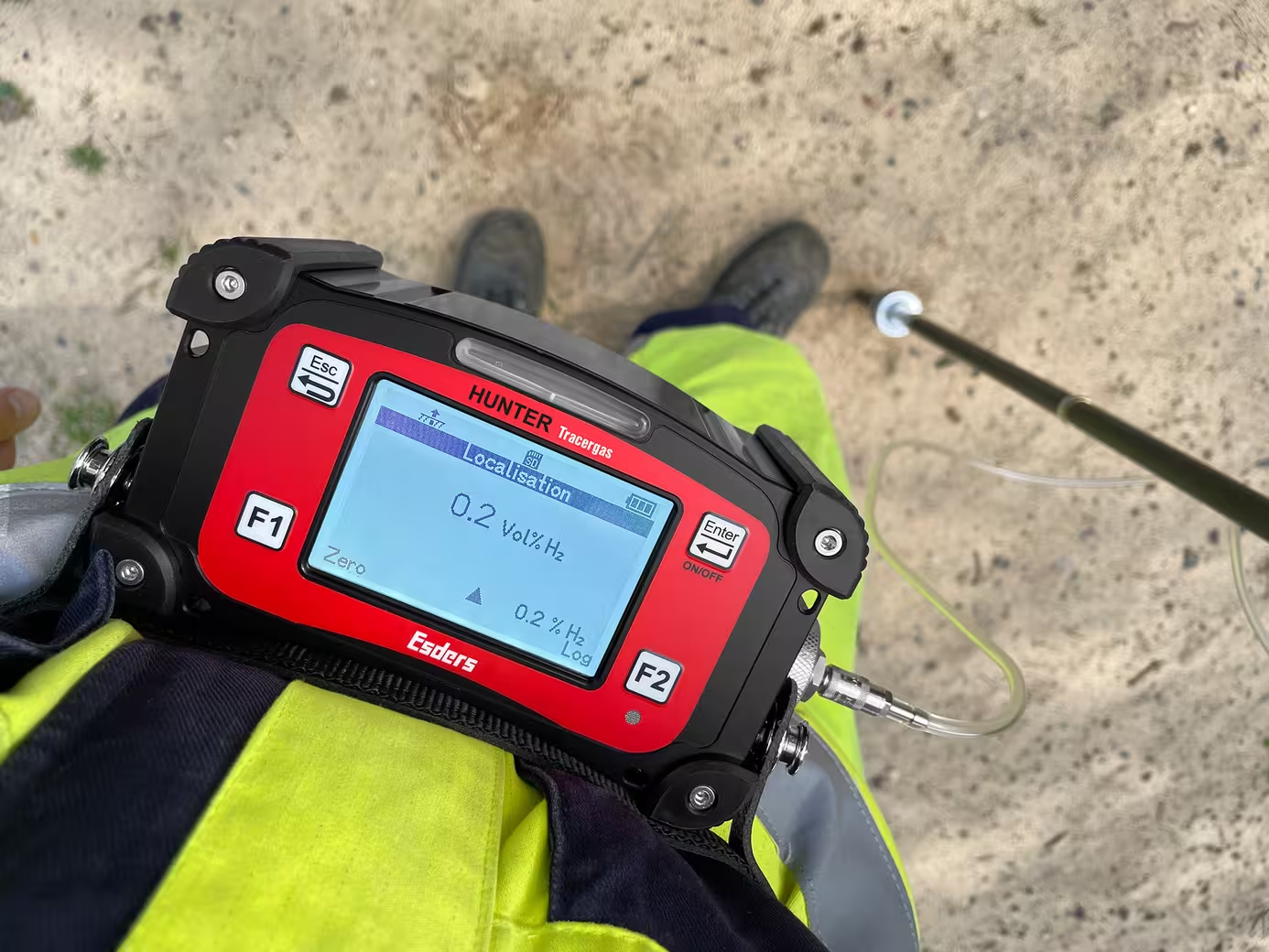
Even the smallest leaks in underground pipe networks are often difficult to locate. The Laser HUNTER uses state-of-the-art laser technology to precisely detect methane (CH₄) and, optionally, ethane (C₂H₆). This enables leak points to be identified quickly and distinguished from natural sources of methane. This helps network operators to comply with the leak detection requirements set out in the EU Methane Regulation.

The EU Methane Regulation requires operators of gas infrastructure not only to detect methane emissions, but also to quantify them. The quantification of methane emissions forms the basis for reporting, prioritising repair measures and providing evidence to the authorities. Depending on the specific application, different measurement methods are used to reliably determine and document emission rates.

Quantification of methane emissions from the gas distribution network

The EU Methane Regulation provides the common legal framework. At the same time, national regulations, industry codes and technical standards continue to play an important role in determining how inspections and measurements are carried out in practice.

In Germany, for example, recognised technical standards published by the DVGW are available to facilitate the practical implementation of the Regulation’s requirements. Below, we will take a closer look at Germany’s experience with practical guidelines for the quantitative assessment of methane emissions.

The DVGW G 465-5 technical guideline describes the determination of methane emissions from gas pipes in the gas distribution network up to 16 bar. In addition to the detection of leaks, this also includes the quantification of emission rates and the identification of the components causing them. The data obtained forms the basis for targeted maintenance and compliance with statutory reporting obligations.

Which methods are used to quantify methane emissions

The metrological determination of methane emissions is described in the DVGW G 425 series of standards. Different methods are used depending on the installation conditions and the type of system. For underground gas pipelines, specific measurement methods in accordance with DVGW G 425-2 are applied, whilst for above-ground installations, the bagging method in accordance with DVGW G 425-3 is the established practice, although this method may also be used on underground pipelines. Furthermore, DVGW G 425-1 describes additional methods for quantification at source or site level. The selection of the appropriate method depends on site conditions, as well as the requirements for accuracy, documentation and reporting.

When carrying out work on gas pipelines, gas stations or storage facilities, it is often not possible to completely avoid residual gases. The EU Methane Regulation aims to minimise direct emissions through controlled processes. In this context, flaring natural gas is a significantly lower-emission alternative to the direct release of methane into the atmosphere. Modern gas flares enable the safe and efficient combustion of residual gases and help network operators to sustainably reduce operational methane emissions.

When are Mobile Gas Flares used?

Mobile Gas Flares are used, for example, during the commissioning, decommissioning, depressurisation or maintenance of pipelines. They enable the controlled flaring of natural gas, hydrogen and other flammable gases and help to prevent emissions during planned work on the gas network. Depending on the network level and the required throughput, different sizes are available for domestic connections, distribution networks, as well as medium- and high-pressure networks.

Recording of flared gas volumes in accordance with the EU Methane Regulation

In addition to reducing methane emissions, documentation during the flaring of residual gases is a key consideration. The EU Methane Regulation requires the traceable recording and reporting of such measures. In combination with modern flow measurement technology, the volumes of gas flared can be recorded with precision. This facilitates compliance with statutory reporting obligations and provides transparency regarding the methane emissions that have actually been avoided.

Product demonstration: Esders Mobile Gas Flares - key features and differences

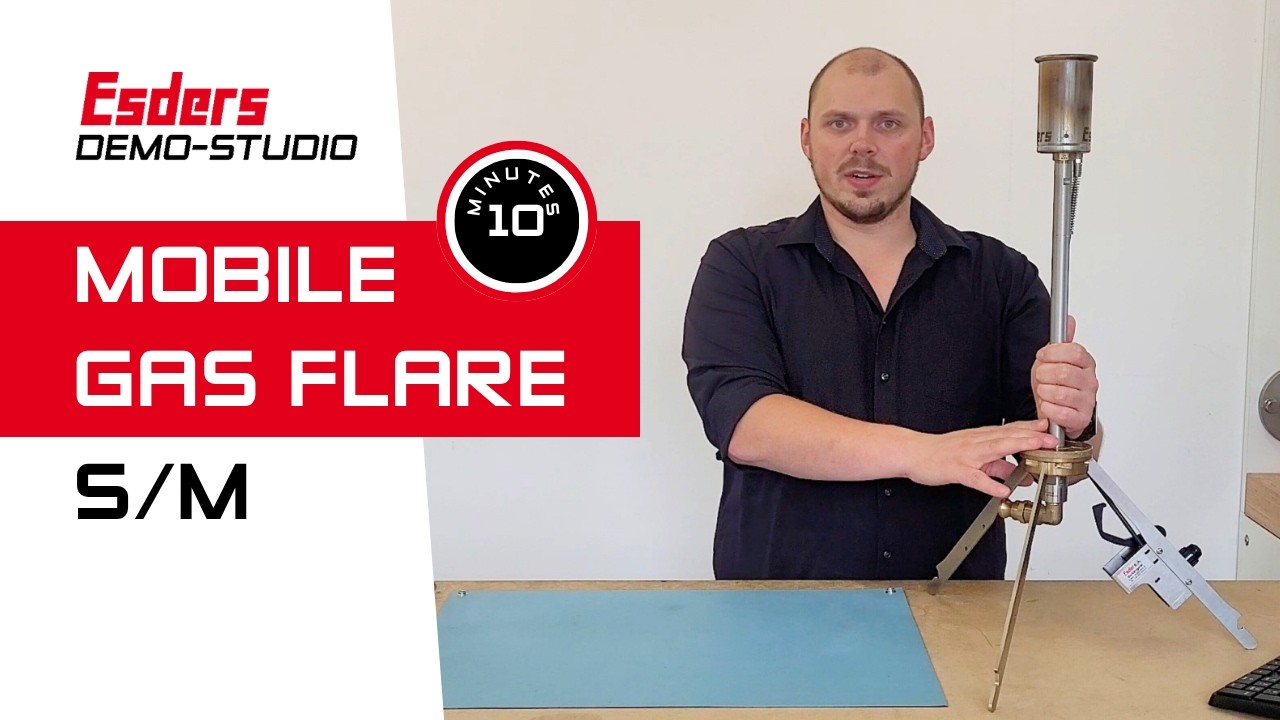
Would you like to find out how the M and S Mobile Gas Flares can make your work with pipeline networks easier? In our exclusive video demonstration, we explain in detail how this system works. In just a few minutes, you’ll learn all about the S and M Mobile Gas Flares, their key features and differences.

Fill in the form and watch our video straight away!

YouTube thumbnail - Mobile Gas Flare S/M product demonstration

The EU Methane Regulation requires operators of gas networks to not only monitor and reduce methane emissions, but above all to document them in a traceable manner and report them regularly. Comprehensive reporting requires the structured recording of measurement values, quantification data and measures taken. Digital processes help to reduce the administrative burden of documentation and to provide the required evidence efficiently.

What data needs to be collected for reporting?

Under the EU Methane Regulation, operators are required to document information on detected leaks, quantified methane emissions, repairs carried out and flaring processes. The quality and traceability of this data form the basis for regulatory reporting and internal analyses. Digital recording directly during the measurement reduces sources of error and simplifies subsequent reporting obligations.

From measurement to the final methane emissions report

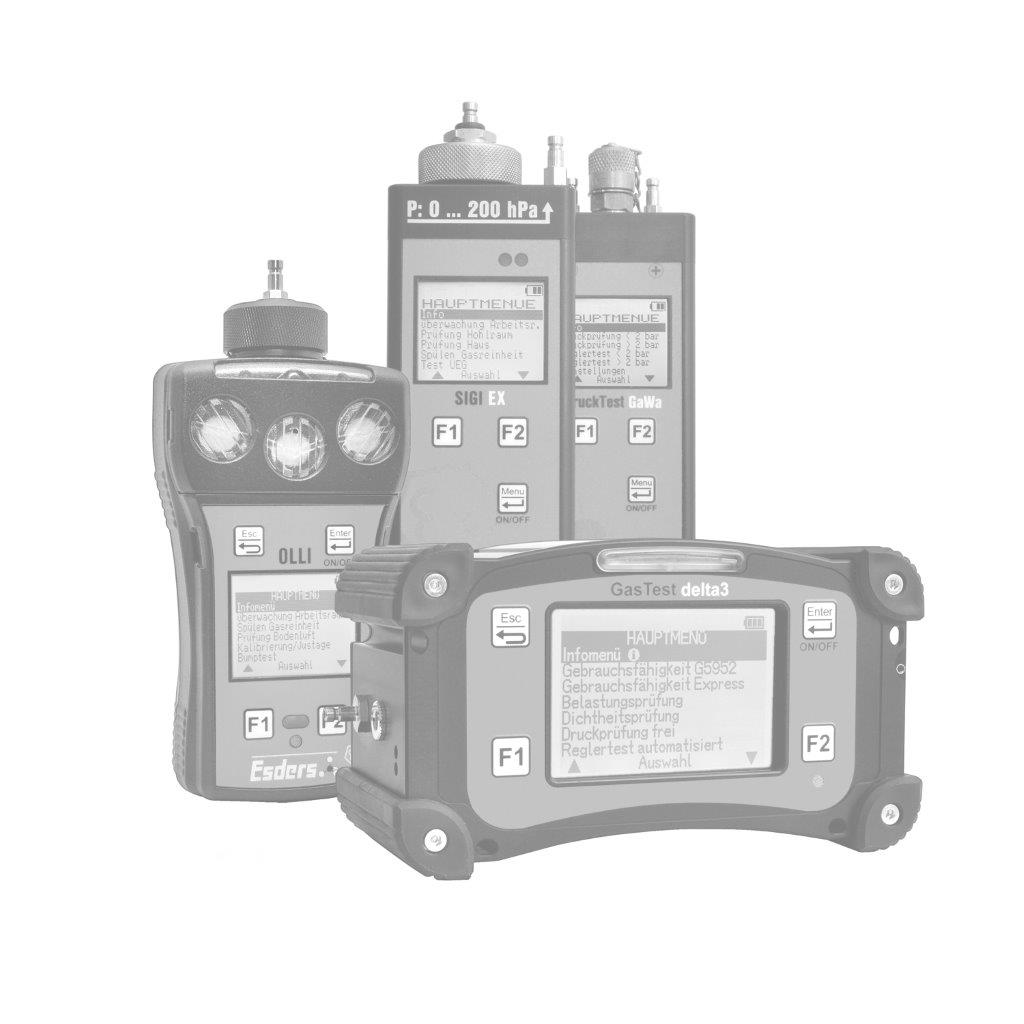
Devices such as OLLI, HUNTER and Laser HUNTER do more than just assist with leak detection and the quantification of methane emissions. By connecting to Esders Connect, measurement data can be transmitted wirelessly, stored and used immediately for documentation purposes. This creates a seamless workflow, from data collection in the field right through to the production of reliable evidence for reports and audits.

Practical examples and areas of application

In our case studies, we explain the procedures and processes relating to the EU Methane Regulation as they apply to the day-to-day work of network operators, utilities and service providers.

Monitoring and documenting methane emissions are becoming an increasingly important part of modern gas network management. While leak detection and localisation have long been standard practice for natural gas operators, increasing attention is now being given to methane emissions quantification – determining how much methane is actually entering the atmosphere.

For network operators, utility companies and service providers, quantifying methane emissions offers much more than simply an assessment of gas losses. It supports risk-based maintenance planning, emissions reporting, regulatory compliance and the prioritisation of repair work.

What is methane emissions quantification?

Methane emissions quantification is the process of measuring or estimating the amount of methane released from a source, usually expressed as a flow rate (e.g., g/h or kg/h).

While leak detection answers the question “Is there a leak?”, methane emissions quantification answers “How much methane is escaping?”

From methane leak detection to emission quantification

The assessment of an underground methane leak usually takes place in three stages: detection, localisation and quantification.

Once a leak has been detected and its location confirmed, the methane emission rate can be measured and documented. Accurate quantification provides the data needed to determine the severity of the leak and to make informed maintenance decisions.

Esders modular system with the Vakumobil and Bagging system for gas leak quantification

Challenge: Locating underground methane leaks

Methane escaping from underground pipelines does not usually reach the surface directly above the leak. Instead, it migrates through the surrounding soil before reaching the atmosphere along the path of least resistance. This makes it difficult to accurately estimate the methane emission rate.
Consequently, the challenge lies not only in pinpointing the exact location of the leak but also in reliably quantifying the amount of methane being released. To address this, specialised measurement methods have been developed for underground pipeline applications.

Methods for quantifying methane emissions

Several methods are available for measuring and quantifying methane emissions, depending on the type of installation and measurement conditions.

For underground gas pipelines, two practical approaches are commonly used:

  • the Bagging (Surface Enclosure) Method, which captures methane released at the ground surface. This method is usually used for quantification in above-ground installations, but it can also be used to estimate methane emissions from underground pipelines.
  • the Extraction Method, which extracts soil air containing methane through ground probes installed around the suspected leak.

Equipment requirements for the accurate measurement of emissions

To determine the emission rate, a metrologically determined or known volume flow rate of the extracted soil air is required. The gas measuring device used to determine the methane concentration in the extracted soil air must have a detection limit of 10 ppm, i.e. at least 10 ppm must be detectable. This must be checked before each operation.

This applies to both methods mentioned in this article: bagging using a dedicated bagging probe and the extraction method using our Vakumobil.

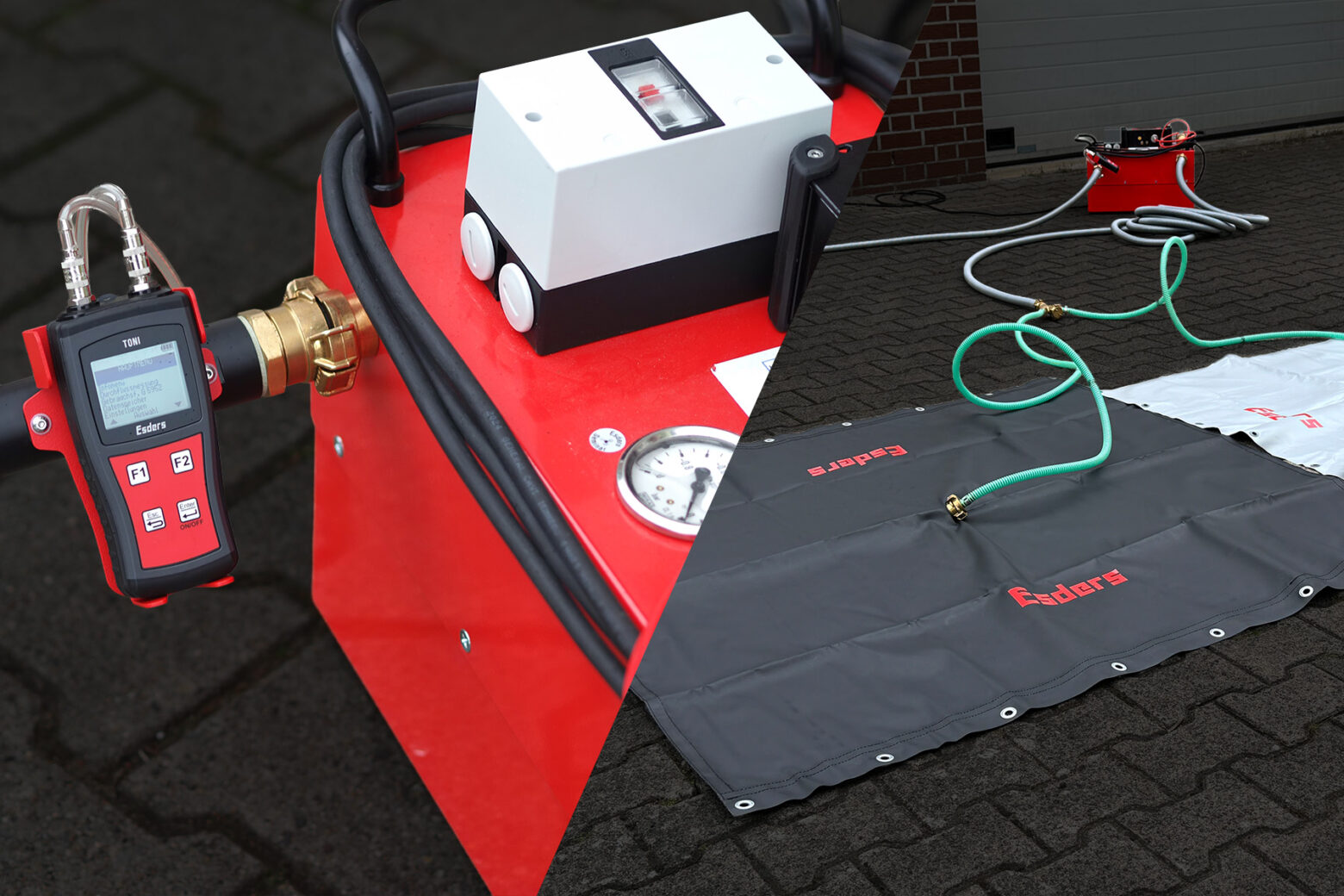
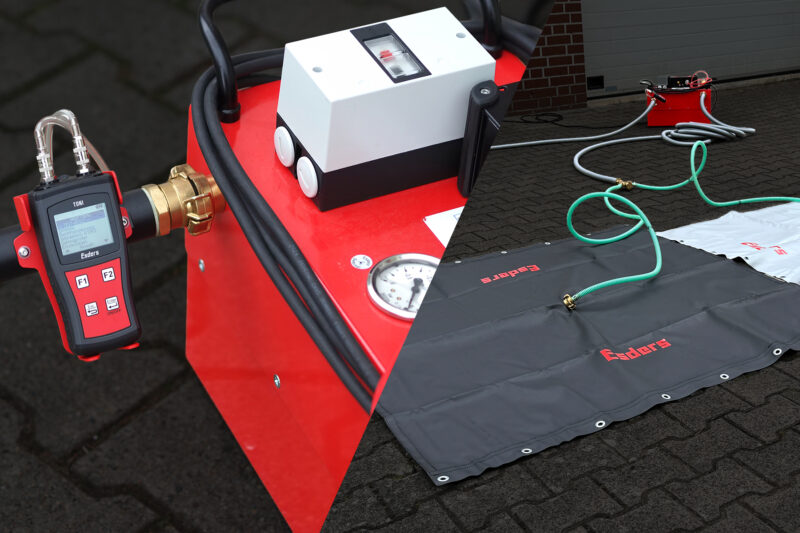
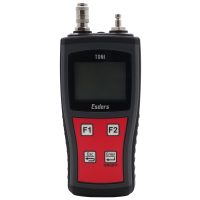
Equipment for methane emissions quantification: Vakumobil, Laser HUNTER, TONI FlowTest and bagging probe

Bagging (Surface Enclosure) Method

The bagging method enables the rapid measurement of methane emissions directly at the surface. To do this, the area where methane is being released is covered with a tarpaulin and the escaping gas-air mixture is extracted in a controlled manner.

The DVGW worksheet G 425-1 refers to the extraction of soil air using a tarpaulin spread out on the ground as a method for quantifying underground releases. This means the method can also be used for underground pipes.

In combination with modern measurement technology, the method enables a practical assessment of the emission levels and provides important information for the further investigation of leak points.

Step-by-step guide: quantifying methane emissions using the Bagging Method
Step 1: Locating the leak

The starting point for the measurement is a previously detected and localised methane leak. Based on the gas concentrations determined, the measurement area is defined and prepared for the measurement.

The gas-air mixture collected beneath the tarpaulin is extracted using the bagging probe. The Laser HUNTER continuously measures the methane concentration, whilst the flow rate is monitored via the TONI FlowTest.

Conclusions regarding the order of magnitude of methane emissions can be drawn from the recorded measurement values. The data obtained assists network operators in assessing, documenting and prioritising leak locations.

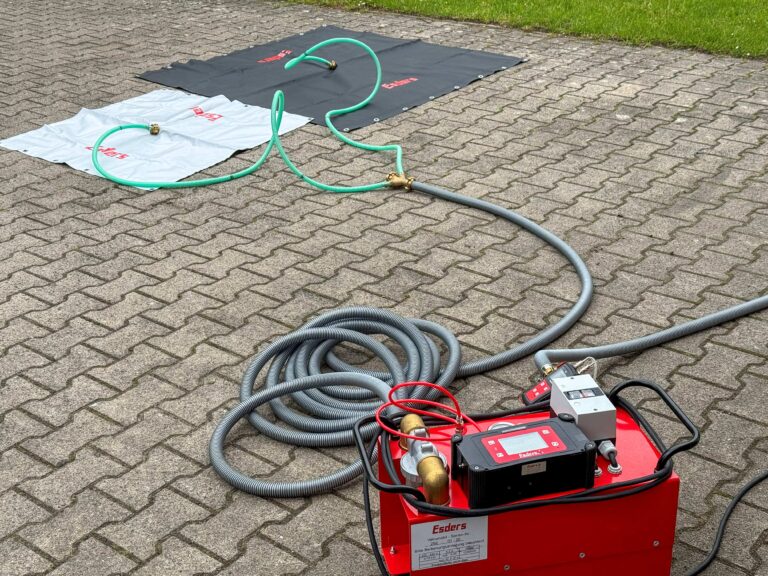
Connection diagram for the Vakumobil, Laser HUNTER and TONI FlowTest devices

Extraction (Suction) Method

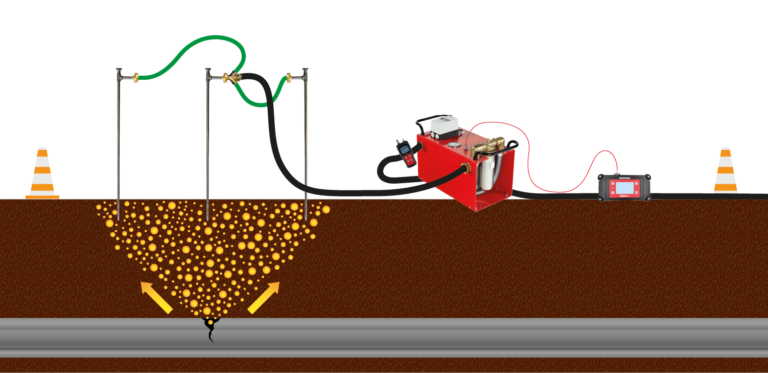
The extraction (suction) method for underground installations is carried out using ground probes inserted into the soil following leak detection or localisation, and is described in detail in worksheet DVGW G 425-2. Other suction methods are permitted to a limited extent in accordance with DVGW G 425-1.

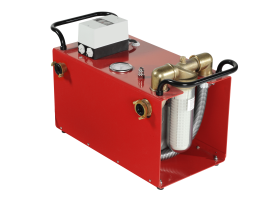
To carry out emission measurements of a leak in underground pipework, we recommend using the Vakumobil with borehole probes in combination with the Laser HUNTER.

Step-by-step guide: quantifying methane emissions using the Extraction Method
Step 1: Define the measurement area

The measurement area is determined on the basis of a recorded gas concentration above ground and prevailing environmental conditions, such as the nature of the subsoil, and, where necessary, cleared and secured. The ground probes should be placed symmetrically around the suspected leak. Furthermore, care should be taken to ensure that the probes are ventilated evenly.

Depending on the nature of the subsoil, boreholes may need to be drilled for the ground probes. These should be as deep as possible, whilst ensuring that the underground pipe is not further damaged. In most cases, a depth of approx. 35 cm has proved effective. Furthermore, the free outflow from the leak should not be affected, and the maximum hose length specified by the manufacturer should not be exceeded.

Once the measuring equipment has been set up and connected, the soil air enriched with methane/natural gas is extracted via a vacuum pump connected to the soil probes and analysed by a concentration analyser linked to the pump. The combination of concentration measurement and flow rate measurement of the extracted soil air enables the methane emission rate from the leak to be determined.

The extraction flow rate must be sufficiently high so that no further methane leakage is detectable at the surface. In most cases, this condition can only be achieved using a suitably sized vacuum pump. Once the measured gas concentration and the flow rate have remained constant for approximately 10 minutes, the enriched soil air has been extracted and the emission rate of the leak itself is recorded. The measurement can then be terminated. Depending on the soil conditions, environmental conditions and extraction flow rate, it may take several hours to reach these constant values.

Bagging Method vs Extraction Method

The two methods described above are designed for different measurement scenarios, although both aim to quantify methane emissions from underground pipeline leaks.

The bagging method allows the quantity of methane escaping through the ground surface to be measured by covering the emission area with a sealed tarpaulin and sampling the gas-air mixture at a controlled flow rate. This is a relatively simple and quick approach when the surface emission area can be clearly defined.

The extraction method involves collecting ground air containing methane using soil probes installed around the suspected leak site. By combining concentration measurements with a controlled extraction rate, this method makes it possible to determine the intensity of methane emissions even in cases where the underground migration of the gas makes surface measurements difficult, as well as to obtain more detailed data.

In practice, the choice of method depends on site conditions, soil characteristics and the accessibility of the leak location. Both methods provide valuable data for quantifying methane emissions. However, it is expected that the requirements set out in the EU Methane Regulation will become even stricter in the future. Consequently, the requirements for the measurement methods used may also change.

An overview of our technologies in this field

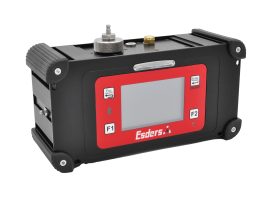
Laser HUNTER

Laser HUNTER
(as part of the modular system)

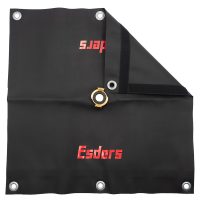
252030 Bagging Sonde 50 x 50 cm mit Geka-Kupplung Schwarz

Bagging Probe

Vakumobil

Vakumobil

OLYMPUS DIGITAL CAMERA

TONI FlowTest

Related products

Laser HUNTER
Gas detection & Gas measurement device
Laser HUNTER Gas detection & Gas measurement device
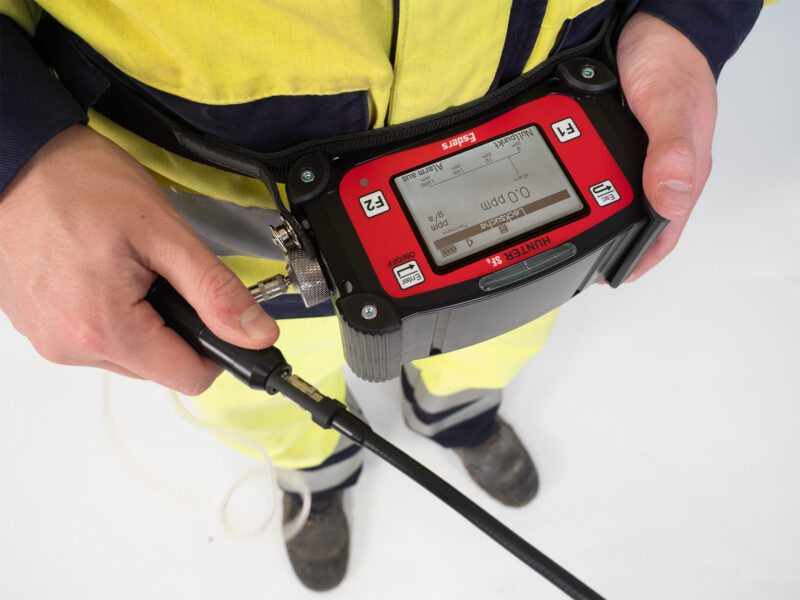
Highly sensitive and selective gas detection & gas measurement device with laser technology for the inspection of underground gas pipes using suitable probes (e. g. carpet probe). The device can also be used for the vehicle-based pipeline inspection. With built-in diaphragm pump, wireless data transfer and rechargeable Li-Ion battery. One out of two different laser modules can be assembled: - single laser module for methane or - dual laser module for methane & ethane Moreover, the device can be equipped with additional sensors to enable further applications. The following applications are possible: - Testing of underground pipes - Testing of exposed pipes in buildings or outdoors - Testing of soil air for localisation (optional) - Purging of gas pipes (optional, only in combination with soil air testing) - Quantification in underground or above-ground installations (optional) - Recording of methane peaks (optional) - Gas analysis (with dual laser module) Operating time: up to 10 hours Measurement range: depending on built-invsensors Dimensions (LxWxH): 143 x 240 x 85 mm Weight: 2.1 kg Temperature ranges: 0 °C to 40 °C (dual laser module) -10 °C to 50 °C (single laser module)
To the shop
Bagging probe 50 x 50 cm with Geka coupling
With the "Quantification" menu item and the bagging probe, the Laser HUNTER enables the standard-compliant determination of methane emissions at above-ground installations in accordance with DVGW G 425 3 (suction method). The antistatic bagging probe (dimensions 50 × 50 cm) is equipped with a GEKA coupling and is connected directly to the Laser HUNTER via the PVC hose (2 m, S20C-GEKA – Art. 412008). The result is a closed, safe measuring system for the precise, reproducible and fully documented quantification of methane emissions.
To the shop
Carpet probe TS14 with joint
with flexible joint unit Carpet probe with optimised suction area, highly flexible hose with coupling and telescopic handle. The warranty of the carpet mat is 3 years.
To the shop
GasCar Laser HUNTER standard
Pump unit for use with a Laser HUNTER. Possibility to clean the suction system by backwashing using an integrated compressor. Additional components are required for a functional system for vehicle-based pipeline inspection and must be ordered separately: - Laser HUNTER (item 251220). - Intake unit & probes - Accessories, e.g. hoses - Test system - Notebook, notebook holder - GIS software (Esders PI NOTE) - GPS Receiver
To the shop
E-scooter Laser HUNTER V2
Ninebot MAX G2 D E-scooter with carpet probe for professional gas leak detection. Includes filter and hose for connecting the measuring device (Laser HUNTER). Insurance is required for use of the scooter on public roads! The registration of the scooter is not included in the scope of delivery and must be carried out by the customer. The Laser HUNTER is also not included in the scope of delivery and must be ordered separately.
To the shop
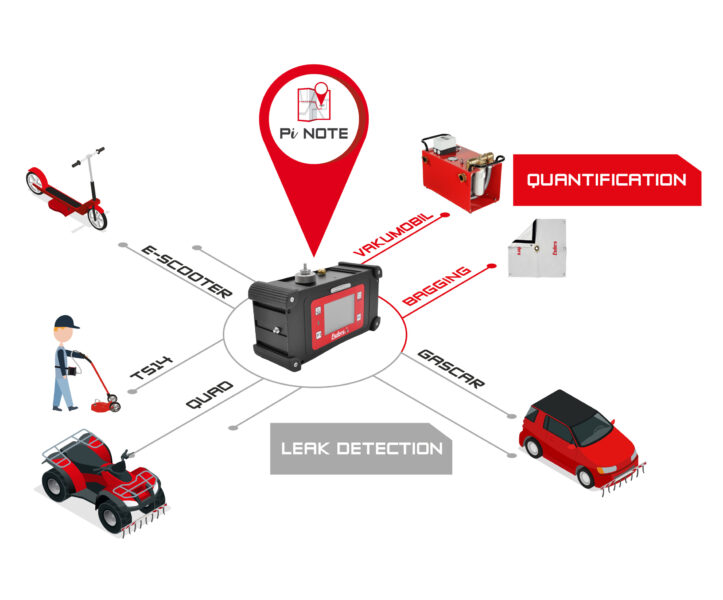
Esders Pi NOTE mobile GIS client
The Esders Pipeline inspection NOTE (Pi NOTE) is a GIS (geo-information system) based client specially developed for the systematic pipeline inspection according to German DVGW G 465-1 The Esdres Pi NOTE mobile client comprises the following possibilities: - Wireless device connection for data transfer - GPS-based positioning and automatic centering of GIS-data - Documentation of GPS position, measuring data, sensitivity check of measuring device, date & time, defects, notes, accessible and non-accessible areas (e. g. houses service connection), classification of leakages - Generation of relevant drawings of leakages on site - Administration of measuring campaigns and examination sections The mobile optimized view enables the complete documentation during inspection, e. g. with enlarged icons Prerequisite for purchasing the software is the conclusion of a corresponding maintenance contract.
To the shop
Esders Pi NOTE analysis client for up to 10 users
Esders Pi NOTE analysis client for up to 10 users The Pipeline inspection NOTE analysis client for up to 10 users was mainly developed for the up- and downstream tasks of the systematic pipeline inspection. The Pi NOTE analysis client comprises the following possibilities: - Consolidation of data from the Pi NOTE mobile client - Administration of measuring campaigns and examination sections - Post-processing and evaluation of collected data - Filtering of data based on campaigns and examinations for individual visualizations and assessments - grid overlapping analyses - export function Prerequisite for purchasing the software is the conclusion of a corresponding maintenance contract.
To the shop

Further reading

Blog tips

Blog

Quantification on above-ground installations with bagging method in accordance with DVGW G 425-3

The EU Methane Regulation (Regulation (EU) 2024/1787) requires operators in the energy sector to systematically record, reduce and regularly report methane emissions. A key component of this are leak detection and repair (LDAR) programmes. The DVGW regulations provide recognised technical rules that transform European obligations into practical procedures. In this
Read more »
Zwavelhexafluoride
Blog

Minimise risks and detect SF6 leaks at an early stage

Why SF6 is particularly relevant today? Sulphur hexafluoride (SF6) has been an integral part of modern medium and high-voltage technology for decades. As an insulating and extinguishing gas, it enables compact, powerful and reliable switchgear. At the same time, the handling of SF6 is increasingly becoming the focus of legislation,

Read more »

Consultation

Would you like to find out more about Esders, our technologies and, above all, the opportunities available to you? We’d be happy to advise you, with no obligation.

Live Demonstration

Whether in person or via an online meeting: we’ll demonstrate our products and help you find the device that best suits your needs

Newsletter

Don’t miss out on the latest news about our technologies and key regulations – sign up for the newsletter now.
keyboard_arrow_up