The EU Methane Regulation (Regulation (EU) 2024/1787) requires operators in the energy sector to systematically record, reduce and regularly report methane emissions. A key component of this are leak detection and repair (LDAR) programmes.
The DVGW regulations provide recognised technical rules that transform European obligations into practical procedures. In this context, DVGW G 465-5 describes the procedure for determining methane emissions from gas pipelines in the gas distribution network up to 16 bar. This includes the detection, quantification and identification of emitting components as a basis for repair.
The methodology for the metrological quantification of emission rates is described in the DVGW information sheets of the G 425 series. While G 425-1 defines general principles, the subsequent parts describe specific procedures. For example, G 425-2 applies to underground installations, while DVGW G 425-3 details the extraction method (bagging) for above-ground installations at source level.
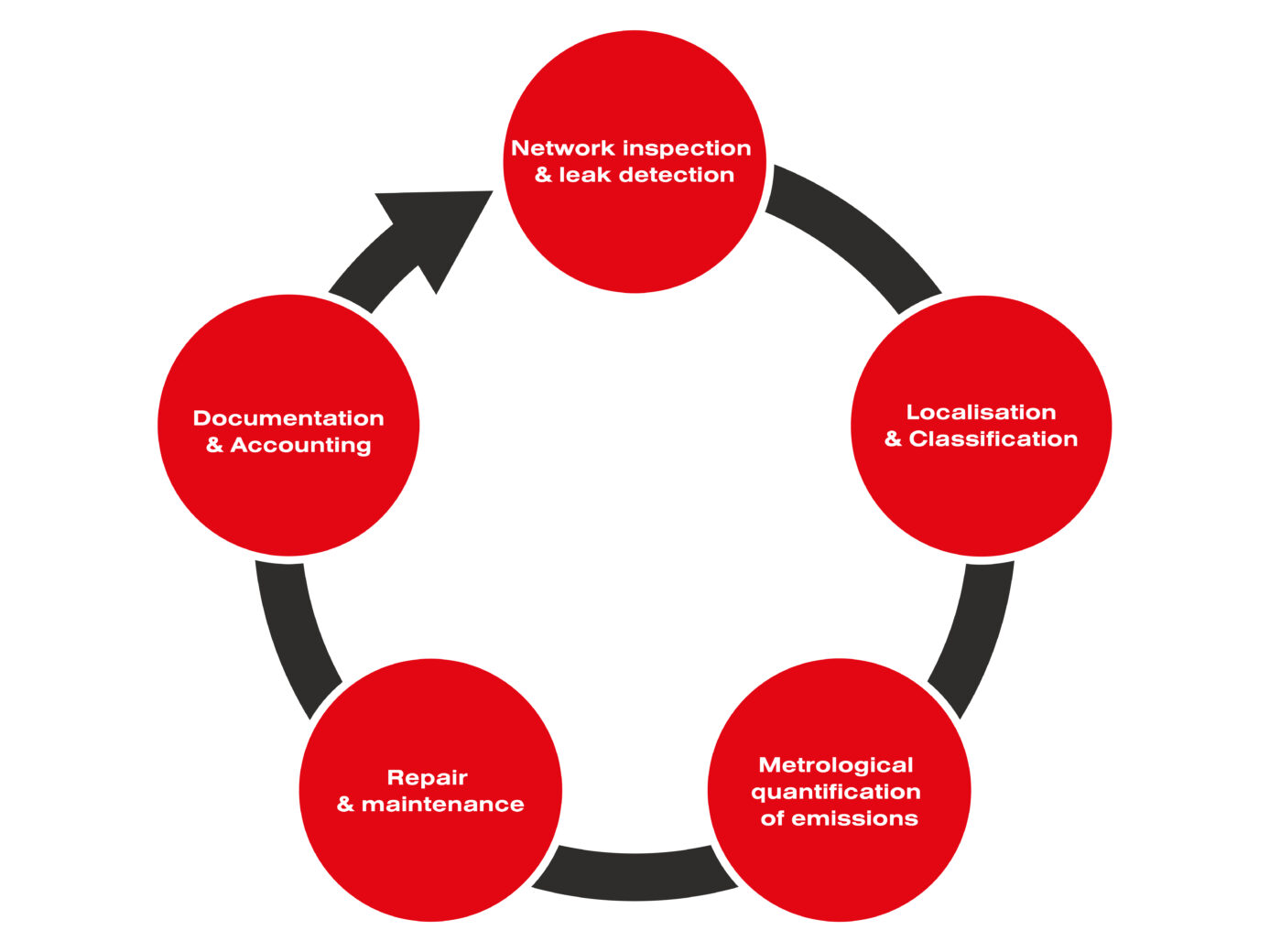
Pipeline network inspection & leak detection
Above-ground inspection
Reference to DVGW information sheets:
G 465-1: Inspection of gas pipe networks up to 16 bar.
G 465-4-1 ff.: Equipment technology for inspection (vehicles, hand-held devices, remote detection)
Localisation & classification
Use of hand-held gas concentration measuring devices for precise localisation and classification of the hazard
Reference to DVGW information sheets:
G 465-3: Localisation, classification and handling of gas leaks
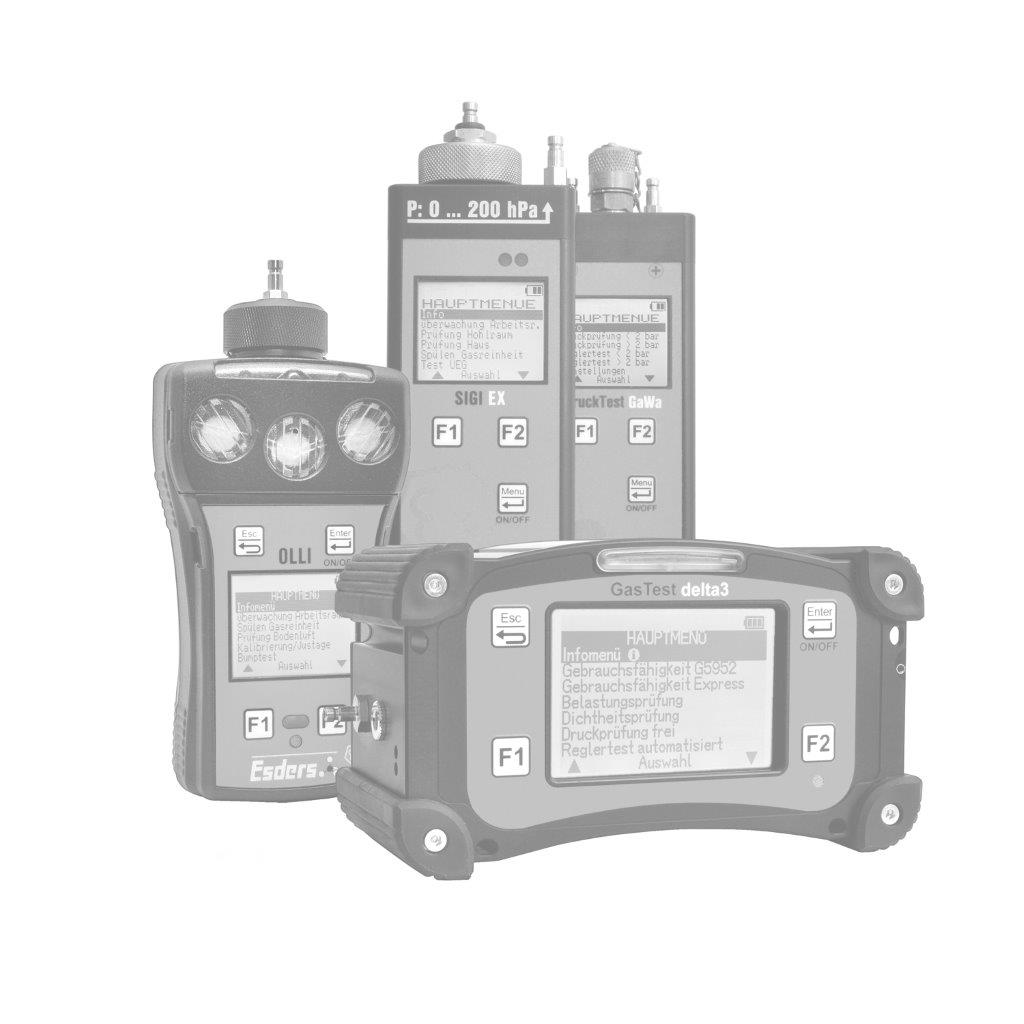
G 465-4-2: Hand-held gas concentration measuring devices
Metrological quantification of emissions
Measurement of emission rates
Reference to DVGW information sheets:
G 425-2: Extraction method for underground installations
G 425-3: Extraction method for above-ground installations / bagging
Repair & maintenance
Planning and carrying out maintenance measures
Reference to DVGW information sheets:
G 465-2: Maintenance, commissioning and decommissioning
Documentation & accounting
Entry into the network and damage statistics and transfer of values for the annual methane emissions report
Reference to DVGW information sheets:
G 426: Preparation of methane emissions reports
G 465-5: Overall accounting and reporting at distribution network level
Methane emission measurement using the bagging method (DVGW G 425-3)
Preparation and safety assessment
Before a measurement is carried out, any hazards must be ruled out as part of a risk assessment. This includes, for example, maintaining a sufficient distance from hazardous areas, carrying out a clearance measurement and securing the work area.
Measurement procedure
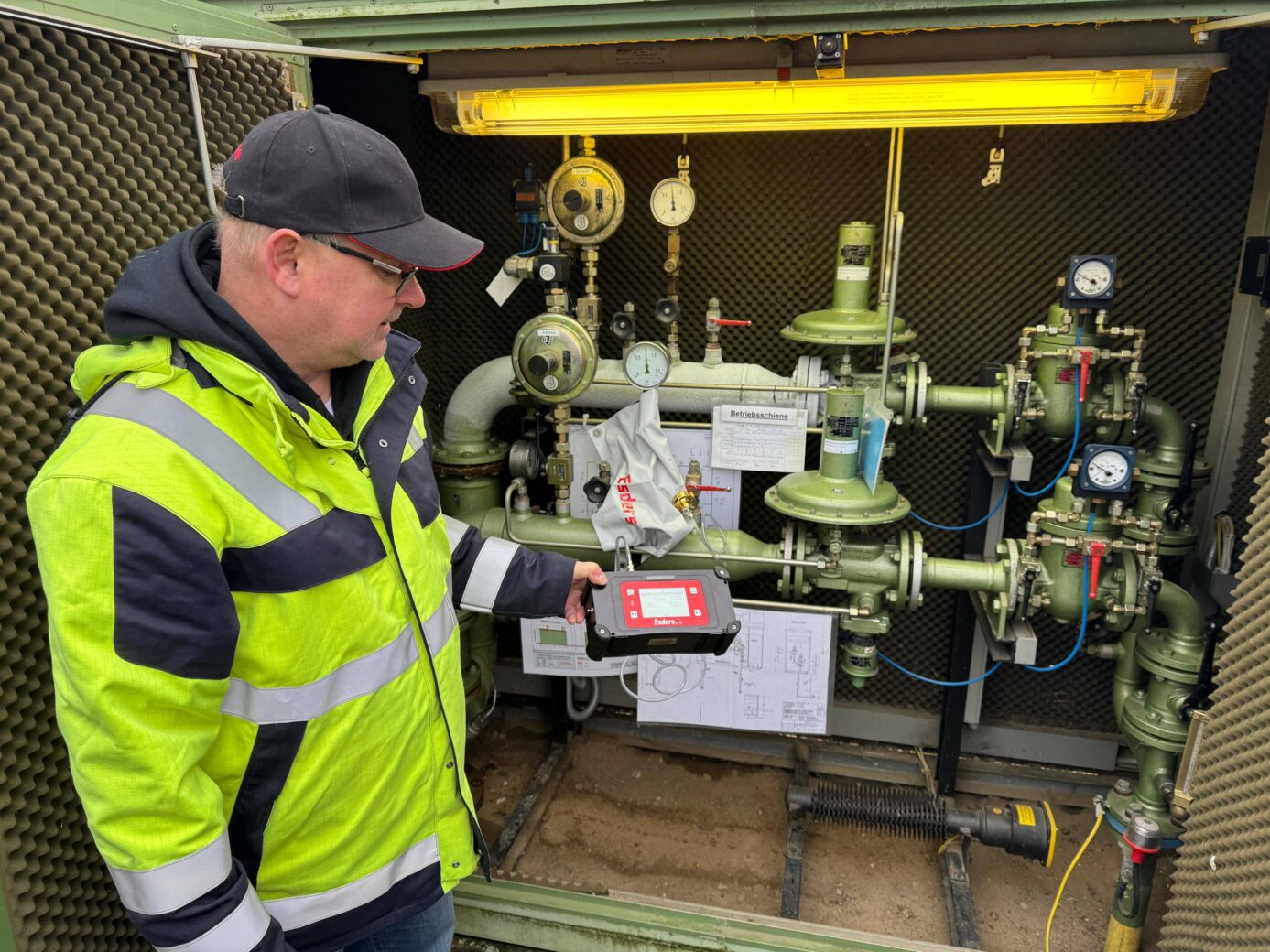
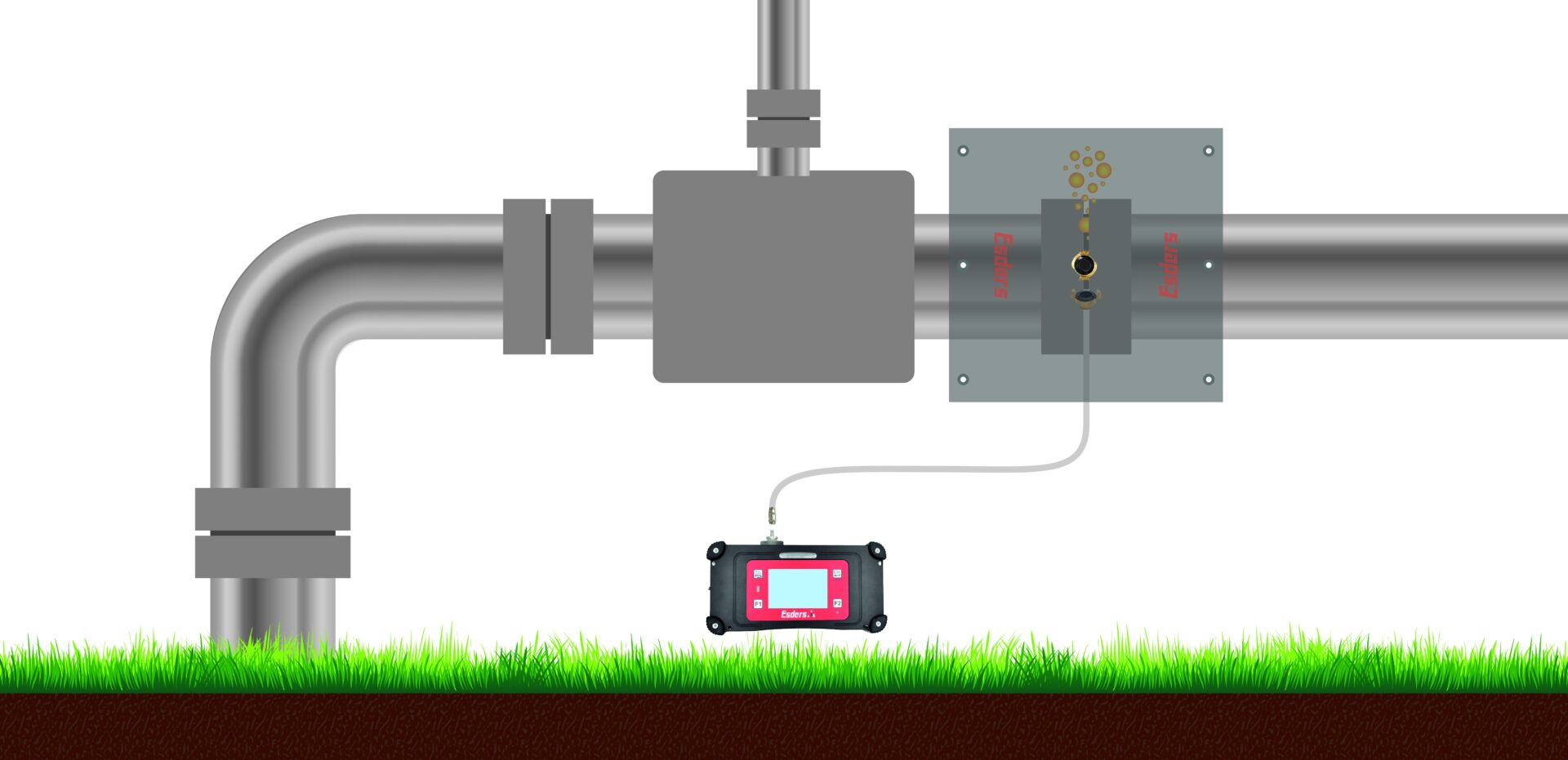
Once the leak has been detected, the component or part is enclosed in an airtight foil. This creates a defined extraction chamber, which ensures that the entire amount of methane escaping can be captured. A vacuum pump is used to extract the methane-air mixture from the sealed chamber. The extraction process continues until a steady state (constant methane concentration) is reached. The emission rate is determined from the volume flow under standard conditions and the methane concentration in the steady state. Only then is the measurement terminated.
The guideline defines clear limits and recording intervals for reliable and standard-compliant quantification.
Temperature limits and environmental conditions: Measurements may only be carried out at ambient temperatures between 5 °C and 35 °C.
Data acquisition and measurement intervals: The measurement data is recorded every 5 seconds during the measurement.
Required measurement parameters: The volume flow, methane concentration, temperature and pressure are recorded.
Device requirements: The methane detector must have a detection limit of at least 10 ppm and cover a working range of 0 to 100 vol.%.
How to calculate emission rates?
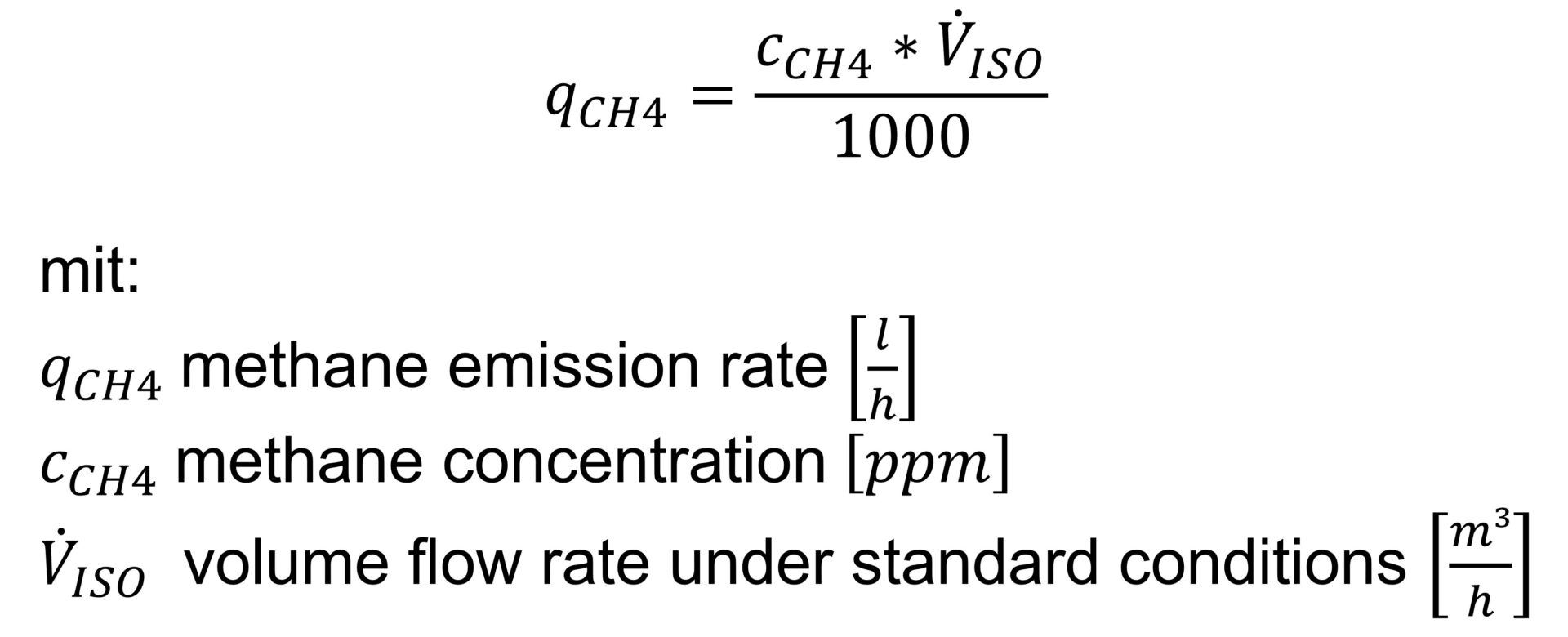
The emission rate of the leak is calculated from the constant methane concentration and the standardised extraction volume flow. The calculation is performed using the formula:
Documentation requirements in accordance with G 425-3
To ensure that the quantification is reportable and auditable, G 425-3 requires a short report to be prepared. This must contain the following elements:
The measurement results, including measurement uncertainties
The measuring instruments used
The extraction volume flow and the recording of the concentration measurement
A technical assessment of the plausibility of the measurement results
Conclusion: Why accurate methane quantification matters
DVGW G 425-3 enables comparable, measurement-based emission rates at above-ground sources. In conjunction with the procedural framework of DVGW G 465-5, it forms the technical basis for accurately quantifying methane emissions. This is essential for prioritising repair measures and consistent, standard-compliant reporting within the framework of the EU Methane Regulation.
.jpg?width=100)
.jpg?width=100)
.jpg?width=100)