Menu
OLLI-Schachtwarn

Leak testing of sewerage systems: methods, standards and measurement technology

How to inspect supply lines, ducts and manholes safely and in accordance with standards

How can wastewater pipes, sewers and manholes be inspected safely, efficiently and in accordance with regulations? Find out what opportunities are offered by automated pressure and leak testing in accordance with standards EN 1610, EN 805, DWA-A 139 and DWA-M 149-6, and how level measurement methods, clearance measurements and digital documentation can be effectively integrated into the workflow.

Challenges in wastewater treatment technology

Reliable pressure and leak testing

Before commissioning and during operation, wastewater pipes, sewers and manholes must be checked regularly for leaks. Different test procedures are used depending on the structure. At the same time, before entering any manhole, it must be ensured that there are no gases present that are hazardous to health or explosive. Modern measurement technology helps to carry out tests in accordance with standards, ensure health and safety at work and document results digitally.

Practical examples and areas of application

Ensuring safe wastewater systems through modern testing technology

When developing our technologies, we always take our customers’ practical needs as our guide. This is also reflected in our case studies. Find out more now!

Safe atmospheric testing during manhole inspections

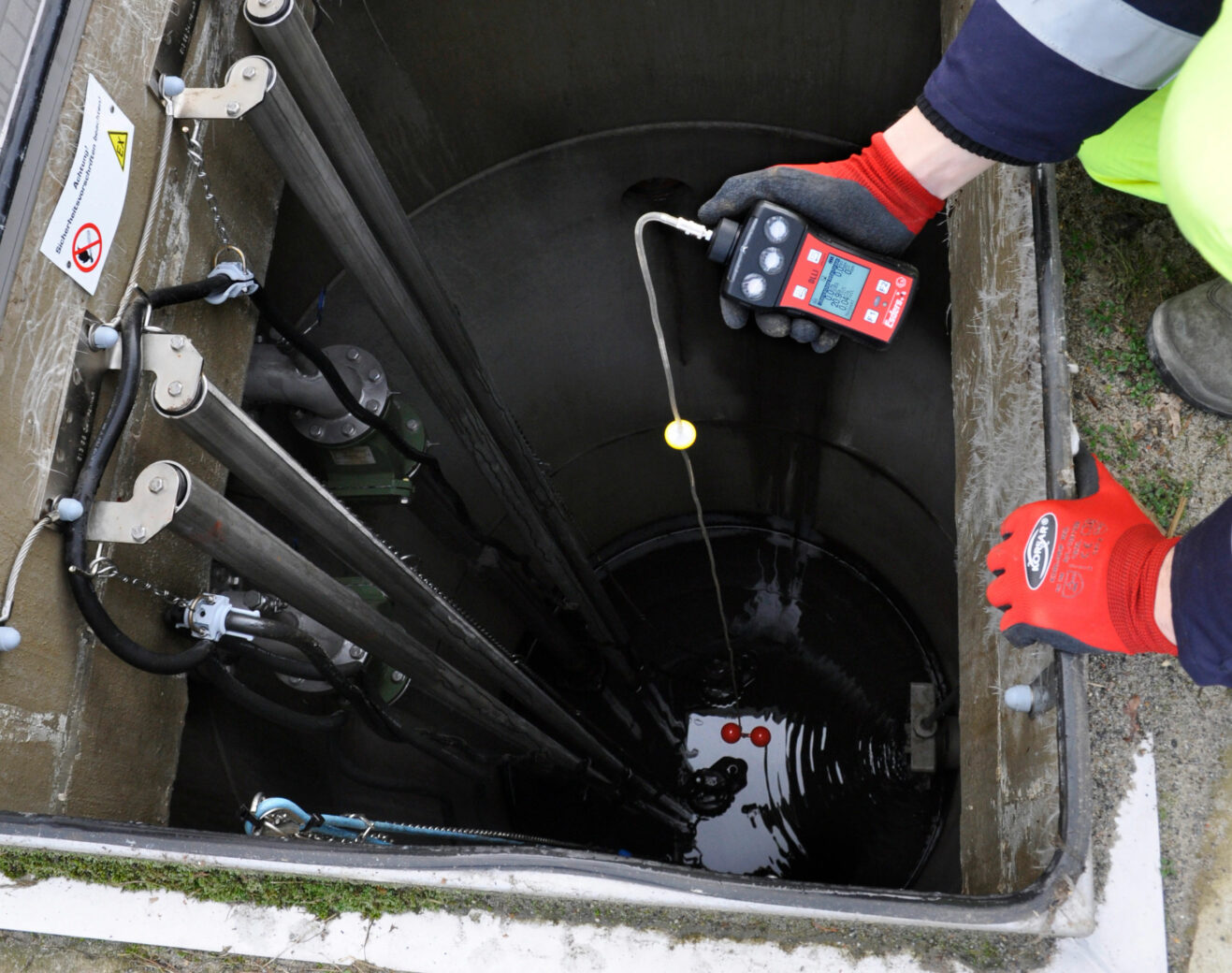
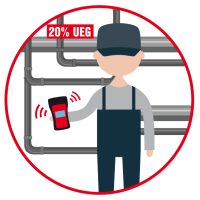
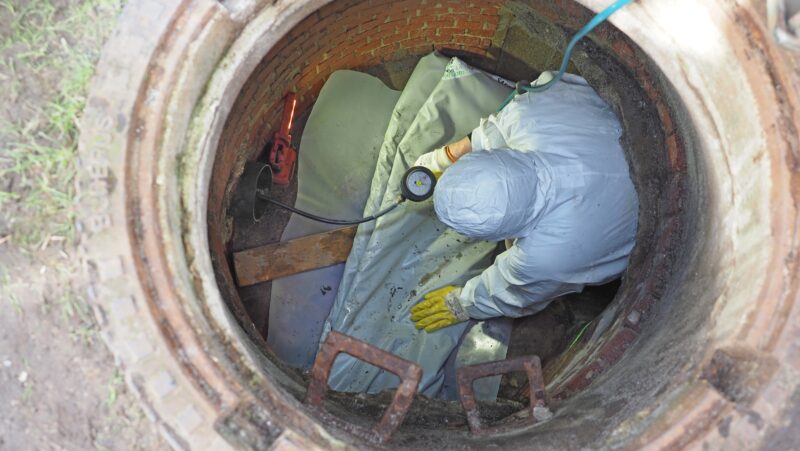
Worker using OLLI for confined space gas testing in a manhole

As part of the maintenance or repair of the water, wastewater and district heating network as well as separator systems, the inspection of manholes is one of the tasks of the specialists. As work on and in manholes (often related to Confined Space Entry, CSE) is associated with various hazards, there are some aspects to consider. Depending on the location of a manhole, the local traffic situation must first be taken into account and, if necessary, measures must be taken to divert traffic.

The most common hazards when working in a manhole are the danger from substances, which include solids, liquids, vapours and gases, each in quantities and concentrations that are hazardous to health, and the danger of falling. As protection against a fall, a tripod with a height safety device including a rescue lift function is usually set up above the manhole. The person working in the manhole is attached to this by means of safety harnesses and ropes. In this article, we want to specifically address the hazard of dangerous gas concentrations and oxygen deficiency and describe the atmospheric testing with our gas detector OLLI.

What is atmospheric testing?

In accordance with DGUV rules 113-004 and 103-003, atmospheric testing means determining a possible concentration of hazardous substances or the oxygen content before and during work in enclosed spaces with the aim of determining whether the atmosphere in the enclosed space allows safe working. It is thus a measure to protect workers from hazardous substances.

Among the gases in the vicinity of manholes, methane (CH4), carbon dioxide (CO2) and hydrogen sulphide (H2S) are the most common hazardous substances, in addition to oxygen (O2) deficiency. Occasionally, carbon monoxide (CO) is also monitored for, as this can be produced in road traffic during incomplete combustion of fuels.

Step-by-step guide

Step 1: Check that the gas detector is ready for use

Before each atmospheric test, the gas detector must be checked to ensure it is functioning correctly. This includes a visual inspection for damage and a quick display test using a suitable test gas. This so-called ‘bump test’ must be carried out every working day in accordance with DGUV Information 213-056 (T 021) and 213-057 (T 023), and simultaneously checks the function of the integrated pump.
On the OLLI, the ‘Bump Test’ function can be started directly from the main menu.

In addition to the daily quick gas test, the gas detector must undergo a functional check at least every four months. As well as a visual inspection, this also includes the calibration and, where necessary, adjustment of the sensors. On the OLLI, this is carried out directly via the “Calibration/Adjustment” menu item.

All functional tests and quick gas tests should be documented. With Esders Connect, these tests can be managed digitally, paperlessly and in compliance with all regulatory requirements.

Atmospheric testing is only carried out after a successful quick gas test and visual inspection – always before entering the manhole.
To do this, select the ‘Confined space entry’ function on the OLLI. The device is switched on in clean ambient air and is ready for use once the sensor initialisation phase is complete. The measurement is then carried out, for example with a float probe connected.
During the measurement, all measured values are shown on the display. If individual measured values exceed the set limit values, the device triggers an optical and acoustic alarm. In this case, the manhole must not be entered. Instead, appropriate measures such as ventilation or the use of personal protective equipment must be taken.

As the atmosphere in the manhole can change at any time, continuous monitoring is required once the atmospheric test has been completed.
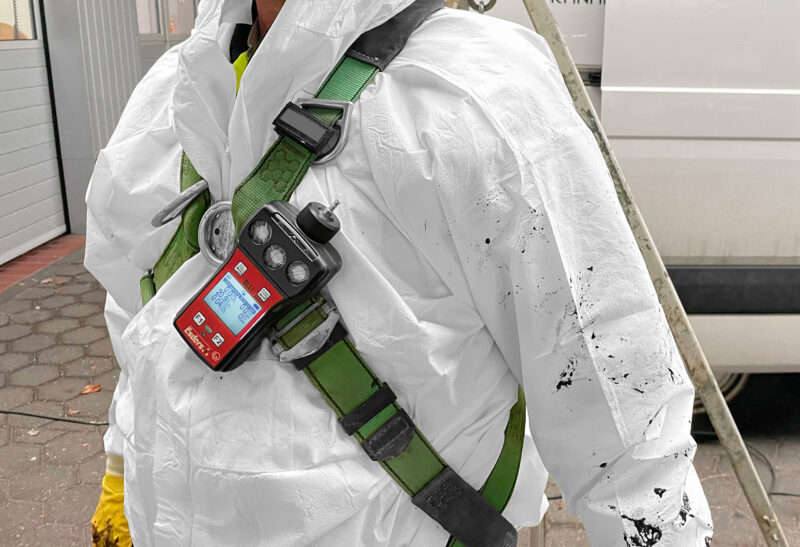
The gas detector can either be carried directly by the person working in the manhole or deployed by the designated safety officer outside the manhole using a floating probe. The second option also protects the measurement device from contamination.

Atmospheric testing may only be carried out by competent personnel. This is based on DGUV Guideline 313-002.

The required expertise includes, in particular:

  • safe handling of measurement devices in use and compliance with the relevant procedures,
  • knowledge of the hazardous substances to be measured,
  • knowledge of the operational conditions, such as the nature of the enclosed space or any potential emissions that may influence the measurement result.

Download a template for a work permit

The atmospheric test must also be recorded.
What are the key factors to consider when carrying out the atmospheric test? What data needs to be checked? Our template for the atmospheric testing report for working in confined spaces, manholes and containers can make this task considerably easier for you.

Atmospheric test report

We have drawn up a special protocol for atmospheric testing, which contains useful information on the threshold values of gas detectors for various gases, as well as a handy table to complete when carrying out measurements. Download it now by filling in the form below.

Our seminars

As part of our one-day seminar, we provide participants with the necessary professional knowledge. On request, we can hold the seminar at your premises. We cover both the legal framework and the specific requirements for handling hazardous substances, as well as selecting the appropriate measuring equipment. Our seminars also include practical sessions.

An overview of our technologies

282100

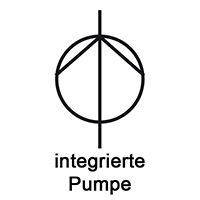
Option: Pump

282103_HMG3_OLLI_Dual_IR_Sensor

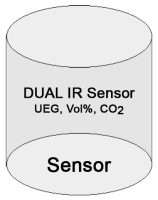
Option: Dual IR Sensor

282106_HMG3_OLLI_Ox_Sensor-v2

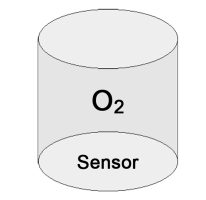
Option: OLLI oxygen measurement

282107_HMG3_OLLI_CO_Sensor

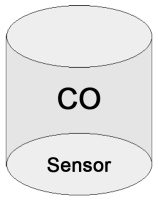
Option: Carbon monoxide measurement

282114_HMG3_OLLI_ÜberwachungArbeitsraum

Option: Confined space entry

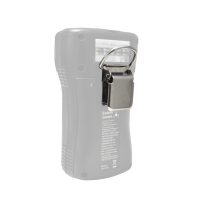
282110_Option_Alligatorclip

Alligator Clip OLLI

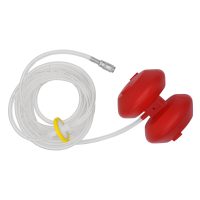
232082_Schwimmersonde_V2

Floating probe V2

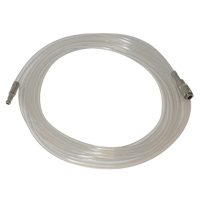
232081 Verlängerung_Schwimmersonde_GOLIATH_200x200

Hose Tygon 3m S20N-S20C

331023 PruefeinrichtungPED5Komponenten_Gas_200x200

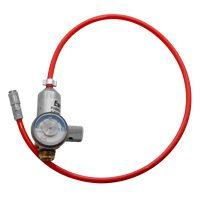
Ecomini test gas regulating valve 30 l/h

Suitable products

smart memo
smart memo
Electronic pressure measurement case for pressure tests with the option of connecting up to five external sensors (type EDS2). - the test procedures are menu-guided and can be carried out with simple data entry dialog - a freely programmable pressure test is included - optional test sequences for gas and water tightness tests e.g. according to DVGW, ÖVGW, EWE, Avacon, WEVG - a subsequent addition of test sequences is possible easily - large, illuminated display, even in direct sunlight easy to read - data entry and signature via touch display and foil keys - stylus for the touch display included - data memory for hundreds of measurements, depending on test sequence - wireless communication with an external device for updates and data transmission (costs apply for data transfer to the cloud) - LTE / GPS module (optional) - robust case (IP 67) - operating time approx. 200 hours, extension with power supply possible from outside Dimensions: 220 x 90 x 168 mm Weight: approx. 1450 g
To the shop
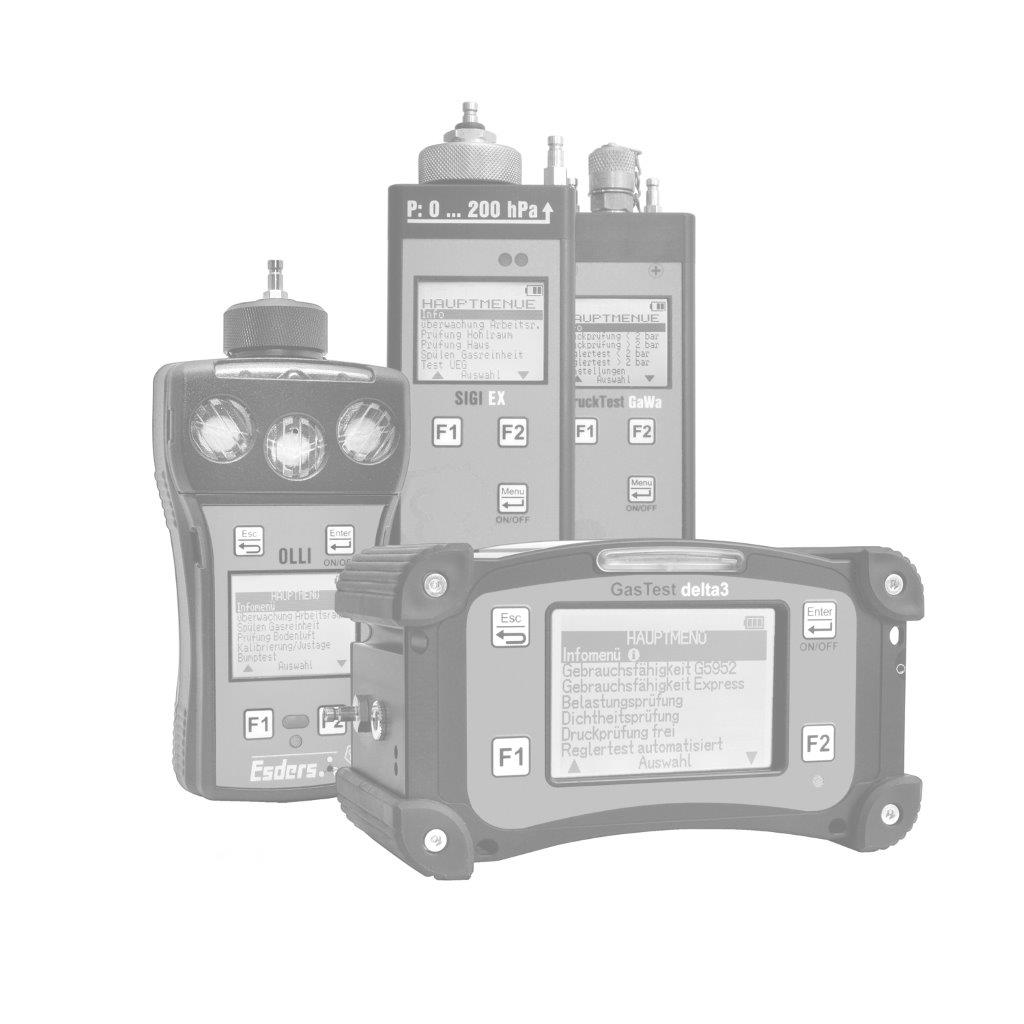
OLLI
OLLI
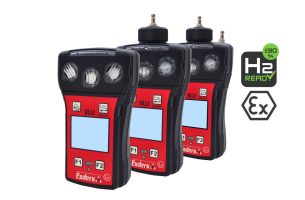
Gas detection and gas warning device without certified measuring function for explosion protection. Compact diffusion hand-held measuring device for up to five combustible and toxic gases as well as oxygen in an extremely durable 2-component plastic housing with three alkaline manganese primary cells. Up to three gas sensors can be installed (Ex/Ox/Tox). The device can optionally be equipped with a Li-ion battery pack, pump and pressure measurement. The configuration is carried out individually according to customer requirements. Operating time > 50 hours (depending on the type and number of sensors installed and ambient conditions, without illumination) Measuring ranges depend on the sensors installed. Dimensions: 136 x 78 x 43 mm, Weight: approx. 350 g Explosion-proof measuring device, Marking (ATEX): II 2G Ex ib db IIC T4 Gb BVS 17 ATEX E 043 X Marking (IECEx): Ex ib db IIC T4 Gb IECEx BVS 21.0085X Temperature range: -20°C <= Ta <= +50°C
To the shop
OLLI function-tested
Gas measurement & warning device with certified measuring function for explosion protection. This variant of the OLLI is included in the BG RCI list of function-tested gas detectors (see item 280060 for the IIC version without certification). Explosion-proof & compact diffusion hand-held measuring device. It can be used for up to 5 combustible and toxic gases as well as oxygen and comes in an extremely rugged 2C synthetic housing with rechargeable and explosion-proof Li-ion battery pack. Charging the battery in potentially explosive atmospheres is not permitted! Up to 3 gas sensors can be installed (Ex/Ox/Tox). Assembly is based on customer requirements. The device can optionally be equipped with a pump and pressure sensor. Operating time > 50 hours (depending on type & number of installed sensors and ambient conditions, w/o illumination) Measurement ranges are subject to sensor assembly Dimensions: 136 x 78 x 43 mm Weight: approx. 350 g Explosion-proof measurement instrument (active & passive) Measuring function certified for methane (CH4), propane (C3H8), oxygen (O2), carbon monoxide (CO), carbon dioxide (CO2), hydrogen sulfide (H2S) according to the following standards: EN 60079-29-1 EN 50104 EN 45544-1 EN 45544-3 ATEX Marking: II 2G Ex ib db IIB T4 Gb (EU-)type examination certificates: BVS 17 ATEX E 043 X TÜV 21 ATEX 8596 X TÜV 21 PTG 7001 X 968/FSP 1940.05/21 Kennzeichnung IECEx: Ex ib db IIB T4 Gb IECEx BVS 21.0085X Temperature range: -20°C <= Ta <= +50°C
To the shop
EDS2 automatic drain module
Optional module for the smart memo to automatically perform pressure drop tests and pressure reduction during water pressure tests. The EDS2 automatic drain is connected directly to the test head HANS with an integrated hose piece. On the outlet side, a suitable EDS2-V must be connected to the EDS2 automatic pressure release. The automatic pressure release only works in combination with an EDS2-V for digital recording of the water volume! The automatic drain is currently supported in the following processes: W 400-2: contraction procedure, accelerated standard procedure, standard procedure, infuence-minimized standard procedure W 101: contraction procedure, standard procedure EN 805: contraction procedure, standard procedure Mechanical connections: - hose connection with nipple series 5000 on the inlet side - on the outlet side coupling Series 5000 - bracket for fixing to the test stand pipe Electrical connections: - 1x socket B11 on the inlet side (power supply via smart memo) - on the outlet side, 3x connector B11 for direct connection of further EDS2 sensors (no additional T-pieces necessary) max. pressure 30 bar max. flow 75 liters/minute Note on use: when carrying out water pressure tests with an expected discharge volume of < 500 ml, a flow reducer (article number 402125) should always be used!
To the shop
EDS2 level probe
EDS2 level probe
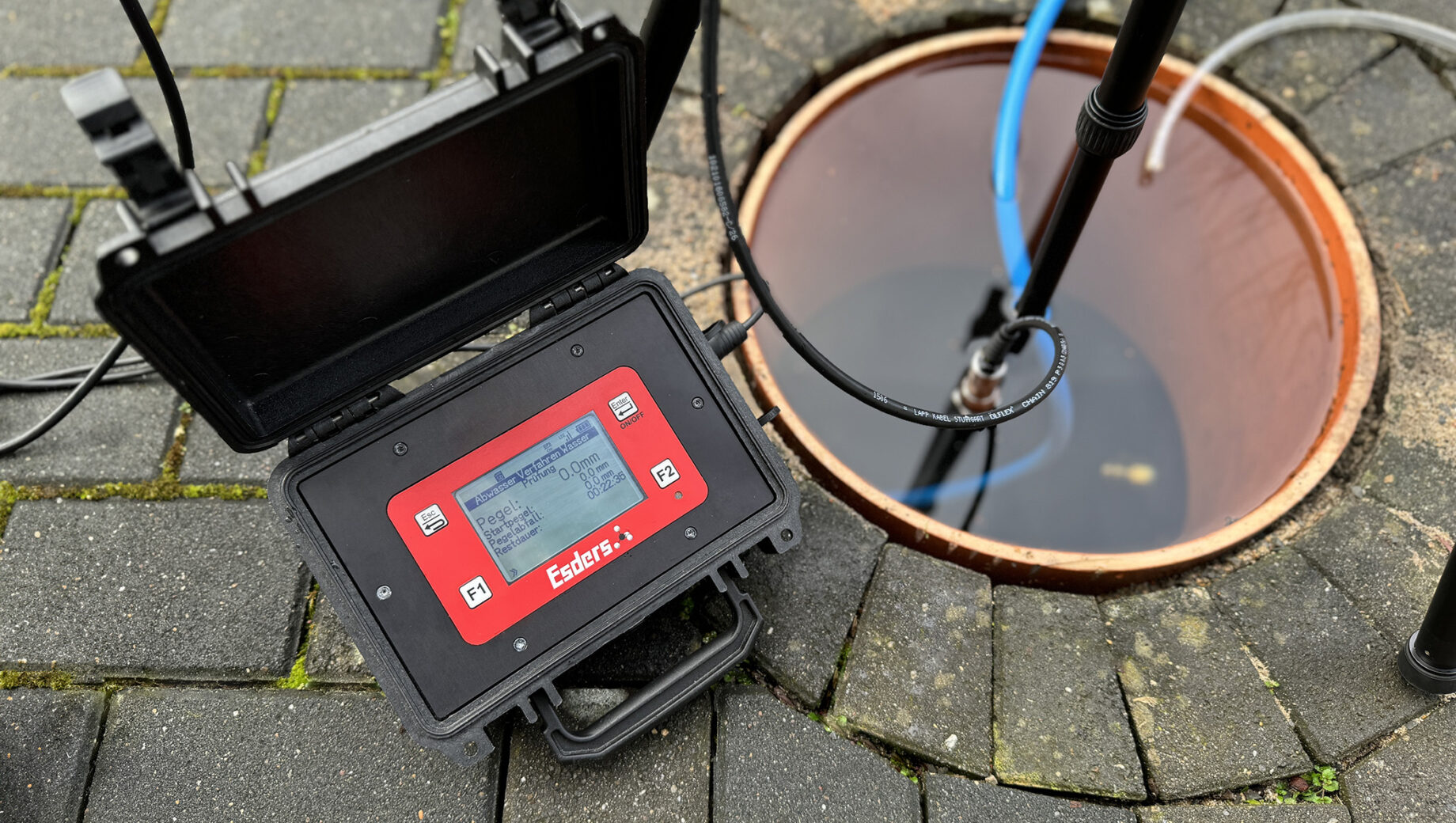
External sensor can be connected to the measuring device, integrated connection cable 0.5 metres Sensor type: Level probe Measuring principle: Pressure measurement Measuring range: 300 mm Measuring accuracy: 0.2 mm at 20°C Resolution: 0.1 mm Operating temperature: +3 °C to +40 °C Maximum immersion depth: 500 mm Suitable for leak testing wastewater pipes/manholes in accordance with EN 1610. The EDS2 level probe is approved for leak testing light liquid separators and grease separators in accordance with DIN 1999-100/DIN 4040-100, issued by TÜV Rheinland LGA Products GmbH.
To the shop

Further reading

Blog Tips

Live-Messung mit dem smart memo in Esders Connect
Blog

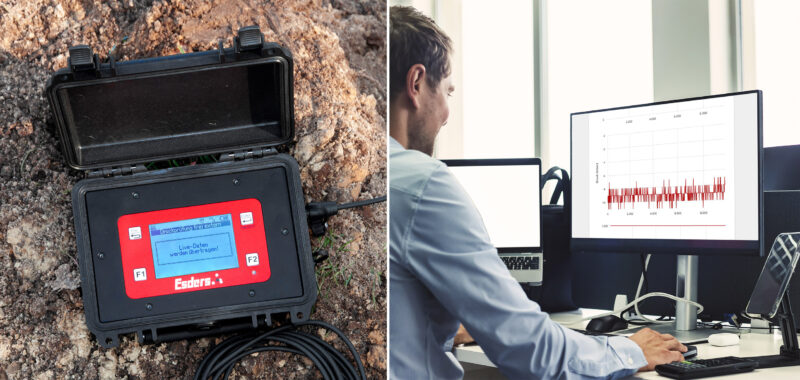
Live measurement during pressure testing with the smart memo

The smart memo is a versatile device for carrying out pressure tests. We offer simple, menu-guided test sequences for different test procedures in the gas, water and waste water sectors in accordance with applicable regulations. All test sequences in the device are programmed according to the current version of the
Read more »
Abwasserschacht Dichtheitsprüfung DIN EN 1610
Blog

DIN EN 1610 – Leak test of wastewater pipes

Table of Contents In Germany, more than 95% of the population is connected to the wastewater system, which means that Germany has a very large wastewater network. We have also summarized more information on the wastewater network in Germany for you here. Our wastewater system is also part of the

Read more »
Abwasser
Blog

The basics of wastewater – wastewater network in Germany

Table of Contents The wastewater network, just like the gas, electricity, and water networks, is part of the so-called critical infrastructure and is therefore subject to special protection. Due to possible attacks on this network as a result of the currently tense political situation, the maintenance and proper operation of

Read more »

Consultation

If you would like to find out more about Esders and our device solutions for environmental and personal protection, we would be happy to advise you.

Live Demonstration

Whether in person or via an online appointment: please feel free to contact us to arrange a live demonstration.

Newsletter

Would you like to stay up to date with the latest news on updates to our wastewater technologies? We’d be delighted if you signed up for our newsletter.

FAQs about sewerage systems

Frequently asked questions about pressure and leak tests on sewage systems

When is a leak test of wastewater pipes required?

Leak tests are carried out, amongst other things, on new buildings and during refurbishments, as well as in accordance with the client’s requirements or the relevant regulations.

For newly laid wastewater pipes and manholes, EN 1610 provides the authoritative basis for pressure and leak-tightness tests.

The level measurement method is used in particular for tightness tests on manholes filled with water and enables precise monitoring of changes in the water level.

Before entering a manhole, it is essential to check for a lack of oxygen or the presence of hazardous gases. This measurement, called atmospheric testing, protects staff and forms part of a safe working process. This is where our OLLI (EX/OX/TOX) comes into play.

The most common gases include hydrogen sulphide (H₂S), methane (CH₄) and carbon monoxide (CO), as well as atmospheres with low oxygen content.

keyboard_arrow_up